Home About Us Sustainability SDG10 – Reduced Inequalities

OVERVIEW

Reduced Inequalities

SDG 10 aims to reduce inequality within and among countries and to include everyone socially, economically and politically, whatever their age, sex, disability, race, ethnicity, origin, religion or economic status. For a university, it means that a person’s background should not decide whether they can enter, take part in and succeed at university.

INCLUSION AND SAFETY

Welcoming and Protecting the 2025 Intake

Orientation 2025 was a 12-day programme that brought 3,860 incoming students onto one common platform regardless of background, so that every fresher starts on equal footing. On August 20, 2025, a POSH sensitisation programme on the Prevention of Sexual Harassment, led by Ms Usha Pantula for the Directorate of Student Affairs, reached about 3,500 students and staff, and an interactive session by university counsellors, “Respecting Differences, Embracing Equality”, covered gender sensitivity, inclusivity and respect for diversity. Anti-Ragging Week reinforced a harassment-free campus.

Image 1: Incoming students at Orientation 2025 (August 28, 2025).

ACADEMIC DIALOGUE

Lectures and Conferences on Inequality, Rights and Democracy

Making Education a Reality and Ending Child Labour (February 21, 2025)

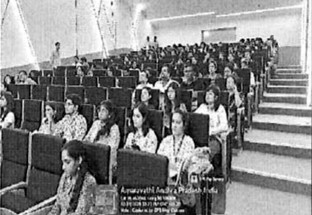
Padma Shri Prof Shantha Sinha, a Ramon Magsaysay Awardee and former Chairperson of the National Commission for Protection of Child Rights, delivered University Distinguished Lecture #20 to 250 participants at the SR Block theatre. Drawing on the M. V. Foundation’s work, she argued that child labour leads to poverty and not the other way round, and described withdrawing children aged 5-14 from labour, preventing child marriages and moving children into schools through residential bridge courses.

Image 2: Audience at the University Distinguished Lecture #20 (February 21, 2025).

The Sociological Perspective and Its Relevance (February 25, 2025)

Prof Maitrayee Chaudhuri, President of the Indian Sociological Society and former professor at Jawaharlal Nehru University, introduced the sociological perspective as a way to relate individual experience to wider social structures and showed its relevance for understanding inequality, identity, culture and globalisation.

Democracy’s Undoing: South Asia and its Politics (March 20–21, 2025)

The Department of Political Science hosted a two-day international conference on democracy in South Asia: populism, technology, social and economic inequalities, civil liberties and minority rights. Keynotes were by Dr Ashok Acharya (University of Delhi), Dr Kurt Annen (University of Guelph, Canada) and Prof Manjari Katju (University of Hyderabad), and paper sessions included work on gender disparity in the legal systems of Nepal and Sri Lanka, OBC reservation and the Thiyya community, and women’s political influence.

Workshop, Film and Lecture (September 2025)

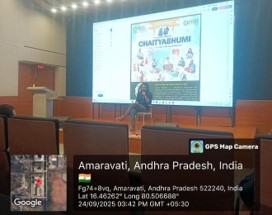
From 15 to September 26 a workshop on Storytelling as Research Methodologies looked at storytelling as an inclusive research method, with a focus on challenges faced by traditionally marginalized students and scholars in virtual learning environments. On September 17, a guest lecture on AI and Transfeminism offered a critical, decolonial look at including women and LGBTQ people in the design of AI systems (78 participants), and on September 24, a screening of the film Chaityabhumi, followed by a discussion with the filmmaker, explored caste, social justice, memory and Ambedkarite histories (96 participants).

Image 3: Chaityabhumi film screening and discussion (September 24, 2025).

Conferences in December 2025

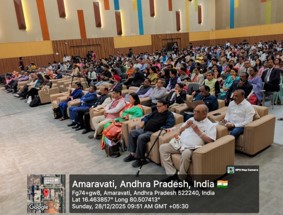
Breaking Barriers: Reimagining Centre-Margin Dynamics (December 17–18) examined intersectionality and multilayered marginalisation, from power and knowledge to digital hierarchies, migration and statelessness, marginalised languages and the politics of visibility. The 50th All India Sociological Conference (December 28–30), with the Indian Sociological Society, examined how caste, class, gender, tribe, religion and region shape unequal access to mobility and resources.

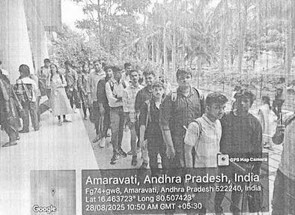
Image 4: Delegates at the inaugural session of the 50th All India Sociological Conference (December 28, 2025).

CULTURE AND INCLUSION

Celebrating Diversity

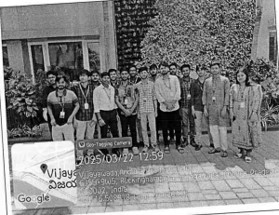
State formation day programmes under the Ek Bharat Shreshtha Bharat initiative, hosted by the Governor of Andhra Pradesh at Rajbhavan, give students a shared platform to present the heritage of different states. Students took part in Bihar State Formation Day at Rajbhavan, Vijayawada on March 22, 2025, with Governor Justice S. Abdul Nazeer as chief guest, in the Odisha and Rajasthan State Formation Day on March 29, and in Unity in Diversity: State Formation Day on November 1. Constitution Day on November 26 promoted awareness of constitutional values of equality and citizenship, and Assam State Formation Day was marked on December 3.

Image 5: Students at Bihar State Formation Day, Rajbhavan, Vijayawada (March 22, 2025).

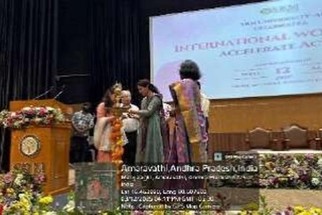
International Women’s Day on March 12, 2025 drew 800 participants, the largest turnout among the cultural events.

Image 6: International Women’s Day 2025 programme on stage (March 12, 2025).

AWARENESS AND OUTREACH

Awareness Events and Community Outreach

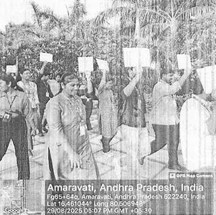
A student rally and the Nukkad Natak street play in August 2025 spread awareness of the National Education Policy 2020 and of access to education (35 and 56 participants). On September 10, students formed a human chain on Suicide Prevention Day to encourage open conversation about mental health. On February 28, NSS volunteers visited a school for the blind in an extension and outreach activity, and on September 20, the NSS Cell delivered mattresses to children at a local orphanage.

Image 7: Students at the NEP Awareness Rally (August 29, 2025).

ACCESSIBILITY

Accessibility Facilities on Campus

Accessible facilities are provided across the main academic blocks. The campus has ramps in 8 buildings, 19 Braille button enabled lifts, 74 washrooms for Divyangjan and 6 wheelchairs for Divyangjan, spread over the HB, VS, JC Bose, X-Lab, SR and CV Raman blocks.

Image 8: Lift lobby with Braille button enabled lifts,
Image 9: Concrete ramp with stainless-steel handrails,

Students by Admission Category

The student community includes General (4,547), Economically Weaker Sections (896), Other Backward Classes (2,713), Scheduled Caste (537), Scheduled Tribe (147), foreign (224) and Non-Resident Indian (15) students, according to the 2024-25 report, and about 36 percent of students are women.

RESEARCH

Research on Equity

The 2024-25 report counts 21 SDG 10 publications. Five carry a 2025 date and address small-scale irrigation for small farmers, global debt and the SDGs, the effectiveness of psychological interventions for war refugees, advocacy for health rights of LGBTIQ communities in Sri Lanka, and factors affecting student diversity in higher education in India.