Home Faculty Dr N Srinivas Mudiraj
mr-nakkala-srinivas-mudiraj

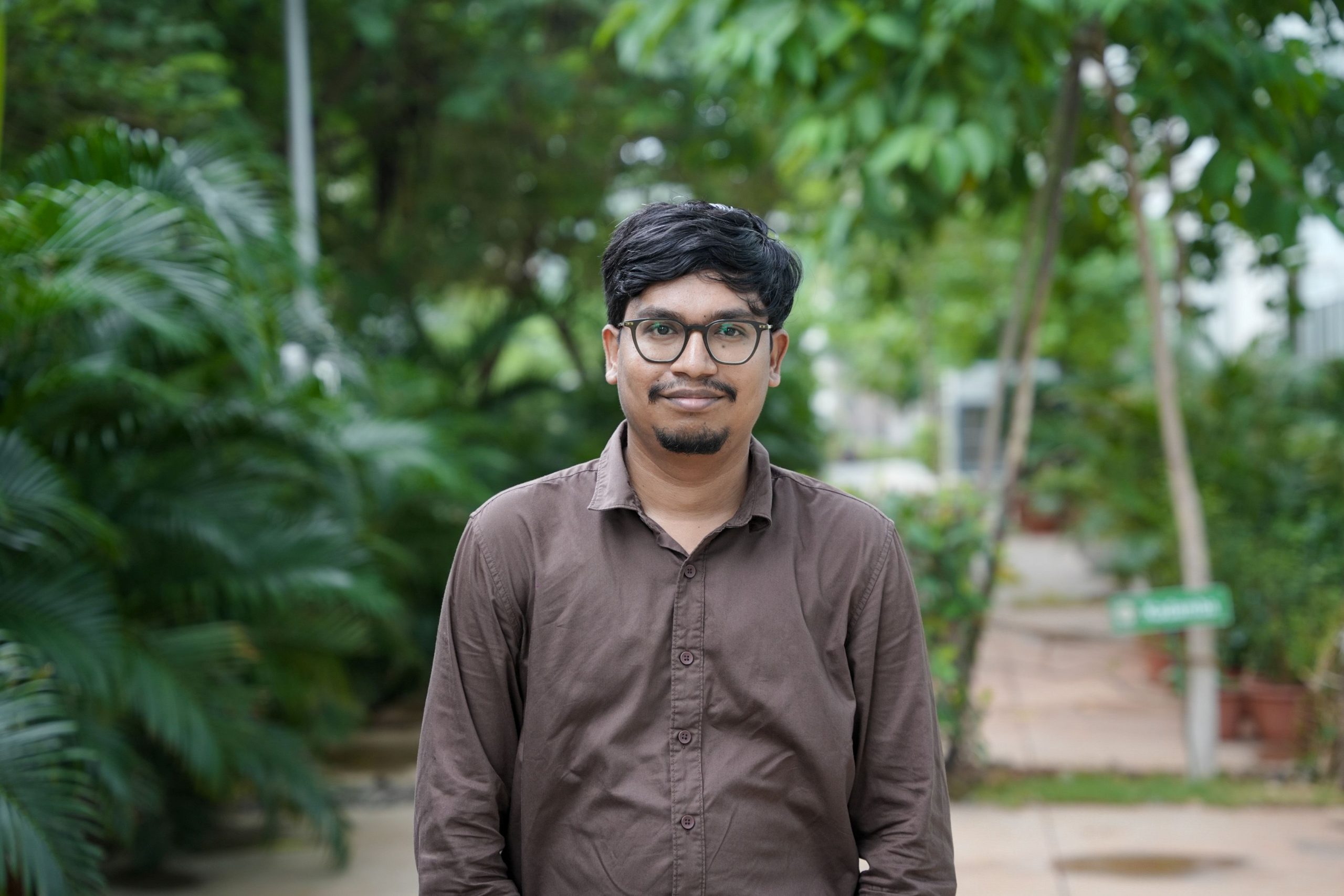
Dr N Srinivas Mudiraj

Assistant Professor

Department of Computer Science and Engineering

Contact Details

srinivasmudiraj.n@srmap.edu.in

Office Location

CV Raman Block, Level 11, Cabin No 52

Social Links

Education

2026
PhD
Central University of Punjab, Punjab
India
2020
M.Tech
Central University of Punjab, Punjab
India
2018
B.Tech
Vel Tech University, Tamilnadu
India

Personal Website

Research Interest

  • My most significant contribution to research lies in advancing the field of generative learning through the development of anefficient, high-performance text-to-image generation framework for low-resource languages.

Memberships

Publications

  • Prediction of Covid-19 Disease Based on Underlying Medical Conditions: An Indian Scenario

    Mudiraj N.S., Kaur P., Bhatti J.S., Singh S.

    Article, Journal of The Institution of Engineers (India): Series B, 2026, DOI Link

    View abstract ⏷

    Viruses like COVID-19 (Coronavirus Disease 2019) are highly contagious. Therefore, it is necessary to identify patients likely to test positive for such diseases to prevent their spreading. COVID-19 has been said to be a life-threatening pandemic because of its huge effects on the internal organs of the human body. The disease proves to be more severe to those who have any history of chronic diseases like hypertension, diabetes, malignancy, heart diseases, etc.; according to the literature, predictions for COVID-19 disease can be made using machine learning approaches based on various underlying medical conditions and parameters. There has been significant research on predicting the intensity and consequences of COVID-19. In the present study, we have proposed a machine learning-based approach to classify COVID-19-positive patients with various underlying medical conditions (chronic lung diseases, diabetes, hypertension, heart diseases, and malignancy). The model has been trained on a dataset of patients with known COVID-19 status and their underlying medical condition parameters (patient category, age, and gender). The dataset was acquired from the Indian Council of Medical Research (ICMR) repository for research purposes. The current study has employed several machine learning techniques, like Support Vector Machine (SVM), Random Forest (RF), K-Nearest Neighbor (K-NN), and Extreme Gradient Boosting (XG Boost) on the dataset. Based on the experimentation and its results, significant improvement in model accuracy up to 98% has been seen. The results state that the underlying medical conditions play a major factor in the fact that individuals with these conditions are more vulnerable to catching the disease than normal people.
  • Biological Databases and Data Mining

    Singh Y., Mudiraj N.S., Bhatia N., Singh S., Tharej S.

    Book chapter, Bioinformatics, Computational Chemistry, and AI in Drug Innovation: Advances and Applications, 2026, DOI Link

    View abstract ⏷

    Integration of bioinformatics, computational chemistry, and artificial intelligence resulted in the advancement of drug discovery programs through various biological databases and data mining techniques. With the increasing volume of data in recent years, traditional techniques have failed to efficiently process the large amount of data, prompting the development of data mining and the storage of biological data in biological databases. The role of biologic databases and data mining of interdisciplined approaches in evolving the landscape of drug innovation has been discussed herewith. Focus on the integration of artificial intelligence in biological databases for drug innovation by using dense machine learning (ML) techniques further explains the challenges and future perspectives of the study.
  • Semantic mapping of Hindi text-to-image generation using CUB dataset

    Mudiraj N.S., Singh S.

    Article, Scientific Reports, 2025, DOI Link

    View abstract ⏷

    Generative Learning enables the generation of unseen data by learning the patterns from existing data. Text-to-Image generation (T2I) is one of the growing areas of generative learning that mainly focuses on creating realistic images from natural language descriptions. Although many models are available for generating images from text, there is a significant gap in regional languages as input, which restricts the capacity to produce realistic visuals based on regional textual descriptions. This paper proposes a semantic mapping of Hindi T2I generation using the Generative Adversarial Network (GAN). The regional T2I generation model, specifically trained on region-specific data, such as a Hindi language dataset, is prepared, pre-processed, and fed to the model. The study utilizes the Caltech-UCSD Birds 200 (CUB) dataset as its primary source. The experiments indicate that the model delivers well and produces robust images. Our model boosts the existing result significantly with an Inception score of 4.65, FID score of 37.17, and a first-of-kind semantic Alignment in Hindi text-image using R-precision score of 75.12.
  • Instance Segmentation of Chest X-Ray Images Using Mask RCNN for Automated Pulmonary Tuberculosis Detection

    Mudiraj N.S., Kaur R., Kaur G., Singh S.

    Conference paper, Proceedings - 3rd International Conference on Advancement in Computation and Computer Technologies, InCACCT 2025, 2025, DOI Link

    View abstract ⏷

    One of the most dangerous infectious respiratory diseases that affect people is tuberculosis (TB). It is essential to detect TB disease in the early stage; otherwise, it can lead to a life-threatening problem. This study proposed an automatic TB detection method based on deep learning, in which automatic analysis and classification of Chest X-Ray images (CXR) for Tb or not Tb was performed. With the Transfer Learning method for automated TB detection that reduces the cost and time, a deep learning-based approach called Mask RCNN is used for semantic interpretation of images. It is a state-of-the-art model trained to determine pixel level/instance segmentation for each object in the image used for TB detection with generalized feature extraction. ResNet 50 and ResNet 101 models were used for the experimental results and to compare the classification performance with DenseNet and Inception models. The experimental results indicate that Resnet 101 produces the best result with a Mean Average Precision of 94.33, and ResNet-50 produces 89 with a learning rate of 0.001.
  • Hindi Text-to-Image Generation: A Diverse Data Collection Methods, Annotation Approaches and Challenges

    Mudiraj N.S., Singh S.

    Conference paper, Proceedings - 2024 2nd International Conference on Advanced Computing and Communication Technologies, ICACCTech 2024, 2024, DOI Link

    View abstract ⏷

    The rapid development in the field of artificial intelligence reshapes industries and humankind every day-a remarkable evolution. The machines can think and make decisions because of the availability of a large amount of data. The advancements in technology and the ease with which internet users can generate vast amounts of data daily, the visual representation of the data has a high impact. Image generation based on text is a revolutionary change in AI research advancements, in which machines can interpret and generate visual representations of text. This work aims to collect the data set to build the text-to-image model for Indian scenarios. The diverse data set that pairs textual descriptions with the image content is collected for the various parts of India with different environments to make a robust system. A systematic approach to the collection of data is applied to this work. Further, it explains the annotation approaches and challenges faced during the data collection and annotation stages.
  • Fine-tuned convolutional neural networks for feature extraction and classification of scanned document images using semi-automatic labelling approach

    Kumar K., Mudiraj N.S., Mittal M., Singh S.

    Article, International Journal of Intelligent Engineering Informatics, 2024, DOI Link

    View abstract ⏷

    Organising documents into relevant categories through image classification is crucial for management and safeguarding of valuable information. Many studies have done work on it with manual intervention, but still there is a scope of improvement. After finding gaps in existing studies, this research fine-tuned a hyper-parameter of pre-trained model based on various convolutional neural networks (CNNs), specifically the EfficientNetB3 and DenseNet201 models, for feature extraction and classification. These models are fine-tuned with the subset of the Ryerson Vision Lab Complex Document Information Processing (RVL_CDIP) dataset. The dataset comprises 16,000 image-scanned documents categorised into 16 classes with semi-automatic approach of labelling. The modified models are fine-tuned by adding a few more layers. The modified models outperformed in terms of accuracy, precision, recall and F1-Score for EfficientNetB3 and DenseNet201. These results highlight a significant improvement when comparing the proposed CNN models with baseline models through the utilisation of semi-automatic labelling and fine-tuning.

Patents

Projects

Scholars

Interests

  • Generative Learning
  • Low Resource Languages
  • Text-to-Image generation

Thought Leaderships

There are no Thought Leaderships associated with this faculty.

Top Achievements

Research Area

No research areas found for this faculty.

Computer Science and Engineering is a fast-evolving discipline and this is an exciting time to become a Computer Scientist!

Computer Science and Engineering is a fast-evolving discipline and this is an exciting time to become a Computer Scientist!

Recent Updates

No recent updates found.

Education
2018
B.Tech
Vel Tech University
India
2020
M.Tech
Central University of Punjab
India
2026
PhD
Central University of Punjab
India
Experience
Research Interests
  • My most significant contribution to research lies in advancing the field of generative learning through the development of anefficient, high-performance text-to-image generation framework for low-resource languages.
Awards & Fellowships
Memberships
Publications
  • Prediction of Covid-19 Disease Based on Underlying Medical Conditions: An Indian Scenario

    Mudiraj N.S., Kaur P., Bhatti J.S., Singh S.

    Article, Journal of The Institution of Engineers (India): Series B, 2026, DOI Link

    View abstract ⏷

    Viruses like COVID-19 (Coronavirus Disease 2019) are highly contagious. Therefore, it is necessary to identify patients likely to test positive for such diseases to prevent their spreading. COVID-19 has been said to be a life-threatening pandemic because of its huge effects on the internal organs of the human body. The disease proves to be more severe to those who have any history of chronic diseases like hypertension, diabetes, malignancy, heart diseases, etc.; according to the literature, predictions for COVID-19 disease can be made using machine learning approaches based on various underlying medical conditions and parameters. There has been significant research on predicting the intensity and consequences of COVID-19. In the present study, we have proposed a machine learning-based approach to classify COVID-19-positive patients with various underlying medical conditions (chronic lung diseases, diabetes, hypertension, heart diseases, and malignancy). The model has been trained on a dataset of patients with known COVID-19 status and their underlying medical condition parameters (patient category, age, and gender). The dataset was acquired from the Indian Council of Medical Research (ICMR) repository for research purposes. The current study has employed several machine learning techniques, like Support Vector Machine (SVM), Random Forest (RF), K-Nearest Neighbor (K-NN), and Extreme Gradient Boosting (XG Boost) on the dataset. Based on the experimentation and its results, significant improvement in model accuracy up to 98% has been seen. The results state that the underlying medical conditions play a major factor in the fact that individuals with these conditions are more vulnerable to catching the disease than normal people.
  • Biological Databases and Data Mining

    Singh Y., Mudiraj N.S., Bhatia N., Singh S., Tharej S.

    Book chapter, Bioinformatics, Computational Chemistry, and AI in Drug Innovation: Advances and Applications, 2026, DOI Link

    View abstract ⏷

    Integration of bioinformatics, computational chemistry, and artificial intelligence resulted in the advancement of drug discovery programs through various biological databases and data mining techniques. With the increasing volume of data in recent years, traditional techniques have failed to efficiently process the large amount of data, prompting the development of data mining and the storage of biological data in biological databases. The role of biologic databases and data mining of interdisciplined approaches in evolving the landscape of drug innovation has been discussed herewith. Focus on the integration of artificial intelligence in biological databases for drug innovation by using dense machine learning (ML) techniques further explains the challenges and future perspectives of the study.
  • Semantic mapping of Hindi text-to-image generation using CUB dataset

    Mudiraj N.S., Singh S.

    Article, Scientific Reports, 2025, DOI Link

    View abstract ⏷

    Generative Learning enables the generation of unseen data by learning the patterns from existing data. Text-to-Image generation (T2I) is one of the growing areas of generative learning that mainly focuses on creating realistic images from natural language descriptions. Although many models are available for generating images from text, there is a significant gap in regional languages as input, which restricts the capacity to produce realistic visuals based on regional textual descriptions. This paper proposes a semantic mapping of Hindi T2I generation using the Generative Adversarial Network (GAN). The regional T2I generation model, specifically trained on region-specific data, such as a Hindi language dataset, is prepared, pre-processed, and fed to the model. The study utilizes the Caltech-UCSD Birds 200 (CUB) dataset as its primary source. The experiments indicate that the model delivers well and produces robust images. Our model boosts the existing result significantly with an Inception score of 4.65, FID score of 37.17, and a first-of-kind semantic Alignment in Hindi text-image using R-precision score of 75.12.
  • Instance Segmentation of Chest X-Ray Images Using Mask RCNN for Automated Pulmonary Tuberculosis Detection

    Mudiraj N.S., Kaur R., Kaur G., Singh S.

    Conference paper, Proceedings - 3rd International Conference on Advancement in Computation and Computer Technologies, InCACCT 2025, 2025, DOI Link

    View abstract ⏷

    One of the most dangerous infectious respiratory diseases that affect people is tuberculosis (TB). It is essential to detect TB disease in the early stage; otherwise, it can lead to a life-threatening problem. This study proposed an automatic TB detection method based on deep learning, in which automatic analysis and classification of Chest X-Ray images (CXR) for Tb or not Tb was performed. With the Transfer Learning method for automated TB detection that reduces the cost and time, a deep learning-based approach called Mask RCNN is used for semantic interpretation of images. It is a state-of-the-art model trained to determine pixel level/instance segmentation for each object in the image used for TB detection with generalized feature extraction. ResNet 50 and ResNet 101 models were used for the experimental results and to compare the classification performance with DenseNet and Inception models. The experimental results indicate that Resnet 101 produces the best result with a Mean Average Precision of 94.33, and ResNet-50 produces 89 with a learning rate of 0.001.
  • Hindi Text-to-Image Generation: A Diverse Data Collection Methods, Annotation Approaches and Challenges

    Mudiraj N.S., Singh S.

    Conference paper, Proceedings - 2024 2nd International Conference on Advanced Computing and Communication Technologies, ICACCTech 2024, 2024, DOI Link

    View abstract ⏷

    The rapid development in the field of artificial intelligence reshapes industries and humankind every day-a remarkable evolution. The machines can think and make decisions because of the availability of a large amount of data. The advancements in technology and the ease with which internet users can generate vast amounts of data daily, the visual representation of the data has a high impact. Image generation based on text is a revolutionary change in AI research advancements, in which machines can interpret and generate visual representations of text. This work aims to collect the data set to build the text-to-image model for Indian scenarios. The diverse data set that pairs textual descriptions with the image content is collected for the various parts of India with different environments to make a robust system. A systematic approach to the collection of data is applied to this work. Further, it explains the annotation approaches and challenges faced during the data collection and annotation stages.
  • Fine-tuned convolutional neural networks for feature extraction and classification of scanned document images using semi-automatic labelling approach

    Kumar K., Mudiraj N.S., Mittal M., Singh S.

    Article, International Journal of Intelligent Engineering Informatics, 2024, DOI Link

    View abstract ⏷

    Organising documents into relevant categories through image classification is crucial for management and safeguarding of valuable information. Many studies have done work on it with manual intervention, but still there is a scope of improvement. After finding gaps in existing studies, this research fine-tuned a hyper-parameter of pre-trained model based on various convolutional neural networks (CNNs), specifically the EfficientNetB3 and DenseNet201 models, for feature extraction and classification. These models are fine-tuned with the subset of the Ryerson Vision Lab Complex Document Information Processing (RVL_CDIP) dataset. The dataset comprises 16,000 image-scanned documents categorised into 16 classes with semi-automatic approach of labelling. The modified models are fine-tuned by adding a few more layers. The modified models outperformed in terms of accuracy, precision, recall and F1-Score for EfficientNetB3 and DenseNet201. These results highlight a significant improvement when comparing the proposed CNN models with baseline models through the utilisation of semi-automatic labelling and fine-tuning.
Contact Details

srinivasmudiraj.n@srmap.edu.in

Scholars
Interests

  • Generative Learning
  • Low Resource Languages
  • Text-to-Image generation

Education
2018
B.Tech
Vel Tech University
India
2020
M.Tech
Central University of Punjab
India
2026
PhD
Central University of Punjab
India
Experience
Research Interests
  • My most significant contribution to research lies in advancing the field of generative learning through the development of anefficient, high-performance text-to-image generation framework for low-resource languages.
Awards & Fellowships
Memberships
Publications
  • Prediction of Covid-19 Disease Based on Underlying Medical Conditions: An Indian Scenario

    Mudiraj N.S., Kaur P., Bhatti J.S., Singh S.

    Article, Journal of The Institution of Engineers (India): Series B, 2026, DOI Link

    View abstract ⏷

    Viruses like COVID-19 (Coronavirus Disease 2019) are highly contagious. Therefore, it is necessary to identify patients likely to test positive for such diseases to prevent their spreading. COVID-19 has been said to be a life-threatening pandemic because of its huge effects on the internal organs of the human body. The disease proves to be more severe to those who have any history of chronic diseases like hypertension, diabetes, malignancy, heart diseases, etc.; according to the literature, predictions for COVID-19 disease can be made using machine learning approaches based on various underlying medical conditions and parameters. There has been significant research on predicting the intensity and consequences of COVID-19. In the present study, we have proposed a machine learning-based approach to classify COVID-19-positive patients with various underlying medical conditions (chronic lung diseases, diabetes, hypertension, heart diseases, and malignancy). The model has been trained on a dataset of patients with known COVID-19 status and their underlying medical condition parameters (patient category, age, and gender). The dataset was acquired from the Indian Council of Medical Research (ICMR) repository for research purposes. The current study has employed several machine learning techniques, like Support Vector Machine (SVM), Random Forest (RF), K-Nearest Neighbor (K-NN), and Extreme Gradient Boosting (XG Boost) on the dataset. Based on the experimentation and its results, significant improvement in model accuracy up to 98% has been seen. The results state that the underlying medical conditions play a major factor in the fact that individuals with these conditions are more vulnerable to catching the disease than normal people.
  • Biological Databases and Data Mining

    Singh Y., Mudiraj N.S., Bhatia N., Singh S., Tharej S.

    Book chapter, Bioinformatics, Computational Chemistry, and AI in Drug Innovation: Advances and Applications, 2026, DOI Link

    View abstract ⏷

    Integration of bioinformatics, computational chemistry, and artificial intelligence resulted in the advancement of drug discovery programs through various biological databases and data mining techniques. With the increasing volume of data in recent years, traditional techniques have failed to efficiently process the large amount of data, prompting the development of data mining and the storage of biological data in biological databases. The role of biologic databases and data mining of interdisciplined approaches in evolving the landscape of drug innovation has been discussed herewith. Focus on the integration of artificial intelligence in biological databases for drug innovation by using dense machine learning (ML) techniques further explains the challenges and future perspectives of the study.
  • Semantic mapping of Hindi text-to-image generation using CUB dataset

    Mudiraj N.S., Singh S.

    Article, Scientific Reports, 2025, DOI Link

    View abstract ⏷

    Generative Learning enables the generation of unseen data by learning the patterns from existing data. Text-to-Image generation (T2I) is one of the growing areas of generative learning that mainly focuses on creating realistic images from natural language descriptions. Although many models are available for generating images from text, there is a significant gap in regional languages as input, which restricts the capacity to produce realistic visuals based on regional textual descriptions. This paper proposes a semantic mapping of Hindi T2I generation using the Generative Adversarial Network (GAN). The regional T2I generation model, specifically trained on region-specific data, such as a Hindi language dataset, is prepared, pre-processed, and fed to the model. The study utilizes the Caltech-UCSD Birds 200 (CUB) dataset as its primary source. The experiments indicate that the model delivers well and produces robust images. Our model boosts the existing result significantly with an Inception score of 4.65, FID score of 37.17, and a first-of-kind semantic Alignment in Hindi text-image using R-precision score of 75.12.
  • Instance Segmentation of Chest X-Ray Images Using Mask RCNN for Automated Pulmonary Tuberculosis Detection

    Mudiraj N.S., Kaur R., Kaur G., Singh S.

    Conference paper, Proceedings - 3rd International Conference on Advancement in Computation and Computer Technologies, InCACCT 2025, 2025, DOI Link

    View abstract ⏷

    One of the most dangerous infectious respiratory diseases that affect people is tuberculosis (TB). It is essential to detect TB disease in the early stage; otherwise, it can lead to a life-threatening problem. This study proposed an automatic TB detection method based on deep learning, in which automatic analysis and classification of Chest X-Ray images (CXR) for Tb or not Tb was performed. With the Transfer Learning method for automated TB detection that reduces the cost and time, a deep learning-based approach called Mask RCNN is used for semantic interpretation of images. It is a state-of-the-art model trained to determine pixel level/instance segmentation for each object in the image used for TB detection with generalized feature extraction. ResNet 50 and ResNet 101 models were used for the experimental results and to compare the classification performance with DenseNet and Inception models. The experimental results indicate that Resnet 101 produces the best result with a Mean Average Precision of 94.33, and ResNet-50 produces 89 with a learning rate of 0.001.
  • Hindi Text-to-Image Generation: A Diverse Data Collection Methods, Annotation Approaches and Challenges

    Mudiraj N.S., Singh S.

    Conference paper, Proceedings - 2024 2nd International Conference on Advanced Computing and Communication Technologies, ICACCTech 2024, 2024, DOI Link

    View abstract ⏷

    The rapid development in the field of artificial intelligence reshapes industries and humankind every day-a remarkable evolution. The machines can think and make decisions because of the availability of a large amount of data. The advancements in technology and the ease with which internet users can generate vast amounts of data daily, the visual representation of the data has a high impact. Image generation based on text is a revolutionary change in AI research advancements, in which machines can interpret and generate visual representations of text. This work aims to collect the data set to build the text-to-image model for Indian scenarios. The diverse data set that pairs textual descriptions with the image content is collected for the various parts of India with different environments to make a robust system. A systematic approach to the collection of data is applied to this work. Further, it explains the annotation approaches and challenges faced during the data collection and annotation stages.
  • Fine-tuned convolutional neural networks for feature extraction and classification of scanned document images using semi-automatic labelling approach

    Kumar K., Mudiraj N.S., Mittal M., Singh S.

    Article, International Journal of Intelligent Engineering Informatics, 2024, DOI Link

    View abstract ⏷

    Organising documents into relevant categories through image classification is crucial for management and safeguarding of valuable information. Many studies have done work on it with manual intervention, but still there is a scope of improvement. After finding gaps in existing studies, this research fine-tuned a hyper-parameter of pre-trained model based on various convolutional neural networks (CNNs), specifically the EfficientNetB3 and DenseNet201 models, for feature extraction and classification. These models are fine-tuned with the subset of the Ryerson Vision Lab Complex Document Information Processing (RVL_CDIP) dataset. The dataset comprises 16,000 image-scanned documents categorised into 16 classes with semi-automatic approach of labelling. The modified models are fine-tuned by adding a few more layers. The modified models outperformed in terms of accuracy, precision, recall and F1-Score for EfficientNetB3 and DenseNet201. These results highlight a significant improvement when comparing the proposed CNN models with baseline models through the utilisation of semi-automatic labelling and fine-tuning.
Contact Details

srinivasmudiraj.n@srmap.edu.in

Scholars