Learning Spaces, Teaching Quality, Access and Education Research
OVERVIEW
Quality Education
SDG 4 calls for inclusive and equitable quality education and lifelong learning opportunities for all. For a university it covers who can enter higher education, how well students are taught, what facilities support them, and how knowledge is shared beyond the campus. SRM University-AP is a multidisciplinary university on a 100-acre campus at Neerukonda, Guntur District, with three schools (Engineering & Sciences, Liberal Arts and Business) and two institutes (AI Technology and Quantum Technology), more than 490 faculty members and over 60 collaborations with universities worldwide.
The University offers degrees in sustainability (an M.Sc. in Environmental Science, an M.Tech in Environmental and Sustainable Engineering and a Ph.D. in Environmental Science and Engineering), and 997 of its 1,035 unique courses (96.3 percent) are mapped to at least one SDG, including 62 dedicated sustainability and environment courses.
ACCESS
Scholarships and Open Learning
The University offers merit-based and need-based scholarships. For 2025-26 a 50 percent tuition award is available to bachelor’s and master’s applicants with 50 percent or more in the qualifying examination (subject to availability), and scholarships of up to 100 percent are available for meritorious students. Merit-cum-need decisions take economic status, social disadvantage and disability into account under an equal-opportunity policy. Students can also reach NPTEL, e-PG Pathshala and SWAYAM courses through the library.
LEARNING INFRASTRUCTURE
Classrooms and Learning Spaces
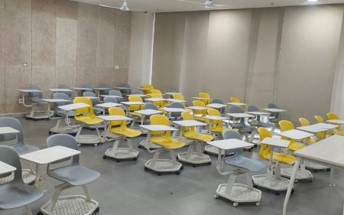
The University has 165 classrooms and 2 auditoriums. Its learning spaces are flexible and technology-equipped: mobile tablet-arm seating that can be rearranged for lectures or group work, air-conditioned rooms with movable furniture, tiered halls with display screens, and round-table rooms built for discussion. These spaces support active, collaborative teaching as well as conventional lectures.
Image 1: Stage and national flag at the Republic Day programme (January 26, 2025).
Central Library and Learning Resources
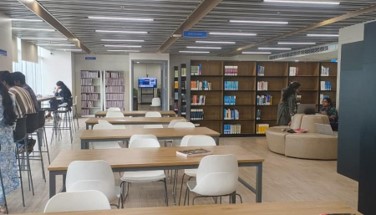
The Central Library is the University’s Digital Learning & Resource Centre, serving students, faculty and researchers in engineering and sciences, management and liberal arts. It is located on the 12th floor of the C.V. Raman Block, is fully air-conditioned, and is automated with RFID gates and self-service kiosks on Koha library software. It provides an online catalogue (OPAC), a mobile app (mLibrary), remote access to online journals, EBSCO and other databases, and access to NPTEL video courses, e-PG Pathshala and SWAYAM. Holdings include 459,458 e-books (JSTOR and DELNET), 54,536 e-journals, e-magazines and e-newspapers, 35,835 print volumes and 881 CD/DVD-ROM resources.
Image 2: Students in traditional dress at the state formation day programme.
TEACHING QUALITY
Faculty Development at the Teaching Learning Centre
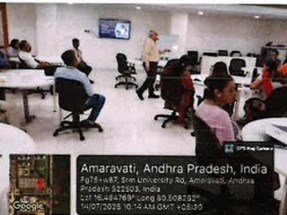
The Teaching Learning Centre (TLC) supports faculty in outcome-based curriculum design, pedagogy and the use of digital and AI tools in teaching, and has an E-Learning Studio for producing educational content. Between July and November 2025 it ran seven programmes with 205 recorded participations: an Outcome-Based Education training programme (9 July), a 5-day programme on teaching-learning methods for newly joined faculty (14-18 July), a session on Google Classroom and ChatGPT (30 July), course curation with flipped and blended learning (3 September), a workshop on course preparation (22 September), a session on innovating the classroom with blockchain technology (24 October), and a hands-on workshop on AI-powered teaching with Khanmigo (1 November).
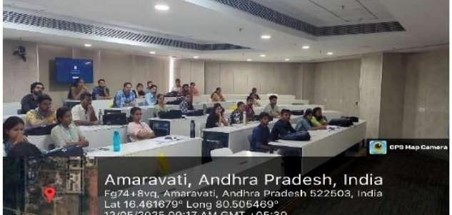
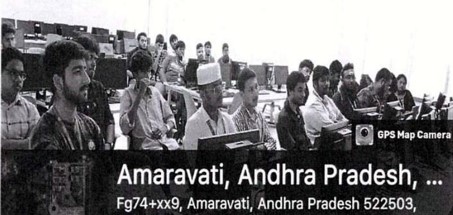
Image 3: Training session for newly joined faculty (14 July 2025)
Qualitative Research Workshop for Faculty (8-16 February 2025)
An online faculty development workshop on “Qualitative Research: Principles, Methods and Practice” trained faculty and doctoral scholars to design, conduct, analyse and publish qualitative research, with hands-on exercises, a research-plan draft and peer feedback. It had 64 participants, most from other institutions.
EXPERT TEACHING
Co-teaching Sessions with Outside Experts
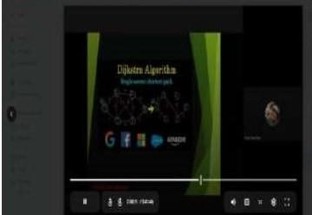
Co-teaching brings an outside expert into a core course. Visiting faculty from an NIT co-taught two sessions on shortest-path algorithms (Dijkstra, Bellman-Ford and Floyd-Warshall) in Data Structures on 19-20 April 2025, with interactive problem solving, for 1,267 participants including 1,264 undergraduates. On 26 April 2025 industry experts co-taught Unit 4 of the Artificial Intelligence course on search and planning algorithms for 342 participants, and on 29-30 March 2025 a two-session online workshop for third-year B.Tech students covered recommender systems and bias in recommendations, with 311 participants.
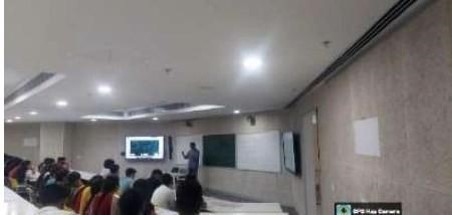
Image 4: Co-teaching session on Dijkstra’s algorithm (19 April 2025)
University Distinguished Lecture #21 (7 April 2025)
The 21st University Distinguished Lecture, “Six Blind Men of Indostan: Theory and Applications of Distributed Inference”, was delivered by a professor from Syracuse University, USA, on how sensors with a limited view can jointly inform decisions in security, surveillance and disease detection. 200 participants attended. In January 2025 a visiting professor emeritus from a US university also gave three guest lectures on big data and data analytics and their applications in mathematics (28 participants).
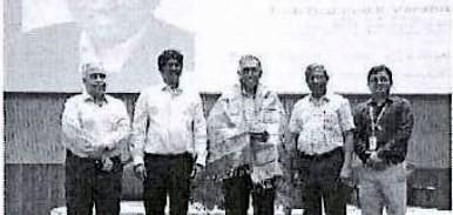
Image 5: The speaker with university faculty at Distinguished Lecture #21 (7 April 2025)
ACCESS AND OUTREACH
Widening Access: Outreach, Foundation School and Skills
Chetna 2.0: Awakening Mathematical Minds (26-28 May 2025)
A three-day summer programme on campus for final-year BSc/BA mathematics students, taught by the University’s own faculty, with the stated aim of motivating them to pursue an MSc in Mathematics. 84 participants attended.
Image 6: Chetna 2.0 summer programme (May 2025)
Annual Foundation School II (12 May – 7 June 2025)
A month-long foundation school run with the National Centre for Mathematics to bring students from varied backgrounds to a common level in Algebra, Analysis and Topology before advanced instructional schools. 38 of the 76 participants came from outside the University.
Image 7: Annual Foundation School II (May 2025)
Skill Development and Doctoral Awareness
A six-day hands-on 3D CAD Modeling course (17-22 March 2025) covered industry-standard software, creating 3D models from 2D drawings and core modelling techniques, to build job-relevant skills for 36 students. A webinar on 19 March 2025, “Everything You Need to Know About Ph.D. in CSE at SRM University-AP”, explained the doctoral journey from application to completion, and half of its 40 attendees were external, which widens access to doctoral education.
Image 8: 3D CAD Modeling training (March 2025)
CULTURAL AND ACADEMIC EVENTS
Literature Festival and World Statistics Day
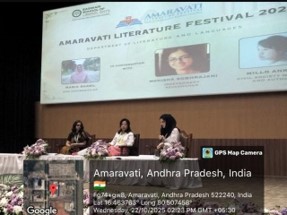
Amaravati Literature Festival 2025 (22 October 2025), hosted by the Department of Literature and Languages under the theme “The Asian Century”, brought together writers, scholars and students for dialogue on literature, culture and society. World Statistics Day 2025 (31 October 2025), hosted by the Department of Mathematics with the Ministry of Statistics and Programme Implementation, marked the UN theme “Quality Statistics and Data for Everyone” with sessions on data reliability, visualisation ethics and statistical literacy. A student-led Campus Clean Drive on 22 January 2025 spread awareness of hygiene and sanitation, and the Pre-Infinitius activities (29 January to 2 February 2025) recorded about 2,150 participations.
Image 9: Amaravati Literature Festival 2025 (22 October 2025)
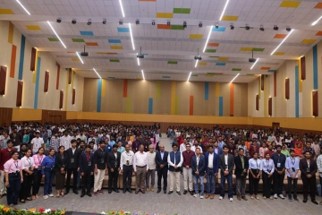
Image 10: World Statistics Day 2025 (31 October 2025)
RESEARCH
Education Research Published in 2025
Researchers at SRM University-AP published seven SDG 4 papers in 2025 on technology in teaching, student wellbeing and diversity, explainable AI in education, educational data analytics and predicting student performance. Topics include the mental health of young adults in higher education in Tier-1 cities of India, technology-empowered language education, factors affecting student diversity in higher education, blockchain and AI for educational data analytics, a data mining and fuzzy logic model for improving instructional quality, and a hybrid random forest and logistic regression model for predicting student academic performance.
REPORT
SDG 4 Sustainability Report
The annual SDG 4 report for January to December 2025 is available for all stakeholders.