LEARNING FROM LAND AND INDUSTRY
Lectures and Field Visits
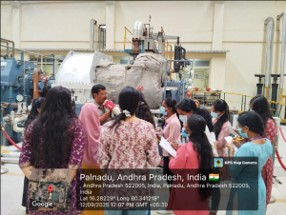
Jindal Urban Waste Management Ltd (September 12, 2025)
Students travelled to the integrated municipal solid-waste and waste-to-energy plant at Kondaveedu village, Guntur district. The visit covered contaminant generation and remediation, pollution-control and zero-discharge practices, and the regulatory standards for sustainable land and waste management, grounding classroom ideas on the circular economy and leachate treatment in a working facility. A total of 132 people took part.
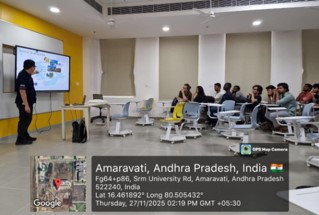
Towards Greener Phenolic Resins (November 27, 2025)
Dr Seng Hua Lee of the Department of Wood Industry, Universiti Teknologi MARA (Pahang Branch), Malaysia, spoke in the Department of Environmental Science and Engineering’s Guest Expert Lecture Series on replacing phenol with renewable precursors in sustainable wood adhesives. Fifteen PhD scholars, five faculty members and sixteen postgraduate students attended (57 participants in the register). The session linked laboratory materials research to forest and wood-industry questions and opened a channel for collaboration with the Malaysian institution.
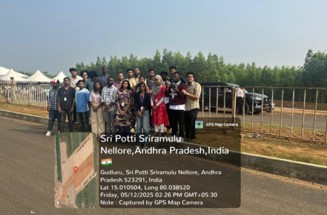
EIA Public Hearing, Nellore (December 05, 2025)
Students attended a live public hearing, a statutory part of an Environmental Impact Assessment, near the Ramayapatnam Port in SPSR Nellore District, seeing how baseline assessment, mitigation planning and stakeholder consultation shape decisions on large-scale industrial land use. Sixty-two people took part.
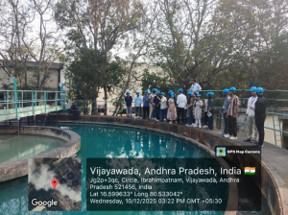
APGENCO Thermal Power Station (December 10, 2025)
At the Dr Narla Tatarao Thermal Power Station, Ibrahimpatnam, students examined air, water and solid-waste pollution-control technologies, ash utilisation and the rules on emissions and environmental compliance, giving a concrete picture of how industrial land use is regulated to limit ecological harm. Sixty-two people took part.
The university’s Disaster Management Plan lists upkeep of green spaces among its prevention measures, linking campus greenery to safety and resilience.