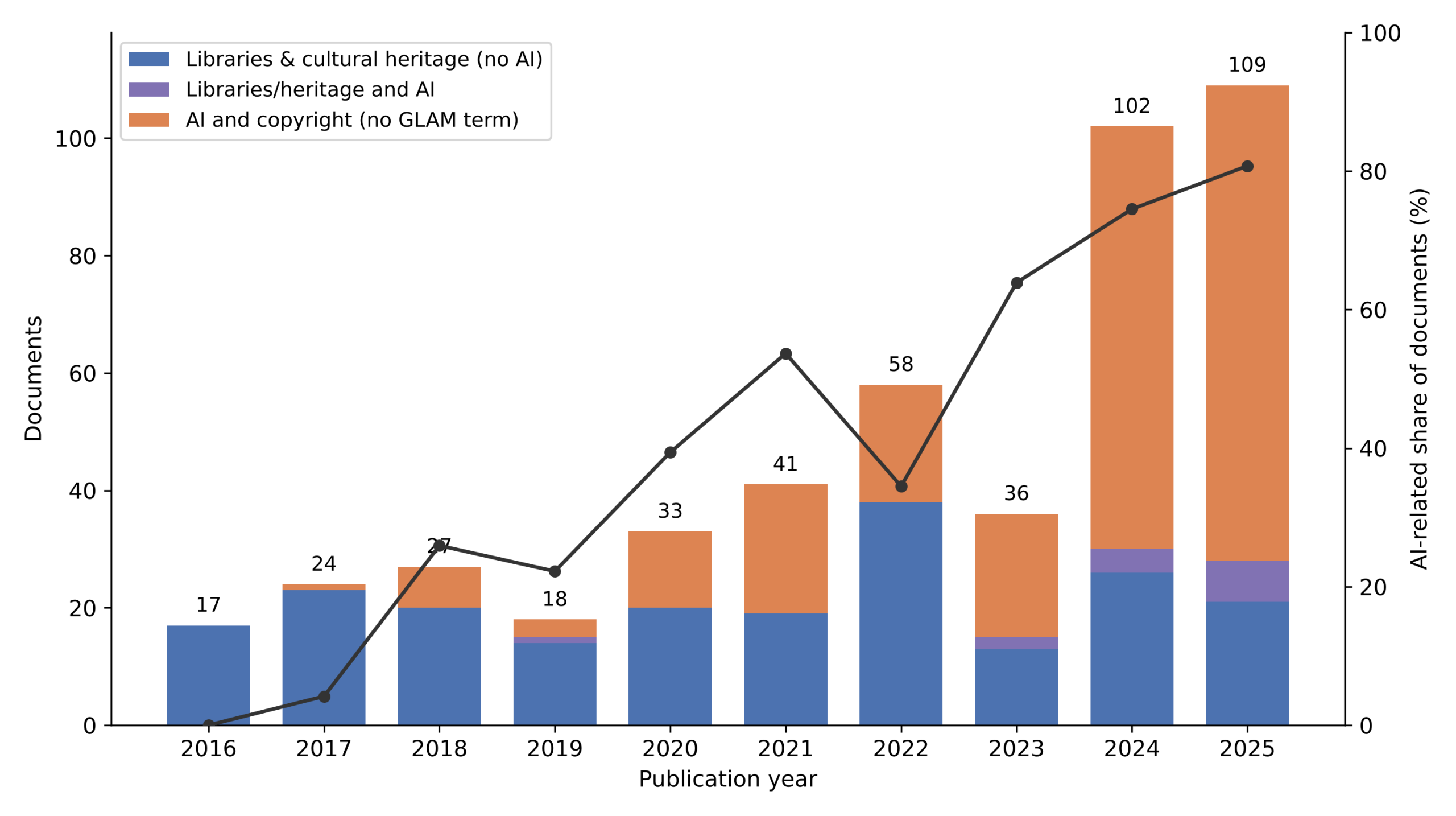
 Libraries, archives, and museums hold books, manuscripts, photographs, and cultural records that depend on copyright law whenever institutions scan and share them online. At the same time, generative AI systems train on large volumes of text and images, drawing on the exact kind of digitised material that heritage institutions curate. Examining 465 research papers published over the past decade, Dr Janakiraman Amirthalingam at SRM AP tracked how legal scholarship has responded to these shifts. His analysis shows that while research on AI and copyright has surged since late 2022, making up three in four recent studies, only 3% connect those legal debates back to libraries and cultural institutions. Because court rulings and laws on AI training data and machine-generated outputs directly shape how public knowledge is preserved and shared, cultural stewards and AI policymakers need to bridge this gap.
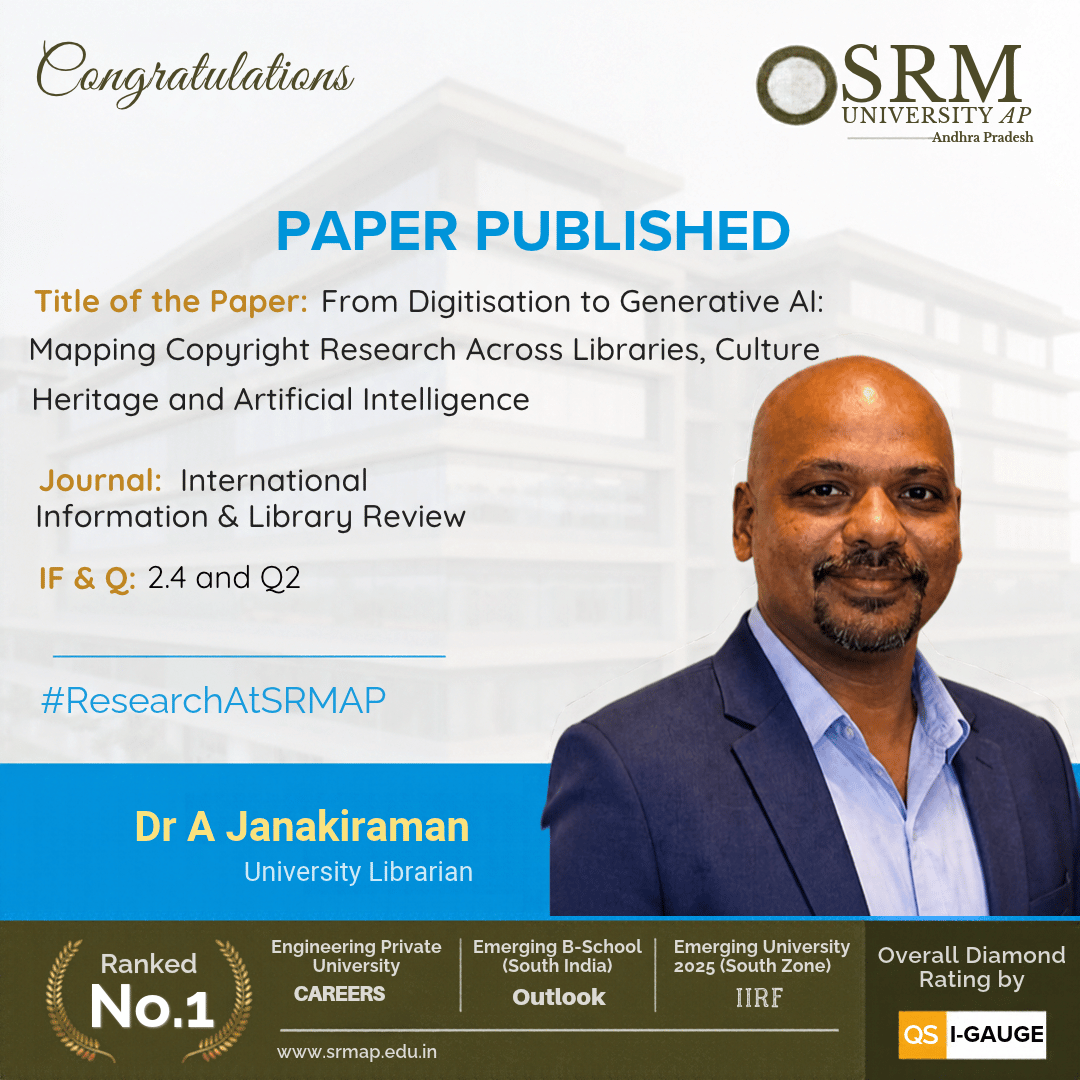
In a study published in International Information & Library Review, a Q2 journal with an impact factor of 2.4 published by Routledge, Dr Janakiraman Amirthalingam, University Librarian at SRM University-AP, investigated these trends alongside international collaborators. His co-authors include Dr Sujin Butdisuwan from the Faculty of Education at Shinawatra University, Thailand, and INTI International University and Colleges, Malaysia, as well as Dr Arpit Sachan and Mr Arpit Vyas from the Department of Library at Bennett University, Greater Noida, India. Their paper is titled “From Digitisation to Generative AI: Mapping Copyright Research Across Libraries, Cultural Heritage and Artificial Intelligence“.
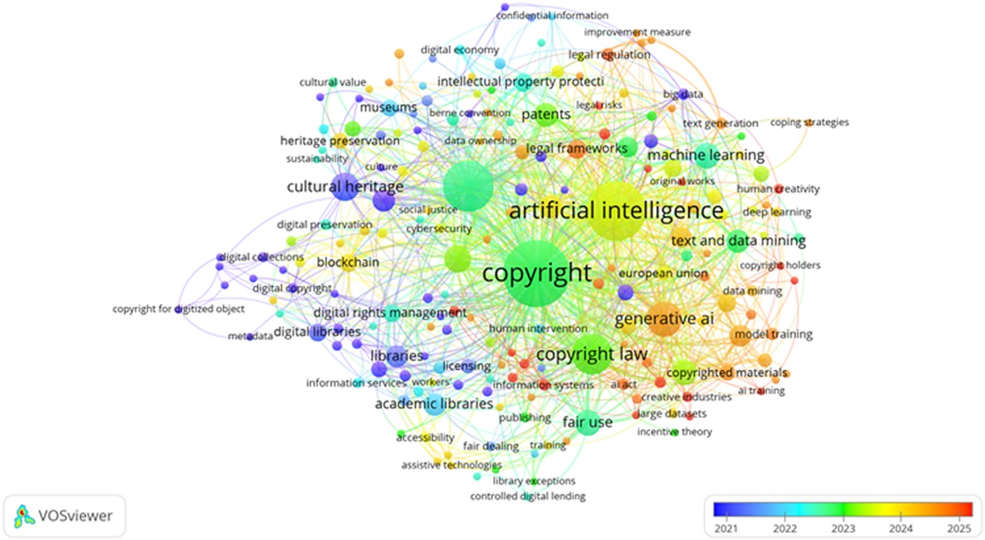
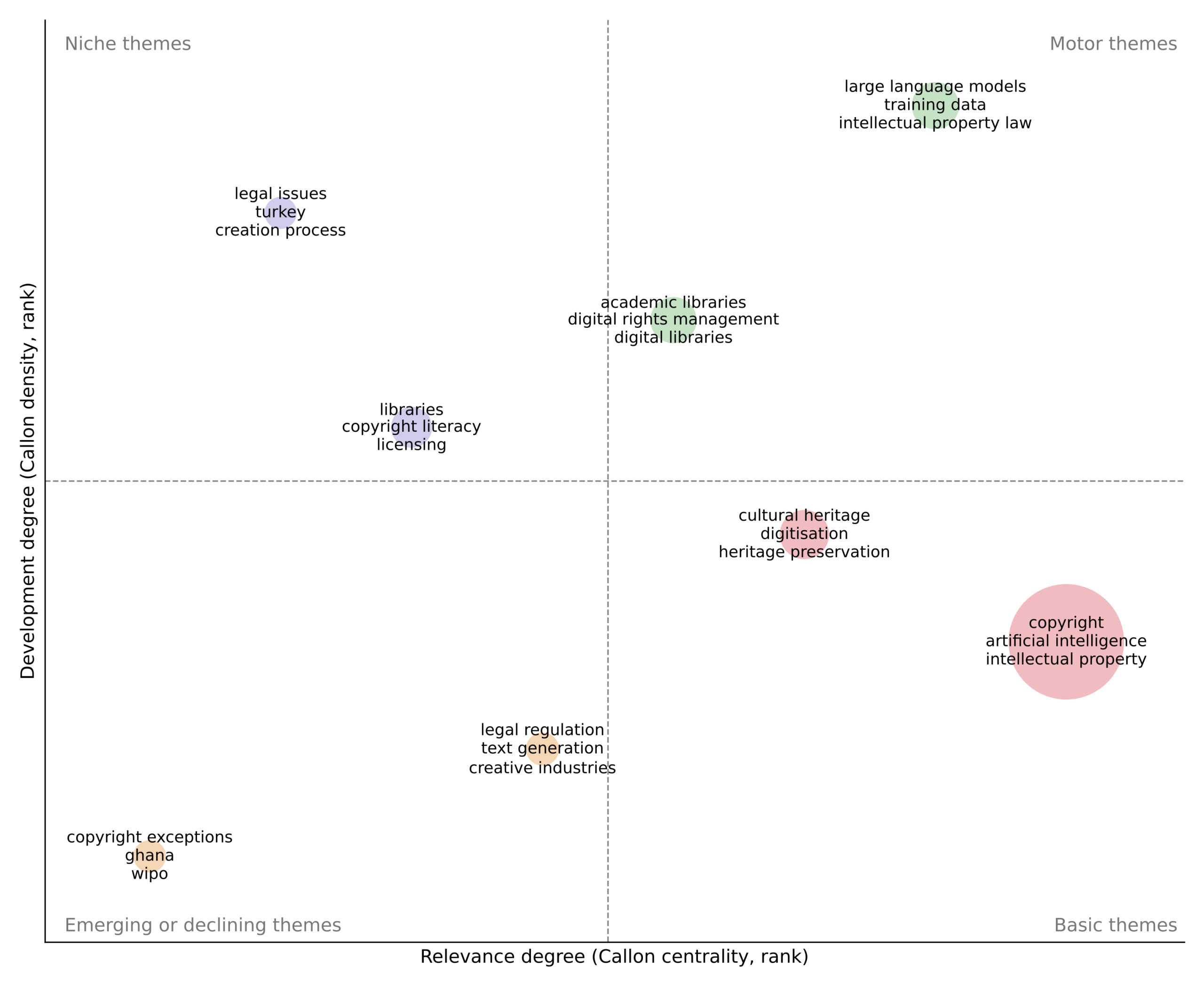
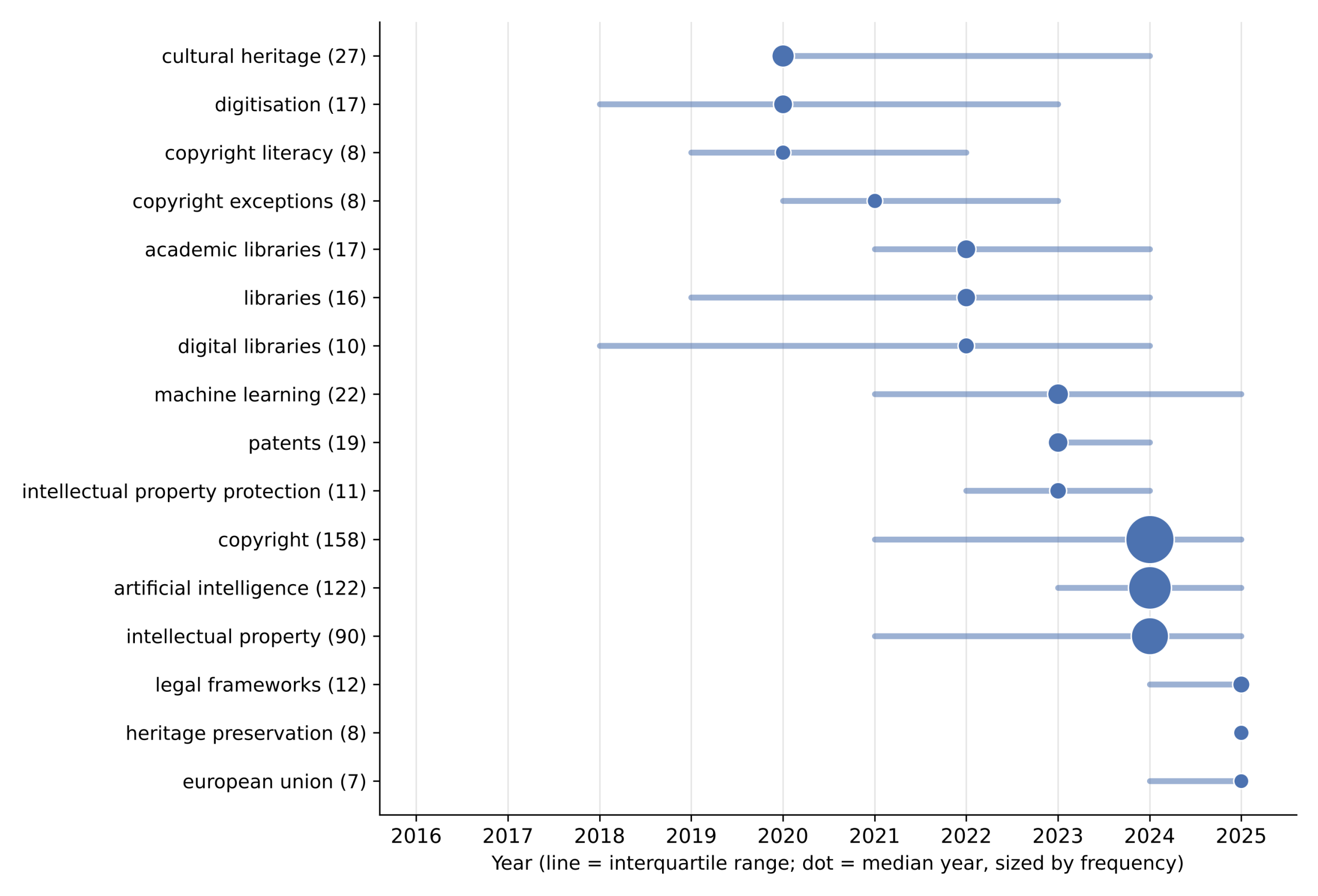
Copyright shapes how libraries and cultural heritage institutions digitize, preserve and provide access to their collections, and generative artificial intelligence (AI) has raised new questions about the use of protected works as training data and the status of machine-generated outputs. This study maps copyright research across libraries, cultural heritage and AI published between 2016 and 2025. Scopus records were screened following the PRISMA 2020 framework, yielding 465 publications, each coded into one of three thematic strands: libraries and cultural heritage; AI and copyright; or both. Using performance indicators, Bradford’s and Lotka’s laws, trend-topic analysis, a thematic map and keyword co-occurrence mapping, the study finds that research output grew by 22.9% a year, with 45.4% of documents published in 2024-2025 alone. The share of AI-related documents rose from 14.0% in 2016-2019 to 75.7% in 2023-2025, yet only 14 documents (3.0%) addressed libraries or cultural heritage together with AI. International co-authorship is limited (15.9%), and library themes (digitization, copyright literacy, digital libraries) and AI themes (generative AI, large language models, training data, authorship) remain largely separate, connected mainly through general legal terms. The findings show that the fast-growing AI-copyright literature has so far engaged only marginally with the institutions that hold and curate cultural collections.
The findings point to practical steps for cultural institutions, educators, and lawmakers. Libraries and museums can record copyright status and licence terms in machine-readable formats so researchers can run lawful text and data mining while institutions block unwanted commercial AI training. Institutions also need clear policies on staff AI use and third-party data mining, updated copyright training for librarians, students, and faculty, and active participation in AI policy consultations so public access to knowledge is protected alongside creators’ rights. These measures matter particularly in countries such as India, where institutional rights-clearance capacity is often limited, and where lawmakers benefit from aligning preservation exceptions with new AI rules. Looking ahead, Dr Janakiraman Amirthalingam plans to conduct empirical surveys of how Indian academic libraries license, mine, and protect their collections, build practical frameworks for machine-readable rights metadata and text-and-data-mining policies, compare copyright rules across India and the Global South, and design AI-aware copyright literacy programmes.
Read the full article here