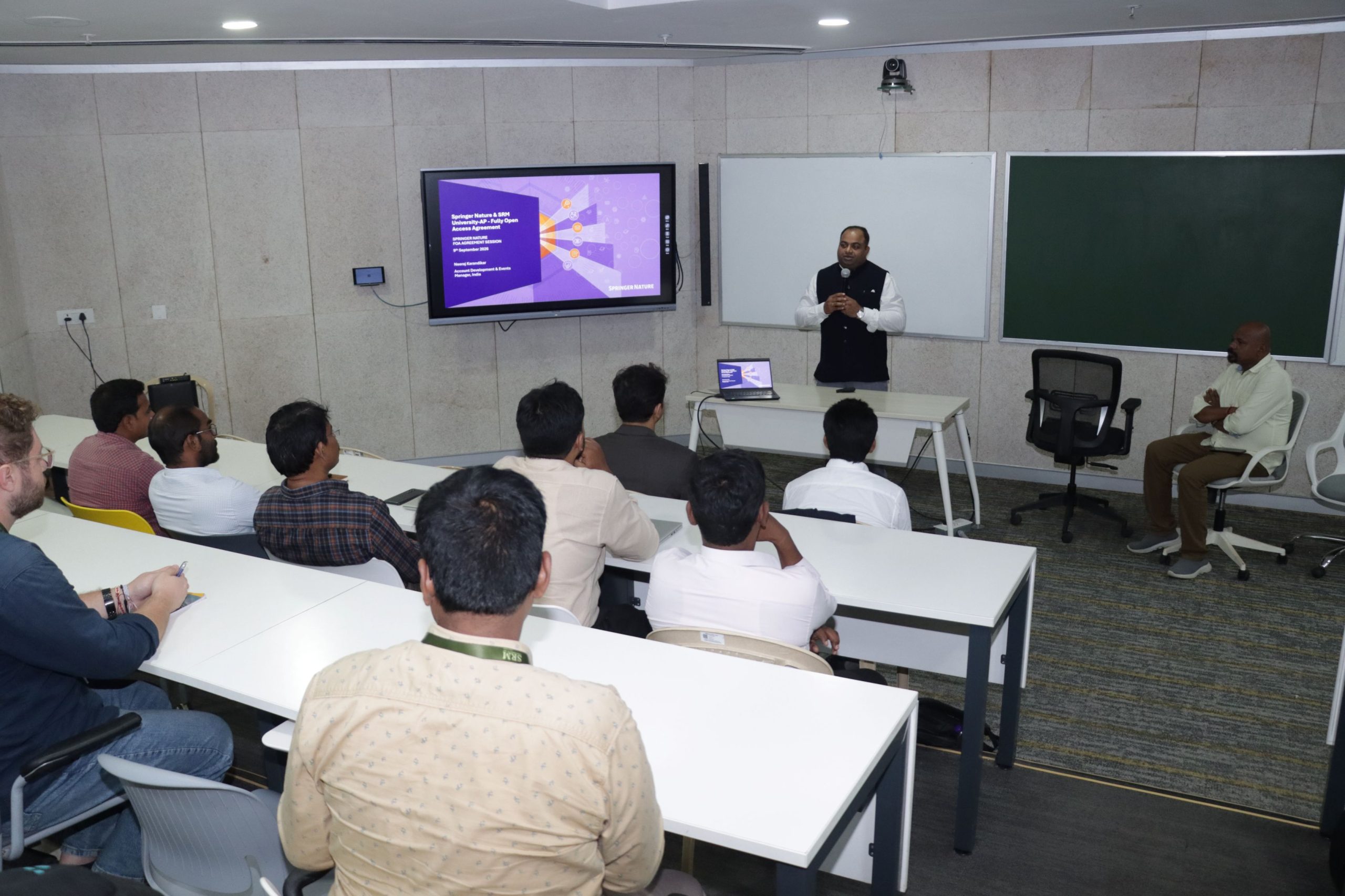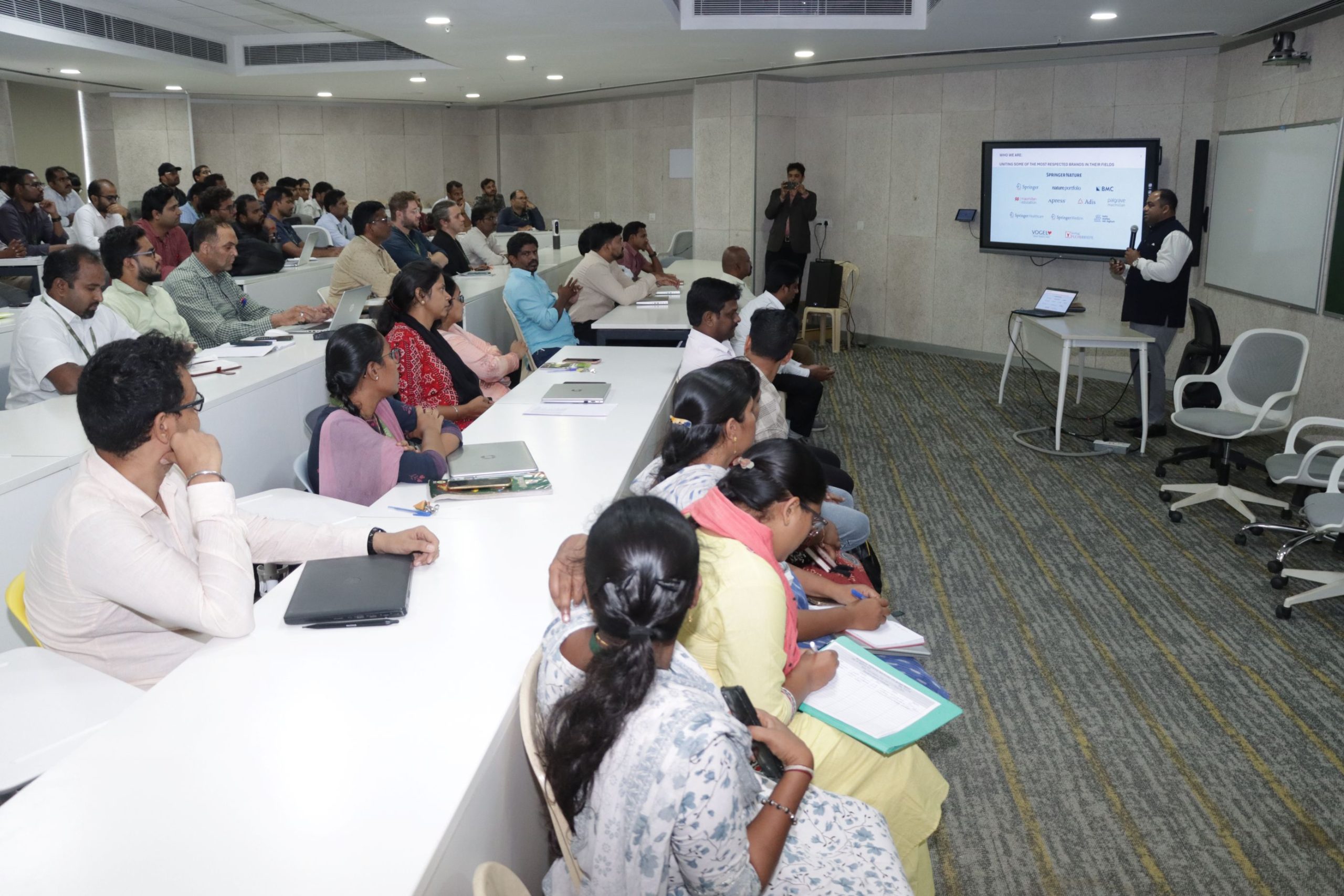

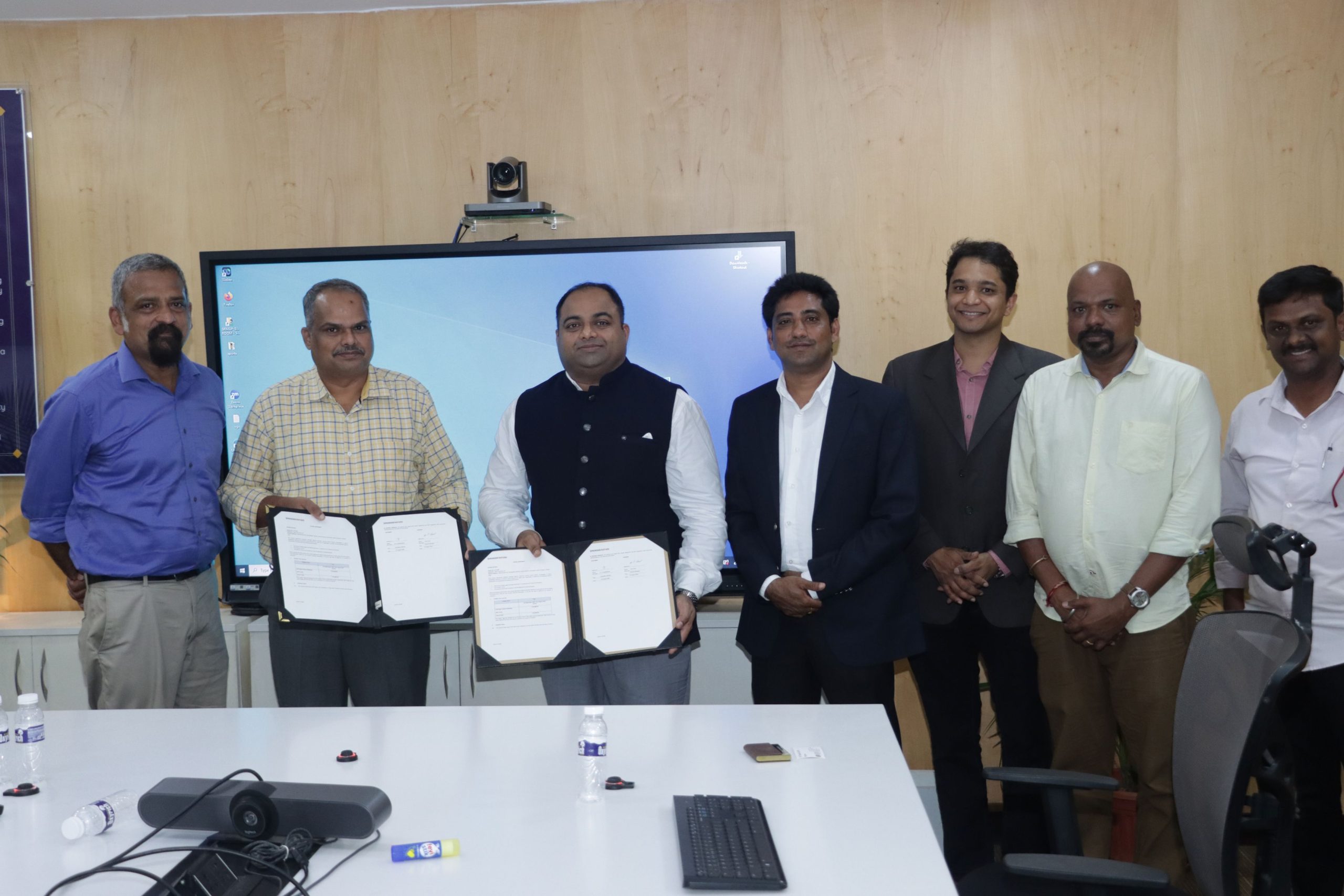
 In a move set to reshape how the university’s scholarship reaches the world, SRM University-AP, Amaravati recently welcomed a delegation from Springer Nature to formally walk the campus community through a newly inked Open Access agreement, one that promises to widen the reach of research produced within its departments while removing a financial barrier that has historically stood between scholars and global readership. The delegation signed an MoU, signed by Dr Vinayak Kalluri, Registrar of SRM University-AP, for coverage of Article Processing Charge on behalf of its authors, by the University
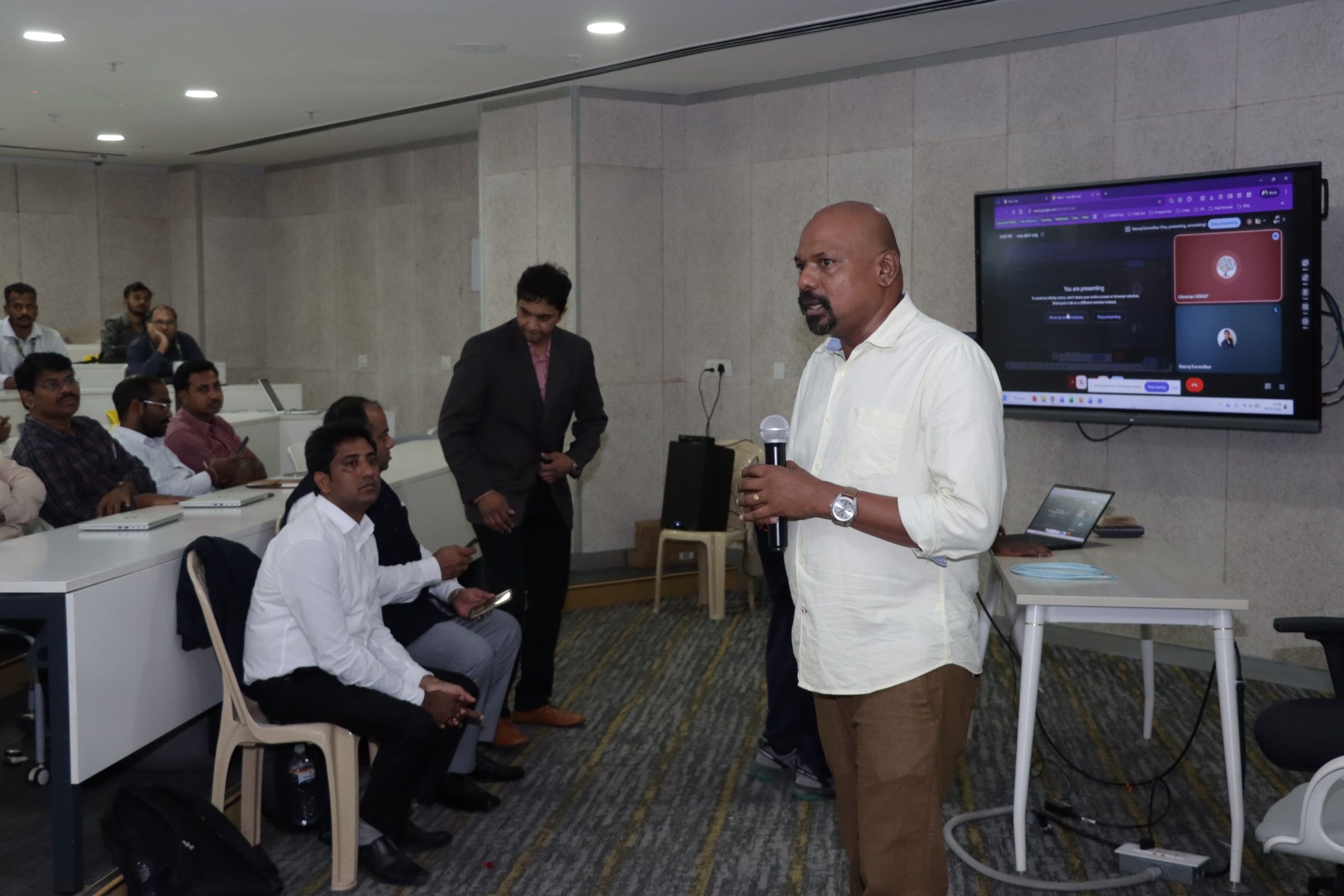
The session, hosted by the University Central Library, brought together three senior representatives from Springer Nature: Mr Neeraj Karandikar, Account Development and Events Manager; Mr Rajneesh Appayya, Licensing Manager specialising in Academic and Institutional partnerships; and Mr Morla Kamakshaiah, Account Manager. The University Librarian opened proceedings, welcoming the visiting delegation and setting the tone for an afternoon that balanced institutional history with practical guidance for the university’s researchers.
Central to the agreement is the university’s decision to cover the Article Processing Charge on behalf of its authors, a commitment that signals SRM AP‘s intent to make open publishing not merely an aspiration but a lived reality for every scholar within its fold. It is a quiet but telling gesture of the institution’s belief that the value of research lies not in where it sits behind a paywall, but in how widely and freely it can be read, cited and built upon.
Mr Rajneesh Appayya opened by recalling Springer’s own history, nearly one hundred and eighty years in the making and now operating as Springer Nature a decade after its merger, before describing the agreement with SRM AP as a Golden Open Access arrangement, one that makes published work immediately and freely accessible, with citation counts known to rise by close to one and a half times compared with paywalled work. The agreement spans a wide family of imprints, among them BMC, Springer, Scientific Reports and the Nature Partner Journals, giving SRM AP researchers considerable room to place their work.
Mr Neeraj Karandikar then walked attendees through the author journey from submission to publication, reassuring the room that peer review and every editorial step ahead of acceptance remain entirely unaffected by the new arrangement, which only takes effect once a manuscript has been formally accepted. He also offered practical guidance on distinguishing editorial acceptance from the subsequent approval workflow, and on identifying which journals fall under the fully open access agreement.
The session closed with an open floor for questions, as researchers and faculty members sought clarity on specific journals, disciplines and publication timelines relevant to their own work.
For SRM University-AP, the agreement marks another step in a broader institutional ambition, one that seeks to ensure the knowledge generated within its laboratories and departments does not remain confined by geography or by the economics of academic publishing. As the university continues to expand its research footprint across engineering, sciences and the humanities, partnerships of this kind are less an administrative formality than a statement of intent: that scholarship produced at SRM AP is meant to travel, to be read, and to shape conversations well beyond the boundaries of its own campus.