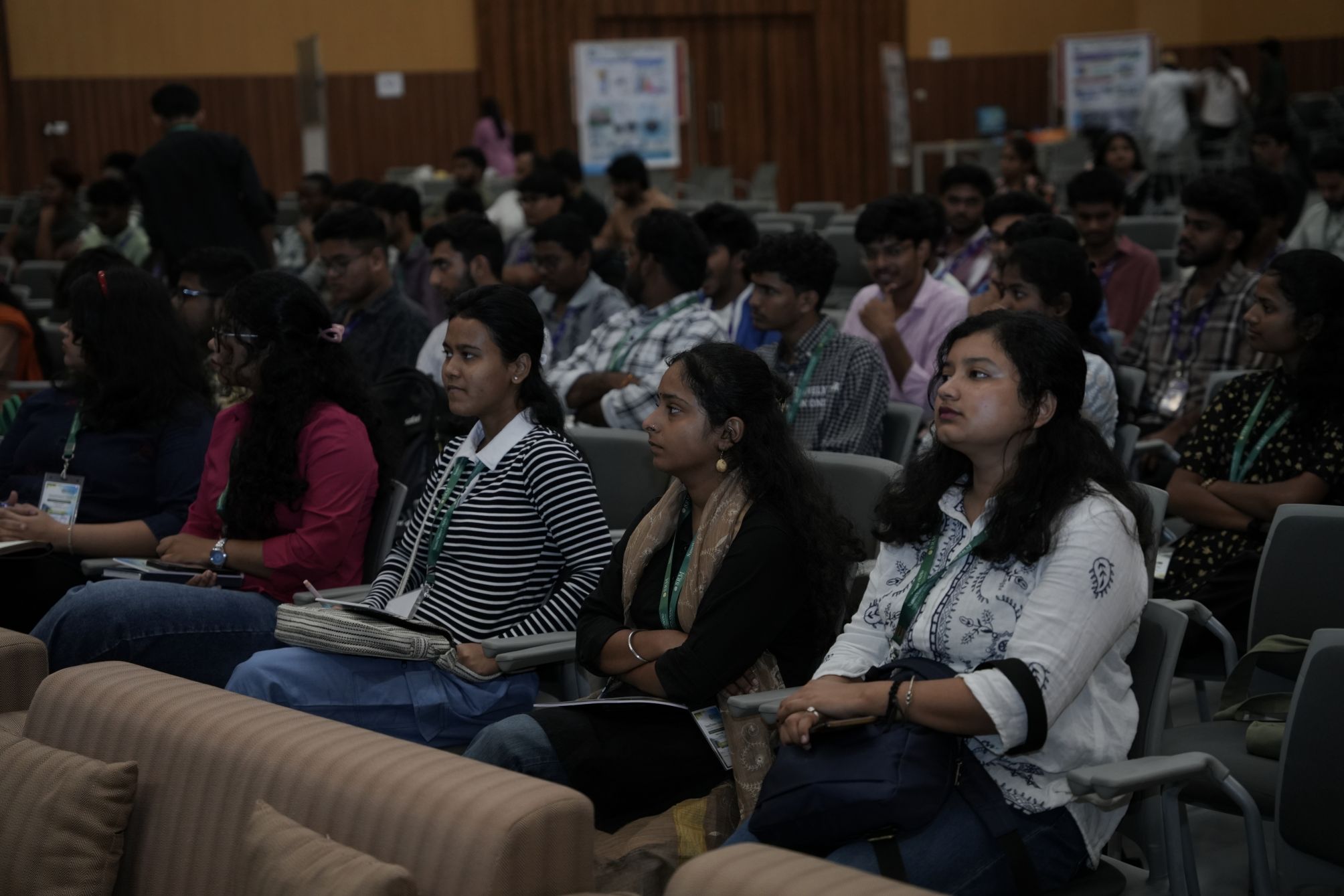
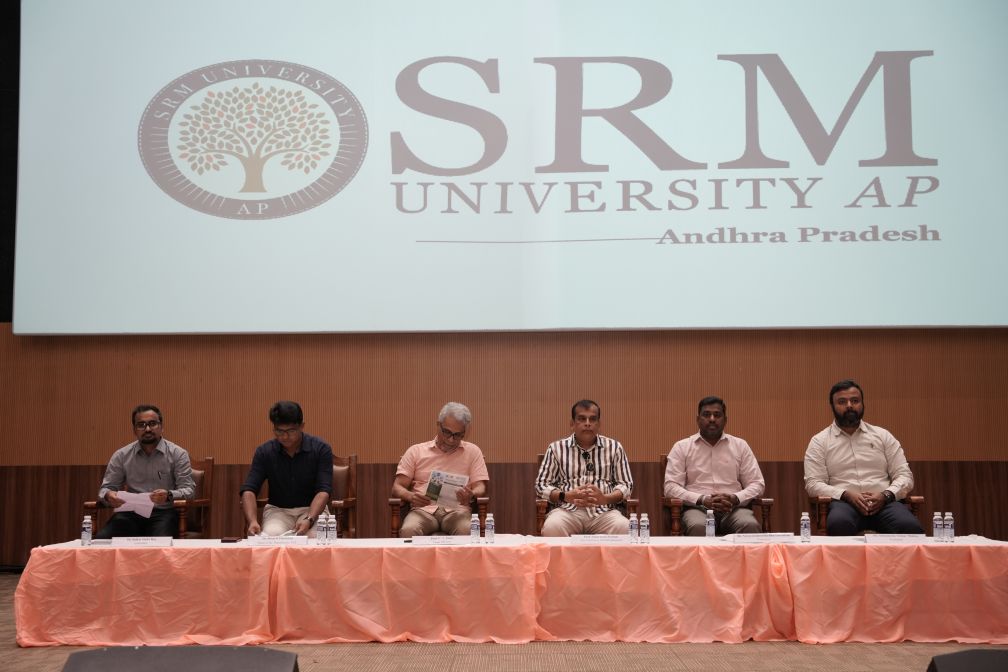
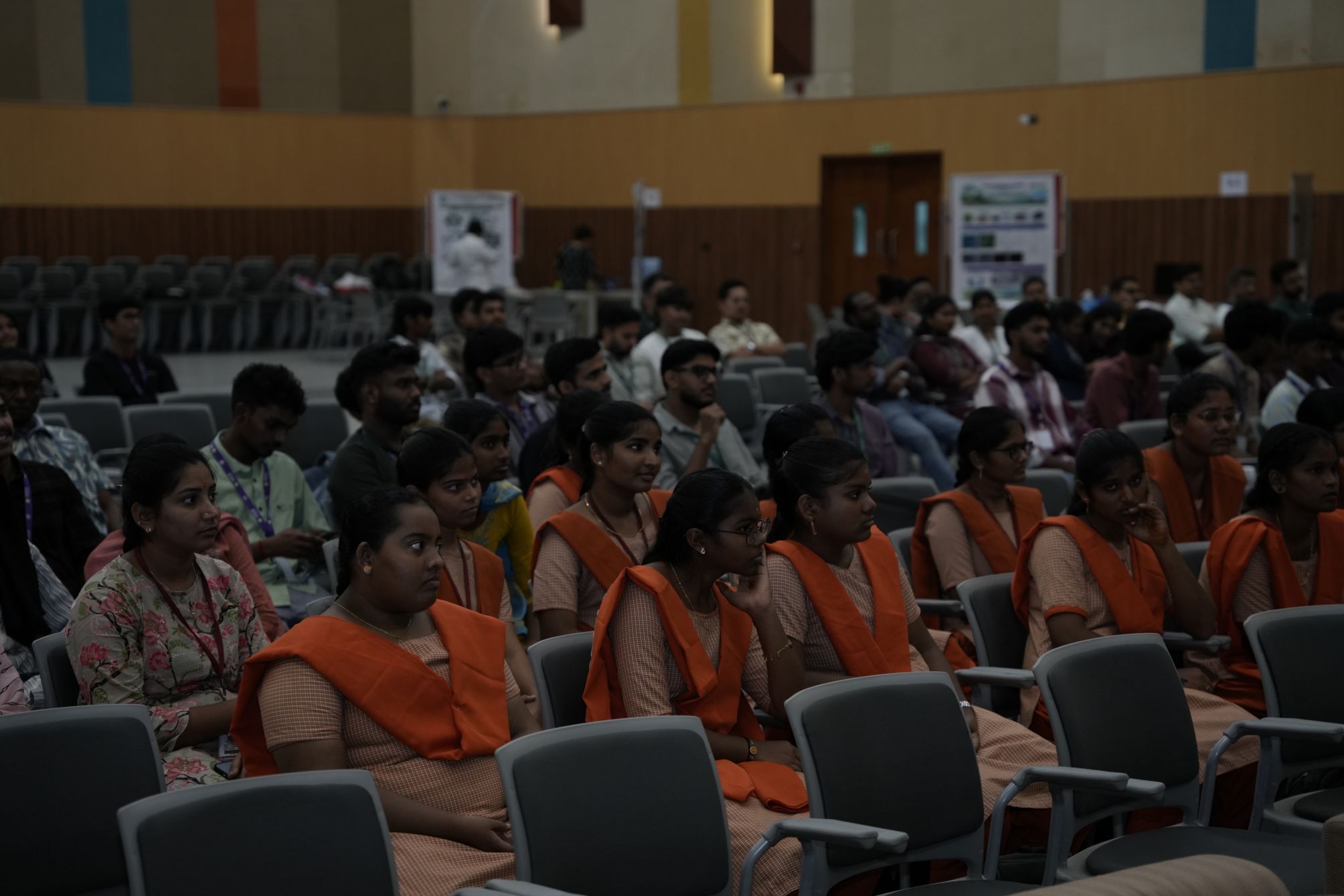
 Advancing interdisciplinary research aimed at solving global ecological challenges, the Department of Environmental Science and Engineering, School of Engineering and Sciences at SRM University–AP, organised the Nano2Nature (N2N) Research Bootcamp: Nano Solutions for Nature | Connecting Nanoscale Science to a Greener World on October 23, 2026. The day-long academic outreach initiative brought together undergraduate and postgraduate students across science and engineering streams to explore how atomic and molecular-scale innovations can address pressing environmental, water, and energy crises.
Delivering the welcome note, Dr Saikat Sinha Ray framed the central theme of the bootcamp, posing how the smallest length scales could offer solutions to large-scale environmental concerns. He emphasised that uniting diverse academic disciplines toward the shared goal of ecological protection remains essential for building sustainable technological frameworks.
In his address, Chief Guest Prof. Saravanan Pichiah highlighted the historic roots and economic potential of nanotechnology, noting Richard Feynman’s foundational role in questioning atomic-level manufacturing. Pointing to biological precedents like flagella as natural nanomotors, he underscored how advancements in quantum mechanics and materials science continue to drive practical solutions. He added that with the global nanomaterial market projected to reach USD 62.8 billion by 2031, young researchers face expanding career opportunities in clean technology and environmental remediation.
Elaborating on the fundamental science behind the field, Prof. C V Tomy explained how downsizing materials to the nanometer scale significantly alters their chemical and physical properties. He observed that while nanoscience has always existed in nature, modern nanotechnology provides the necessary tools to observe, build, and deploy high-performance materials across diverse industrial sectors. Adding to the discussion, Dr Shoji stressed the importance of bridging nanotechnology and nature, urging students to ask meaningful research questions that target the root causes of the global climate and resource crisis.
Beyond theoretical insights, the bootcamp offered practical exposure through hands-on wet-lab demonstrations, covering nanomaterial synthesis and characterisation, water quality testing, contaminant detection, and electrochemical analysis. Participants also toured the advanced analytical facilities at the Central Research Facility (CRF) and engaged in interactive quizzes testing core nano-environment concepts.
By providing immersive training at the intersection of environmental engineering and deep technology, SRM University–AP continues to strengthen its research-driven ecosystem, preparing the next generation of scientists to translate fundamental research into tangible societal value.