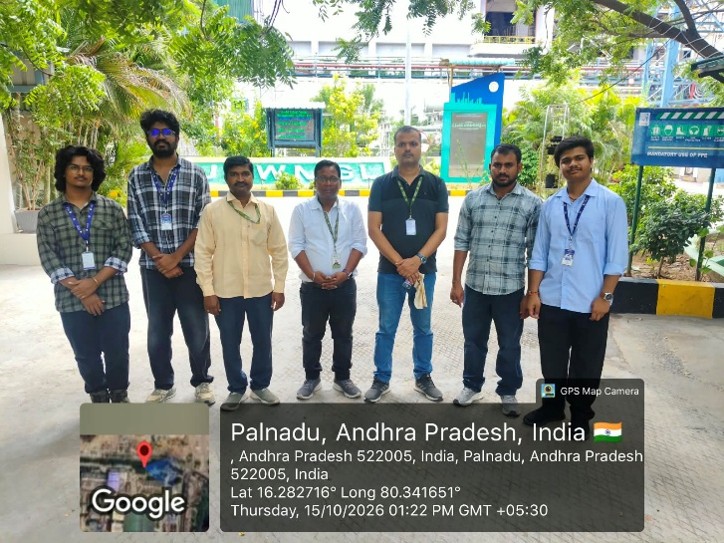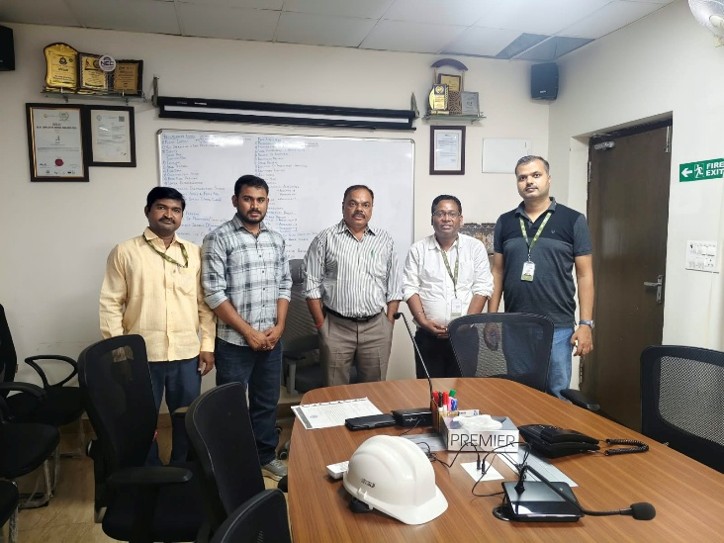

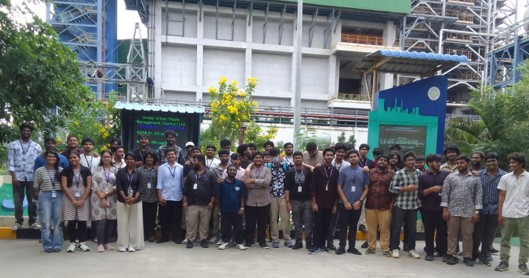
 The Department of Mechanical Engineering under the School of Engineering and Sciences at SRM University-AP organised an industrial visit for B.Tech students to the Jindal Waste-to-Energy Plant in Guntur on October 15, 2026. Guided by faculty members Dr Chandan Kumar and Dr Vipin Kumar, the visit offered students a practical look at municipal solid waste processing, large-scale energy recovery, and thermal conversion systems. The initiative connected classroom concepts in mechanical engineering with operational procedures in environmental facilities across the region.
During the plant tour, engineers and technical staff walked students through the complete operational cycle, from municipal waste reception and sorting to combustion and power generation. The group observed heavy material handling equipment, high-capacity boilers, heat transfer systems, and flue gas pollution control units designed to meet regulatory compliance standards. Technical discussions led by facility staff focused on process-residue management, preventive maintenance schedules, and industrial safety protocols. By observing large mechanical infrastructure in real-time operation, students gained practical understanding of how thermal engineering principles apply to modern environmental challenges.
The visit helped students bridge theoretical thermodynamics and machine design with real-world energy recovery solutions. Exposure to modern waste processing facilities equips young engineers to address global environmental demands, energy scarcity, and sustainable municipal infrastructure. This practical outing reflects SRM AP‘s mission to offer industry-aligned education that prepares students for global technical roles. By combining rigorous academic study with direct exposure to industrial infrastructure, the university continues to develop engineering graduates who can contribute to global green technology and sustainable development.