 Modern computer processors contain multiple cores that generate significant amounts of heat during operation. Because computational tasks are rarely distributed evenly across cores, processing loads produce localized hotspots where temperatures rise well above surrounding areas. Uncontrolled thermal concentrations lead to processor throttling, reduced operational reliability, and potential hardware damage over time. Addressing these thermal challenges, research from SRM University-AP evaluates liquid cooling systems that use microchannel heat sinks to remove heat from high-density processing units. By analysing flow patterns and structural designs under both uniform and concentrated heat conditions, the study provides specific configuration guidelines to protect high-performance computing hardware.
In a study published in Scientific Reports, a Q1 journal with an impact factor of 4.9 published by Nature Portfolio, Dr Lakshmi Sirisha Maganti, Associate Professor in the Department of Mechanical Engineering at SRM University-AP, led the research alongside PhD Scholars Mr Siva Krishna Karnati, Mr Manikanta Bandlamudi, and Mr Mathiyazhagan S. Their published paper is titled “Experimental Evaluation of the Thermal Performance of a Parallel Microchannel Cooling System for Thermal Management of Multicore Processors Under Low Computational Loads”.
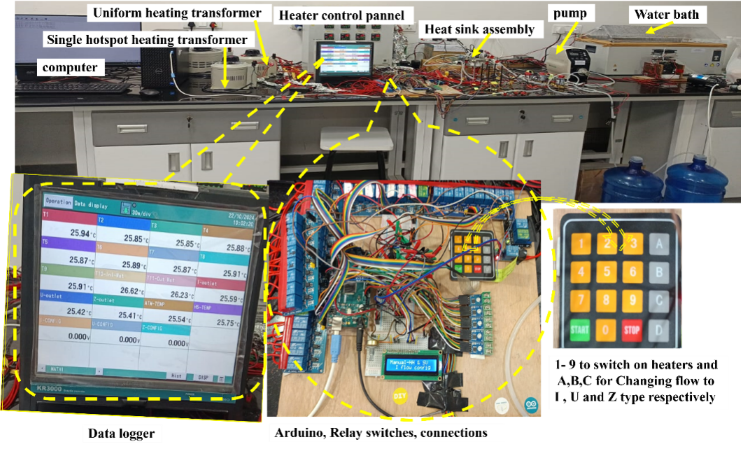
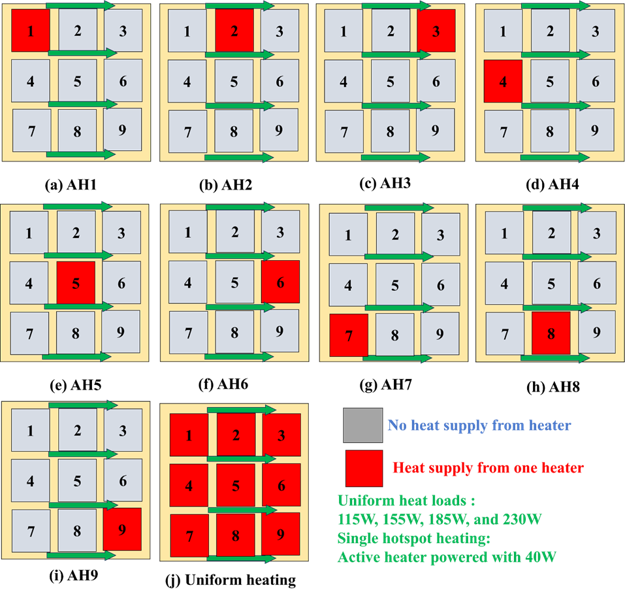
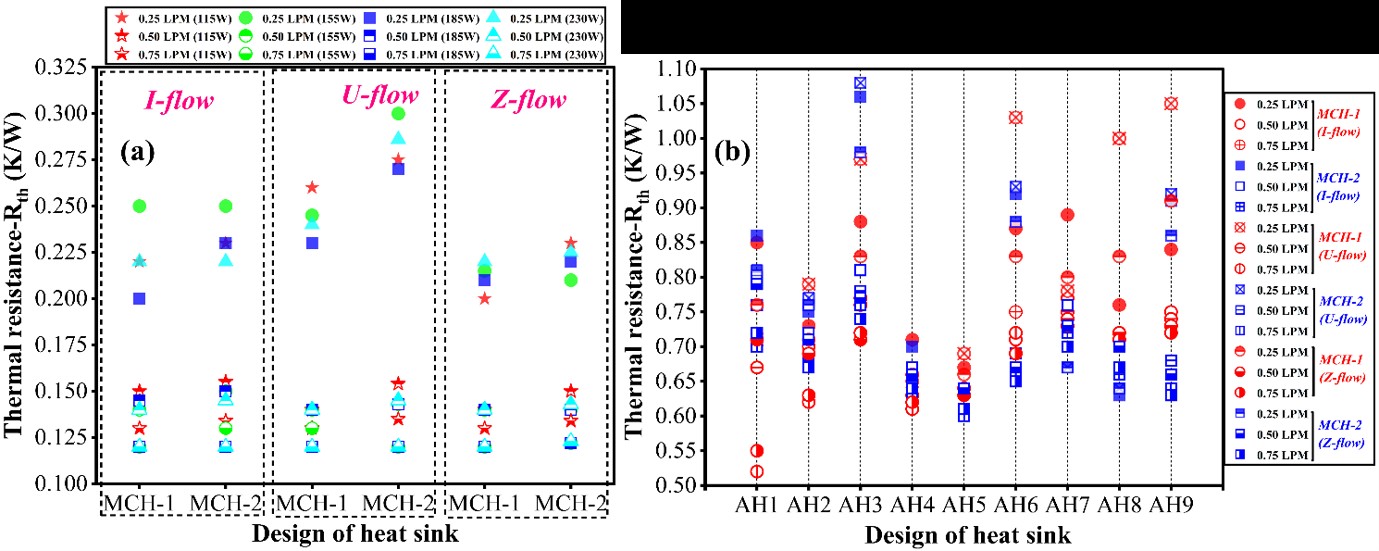
Thermal management of multicore microprocessors is challenging due to dynamic and non-uniform heat generation, which can result in localized hotspots. This study experimentally investigates two microchannel heat sinks (MCH-1 and MCH-2) with I-, U-, and Z-type flow configurations under uniform and single-hotspot heating conditions. Experiments were conducted at flow rates of 0.25, 0.50, and 0.75 LPM. Under uniform heating, MCH-2 with Z-type flow demonstrated superior thermal performance, achieving a minimum thermal resistance of 0.12 K/W and a maximum heat transfer coefficient of 4173 W/m²K at 0.75 LPM. Under non-uniform heating, MCH-1 performed better for hotspots located near the outlet header, while MCH-2 was more effective for hotspots near the inlet header. The findings provide practical guidelines for selecting microchannel heat sink configurations for efficient thermal management of next-generation multicore processors.
The experimental outcomes offer direct application in the thermal design of high-performance processors, data centers, and high-heat electronic systems. By optimising microchannel configurations to target specific hotspot locations, these liquid cooling designs lower thermal resistance, improve energy efficiency, and extend the operational lifespan of electronic hardware. Looking ahead, future research directions will focus on developing scalable, energy-efficient cooling architectures specifically tailored for large-scale data center infrastructure.
Read the full article here