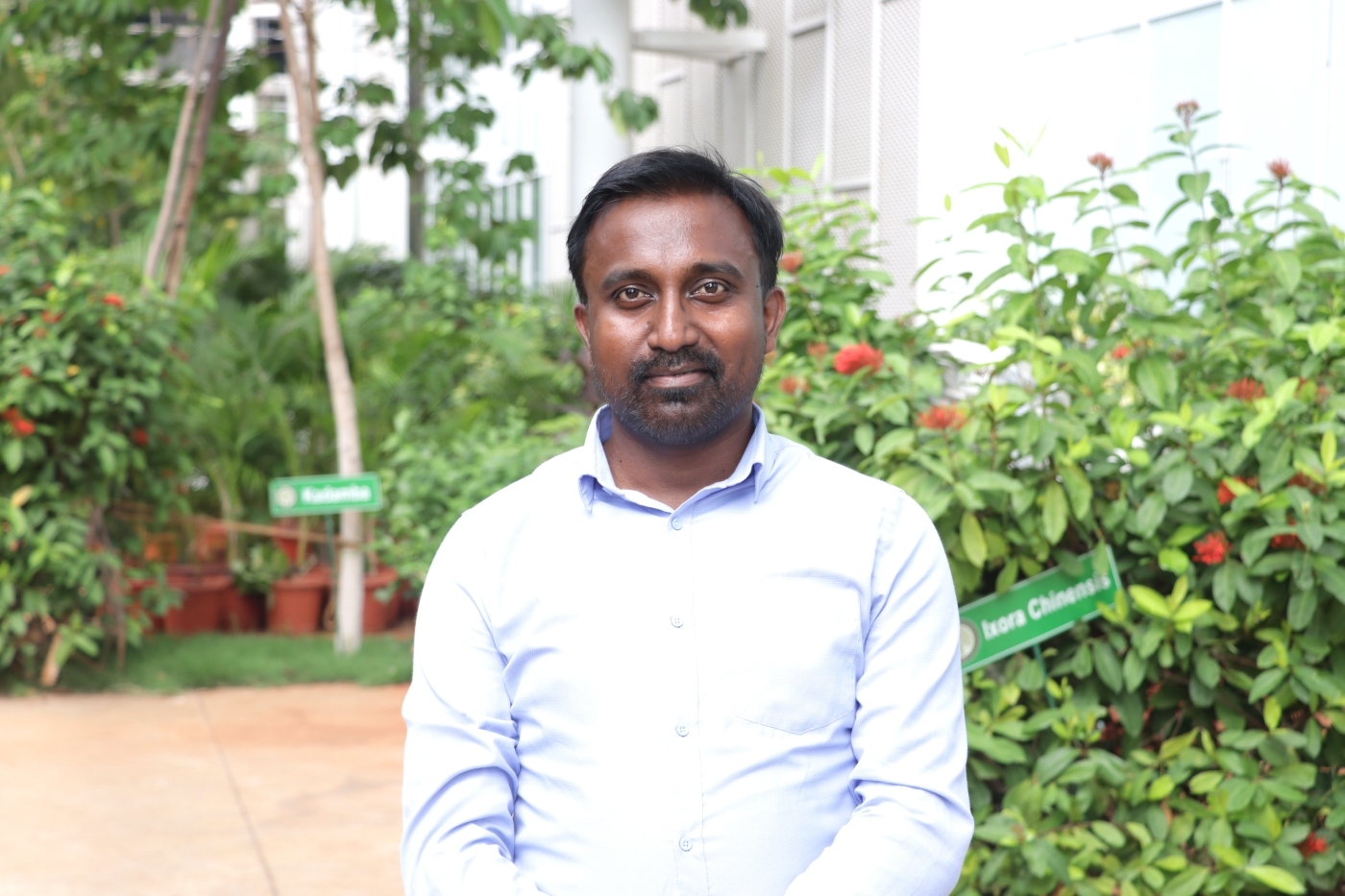

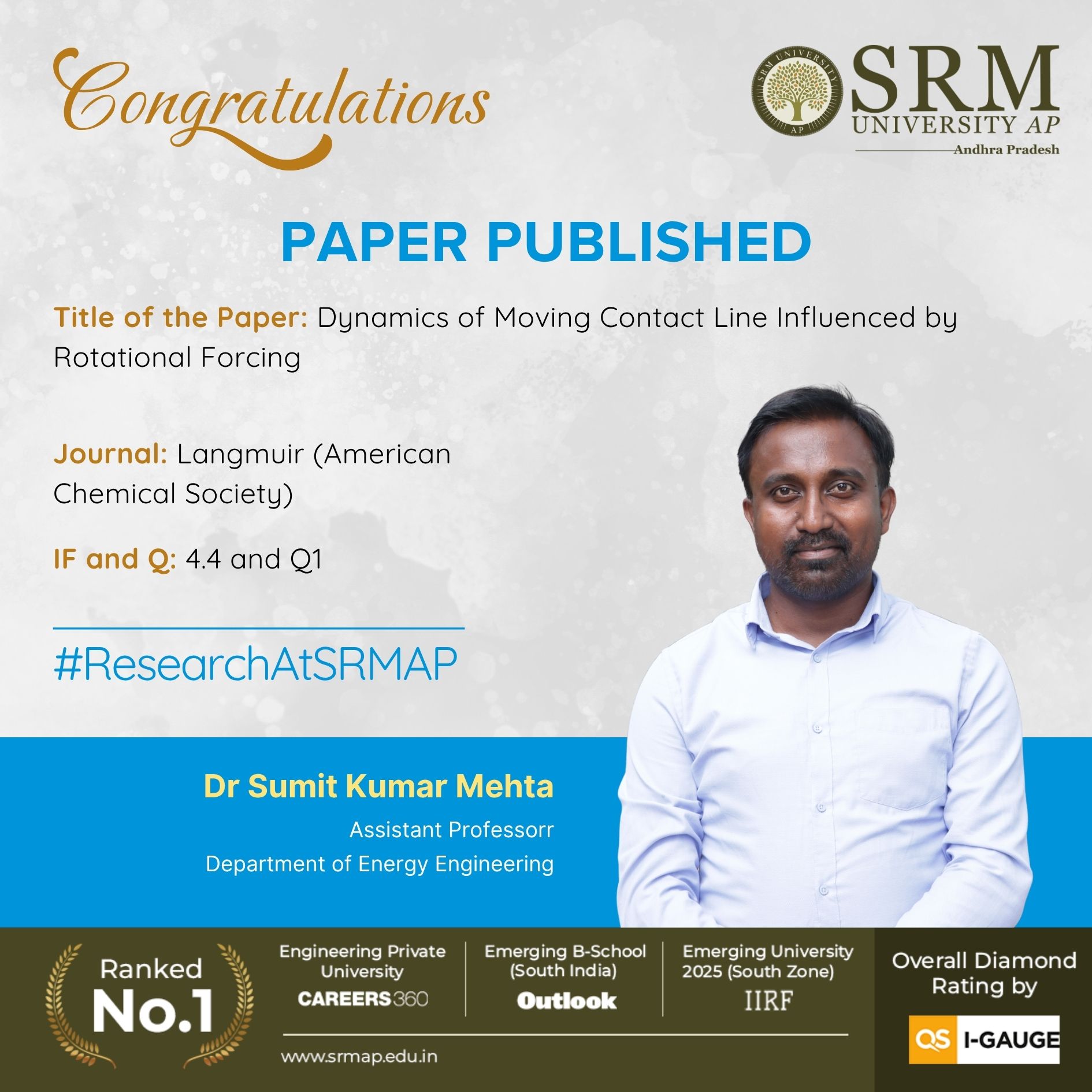
 Dr Sumit Kumar Mehta, Assistant Professor in the Department of Energy Engineering in SRM University-AP has recently published an impactful study titled “Dynamics of Moving Contact Line Influenced by Rotational Forcing“ in Langmuir, a prestigious Q1 journal published by the American Chemical Society with an impact factor of 4.4. This research investigates how tiny amounts of liquids move and mix inside spinning microfluidic devices, similar to those utilized in modern medical diagnostic kits. By understanding how surface properties and fluid characteristics dictate liquid movement under rotational forces, Dr Mehta’s work offers critical insights for designing faster and more efficient lab-on-a-chip systems. Ultimately, these advancements hold significant promise for streamlining healthcare testing, sample processing, and biochemical analysis.
Abstract of the research
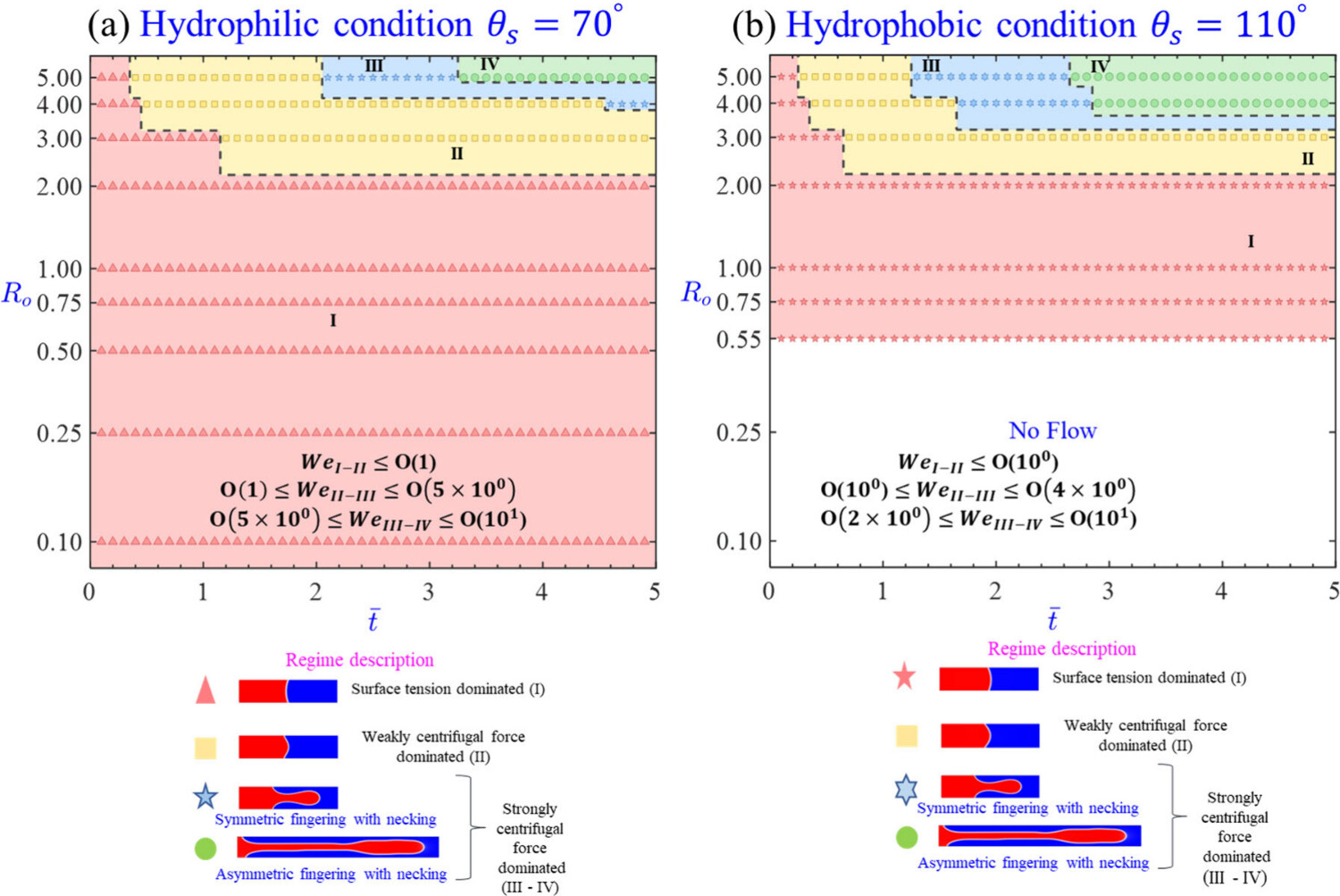
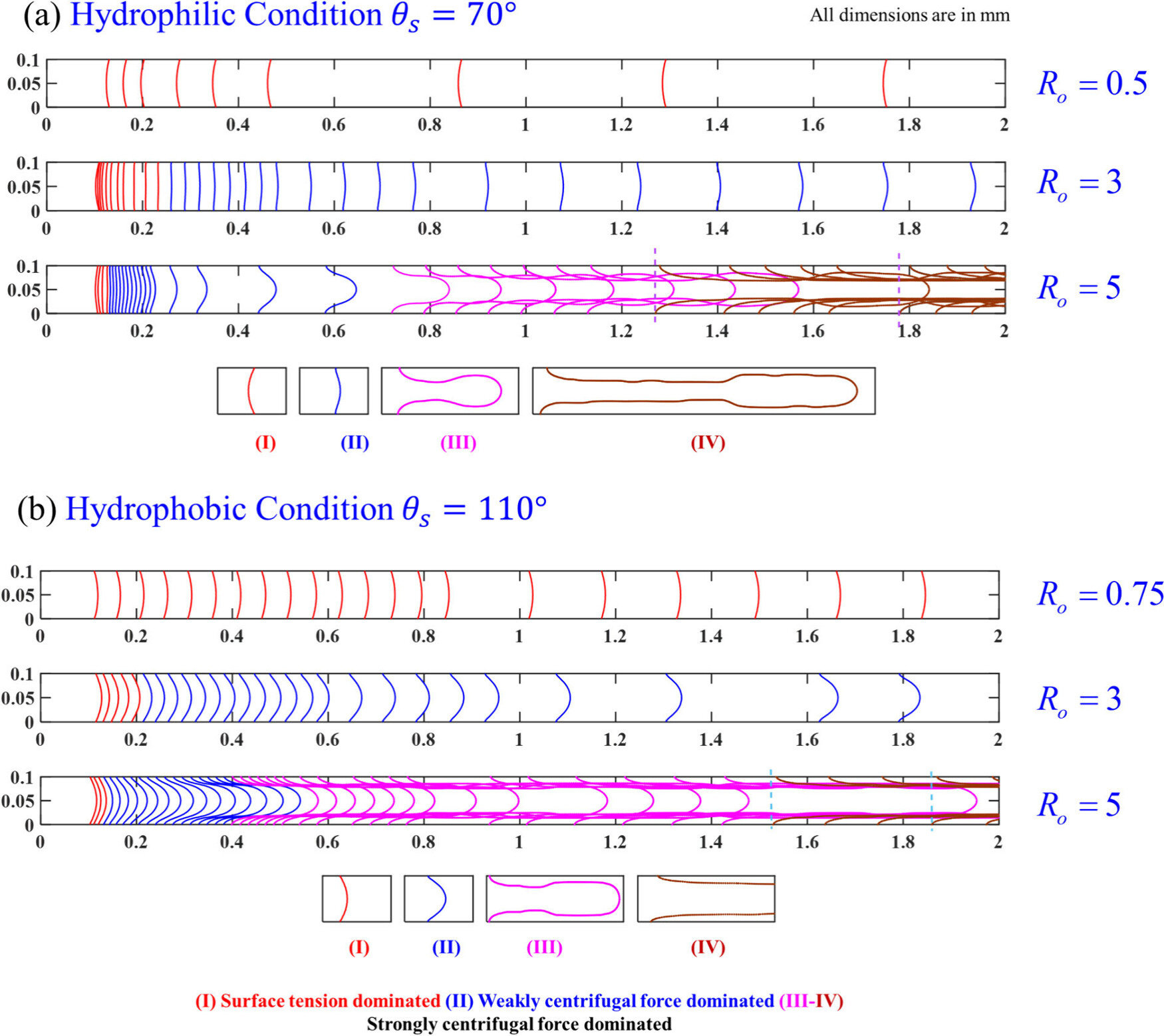
This study investigates the effects of surface wettability and viscosity ratio on capillary filling and interfacial dynamics of immiscible fluids in a rotational microfluidic system using a phase-field model. A regime map based on the local Weber number is developed to identify distinct interface transition modes. Unlike conventional pressure-driven flows, rotational forcing generates transverse Coriolis momentum, leading to asymmetric interface deformation and lateral fluid displacement. Hydrophilic and hydrophobic surfaces exhibit markedly different transition behaviours, while higher viscosity ratios delay regime changes due to increased viscous resistance. The findings provide new insights into rotational microfluidics and support the design of advanced centrifugal lab-on-chip devices.
Practical Implementation and social implications.
This research can improve the design of centrifugal lab-on-chip devices used for rapid medical diagnostics, biochemical assays, and sample preparation. The outcomes may contribute to the development of faster, more reliable, and cost-effective point-of-care testing technologies, enhancing healthcare accessibility and diagnostic efficiency
Collaborations
This work was carried out in collaboration with Mr Giridhar Raveendar and Prof. Pranab Kumar Mondal, Department of Mechanical Engineering, Indian Institute of Technology Guwahati
Future Research Plans
The future research plan is to develop advanced multiphysics models for electrokinetic transport, energy conversion, and thermal-fluid systems using high-performance computational tools. I also aim to establish collaborative research projects, secure external funding, and contribute to high-impact publications in sustainable energy technologies.