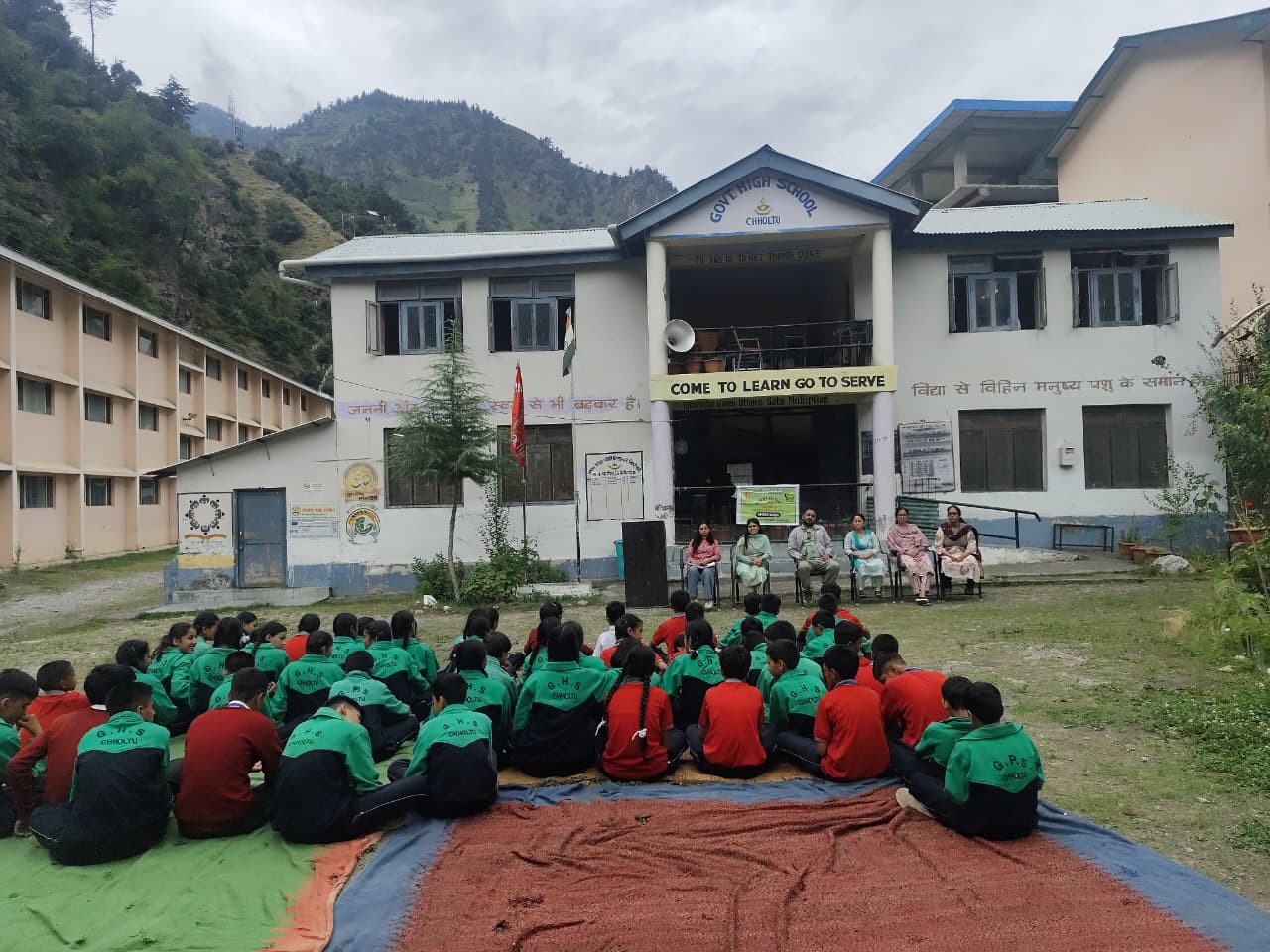
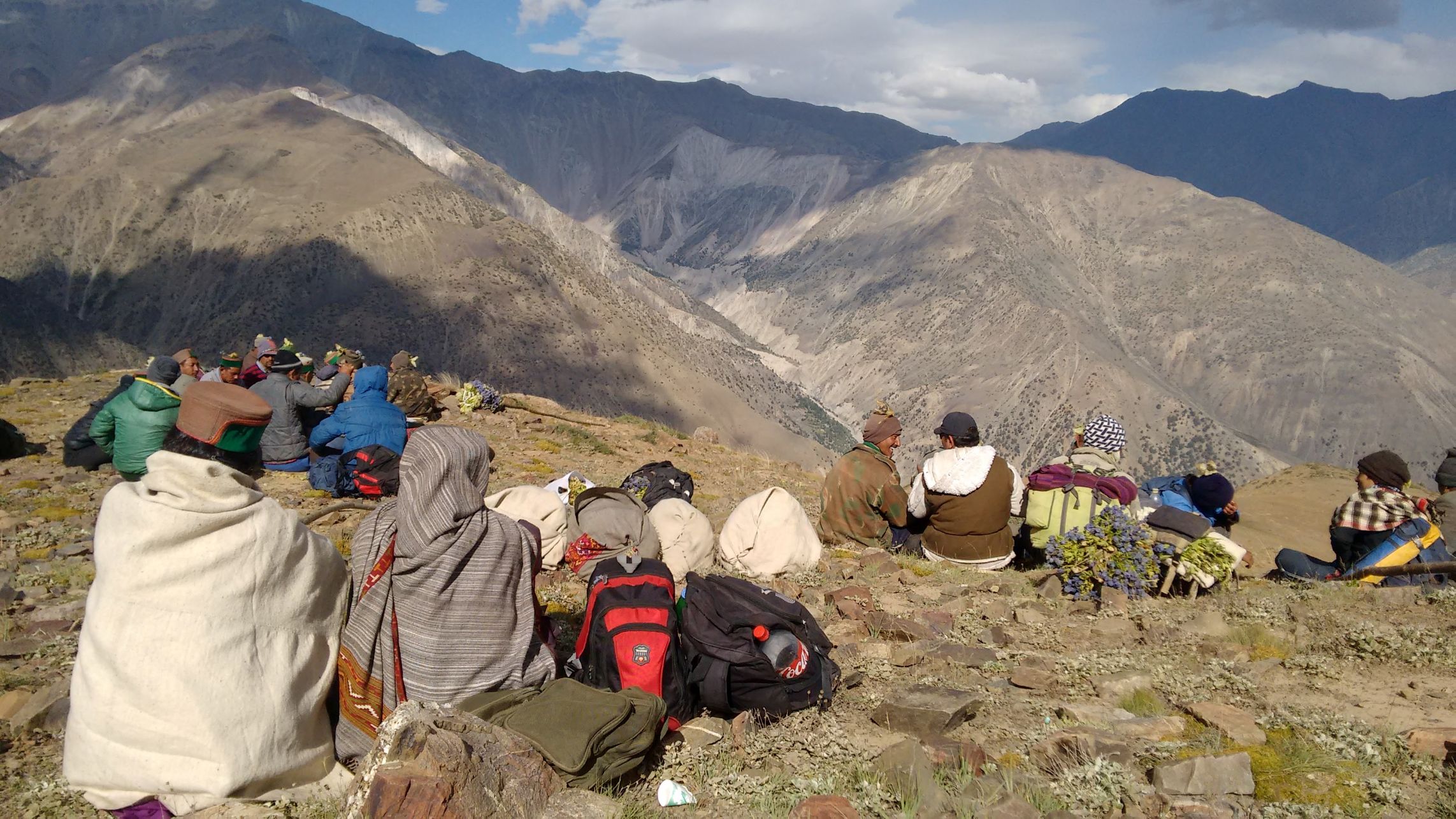
 India is home to hundreds of languages, yet support across educational, governmental, and digital platforms remains vastly unequal. While languages with official recognition, standard writing systems, published textbooks, and trained teachers flourish in public life, many tribal and Himalayan languages lack these basic institutional resources. Even though the National Education Policy 2020 advocates for mother-tongue education, children from smaller linguistic communities often transition to regional languages in school, gradually diminishing mother-tongue usage at home. Examining this structural divide, Dr Harvinder Kumar Negi from SRM University-AP evaluates why national language policies fail to serve all communities equally and highlights how local initiatives can bridge the gap between policy intent and actual classroom practice.
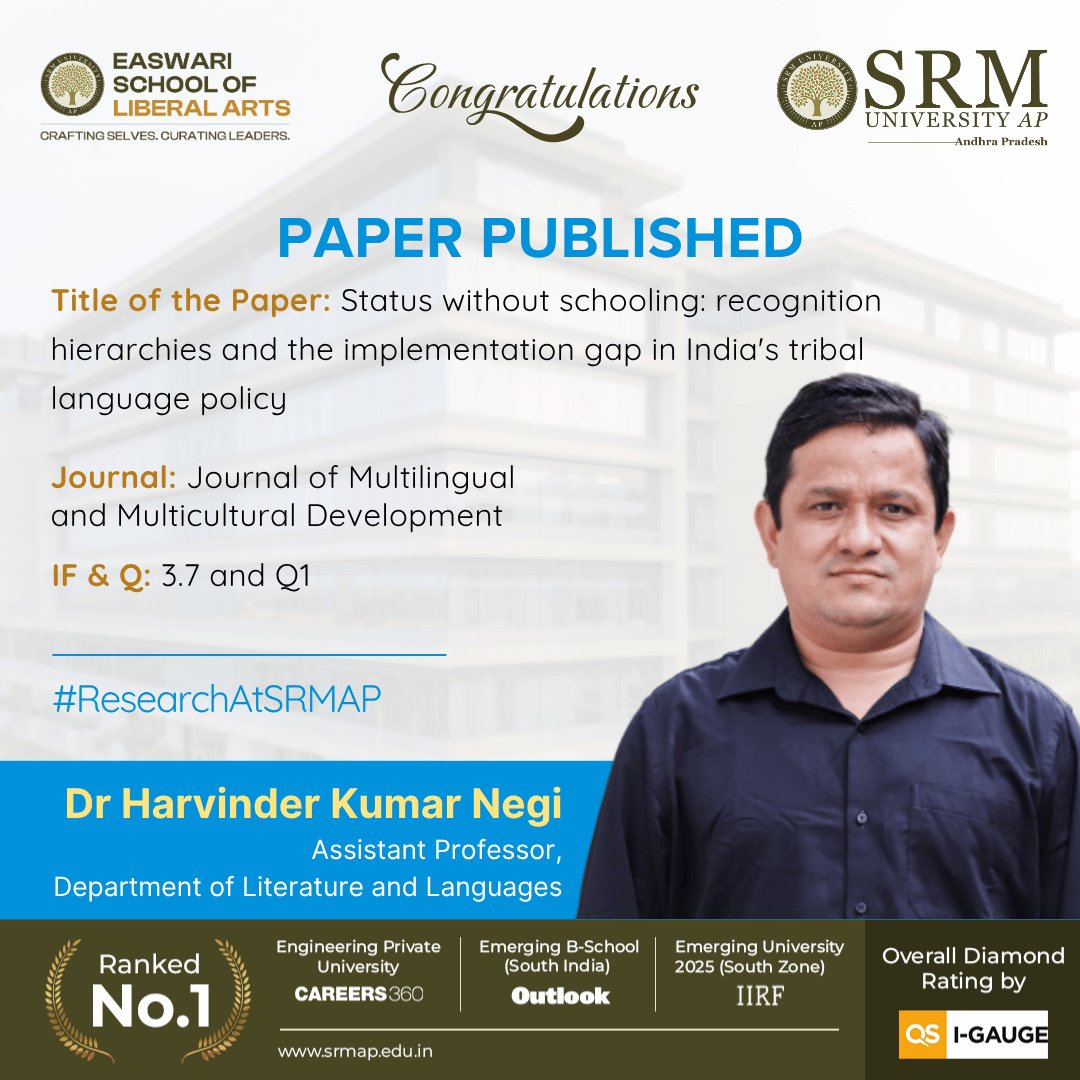
In a paper published in the Journal of Multilingual and Multicultural Development, a Q1 journal with an impact factor of 3.7 published by Routledge, Dr Harvinder Kumar Negi, Assistant Professor in the Department of Literature and Languages at SRM University-AP, provides a critical assessment of these educational disparities. His publication is titled “Status without schooling: recognition hierarchies and the implementation gap in India’s tribal language policy”.
The published paper examines why India’s language policies, including the National Education Policy 2020, do not reach all linguistic communities equally. The study argues that mother-tongue education depends on several basic conditions: official recognition, a writing system, teaching materials, trained teachers, and digital resources. Languages that lack these resources remain at a serious disadvantage, even when national policies support multilingual education. Drawing on examples involving Gondi, Santali, Kokborok, Kumaon Vani, and the People’s Linguistic Survey of India, the research shows how communities are working to document and maintain their languages. It calls for dedicated institutional support, community participation, digital documentation, and locally designed educational programmes for small and endangered languages.
The findings hold direct implications for translating national education goals into practical classroom measures, particularly for smaller non-scheduled languages. Effective implementation requires moving beyond general policy statements to address specific needs such as teacher availability, orthographic resources, school-based support, and digital infrastructure. Engaging speaker communities in decisions regarding language documentation, digital archives, and local literature helps preserve linguistic heritage alongside oral traditions and cultural knowledge. Building on this framework, future research will focus on documenting endangered Himalayan languages such as Sunam, Kanashi, and lesser-known Kinnauri varieties, studying intergenerational language transmission, and creating digital tools and community archives to support mother-tongue education.
Read the full article here