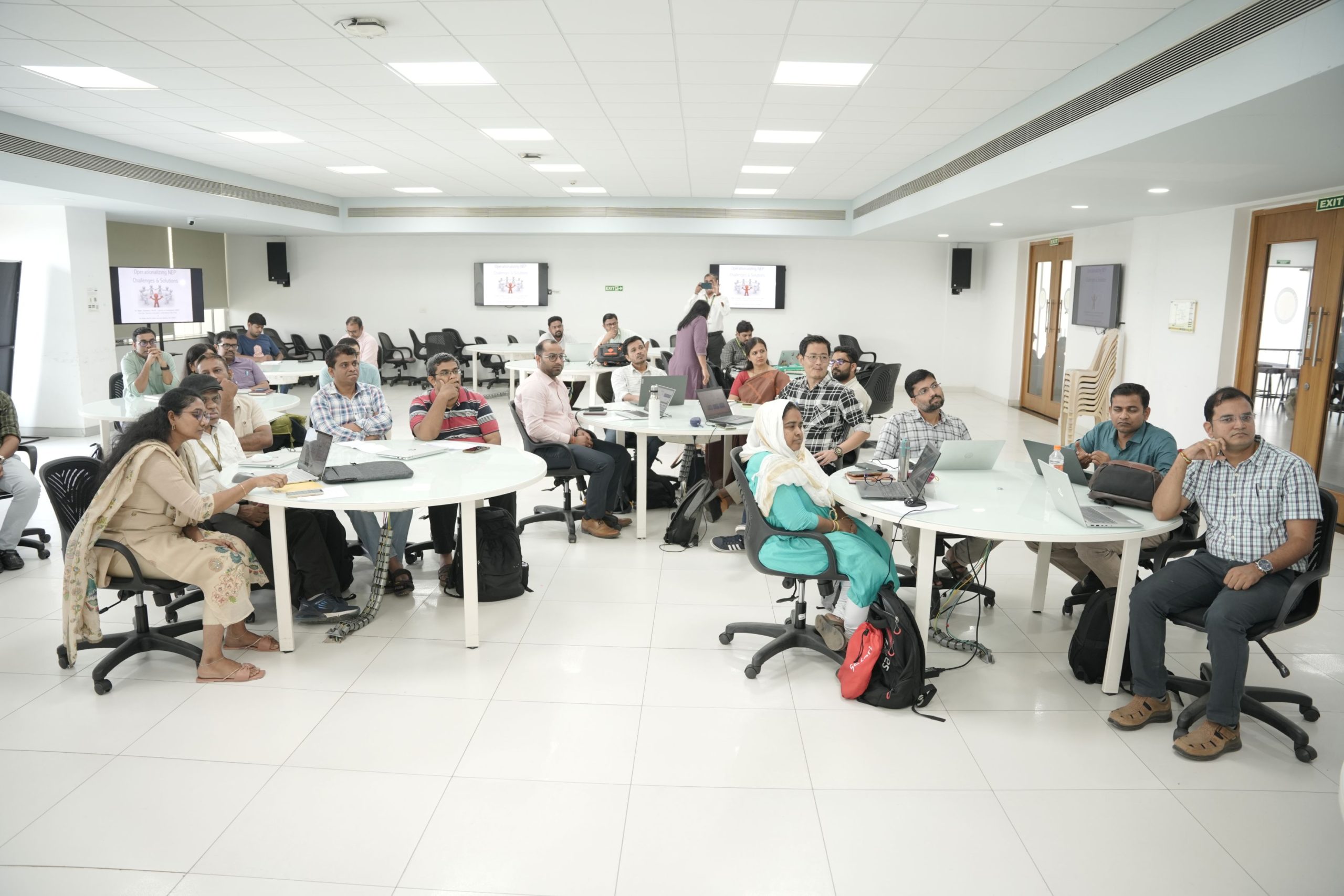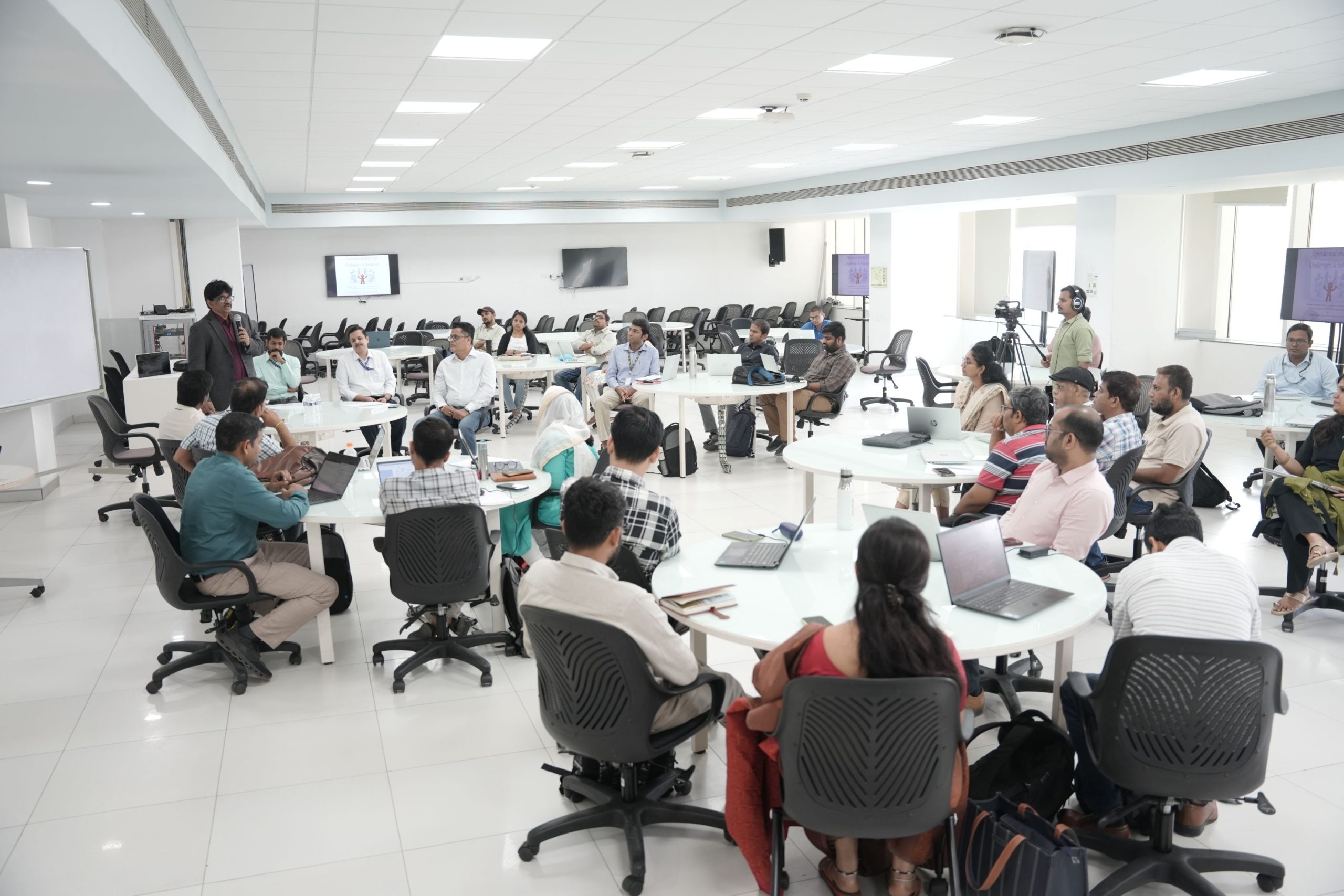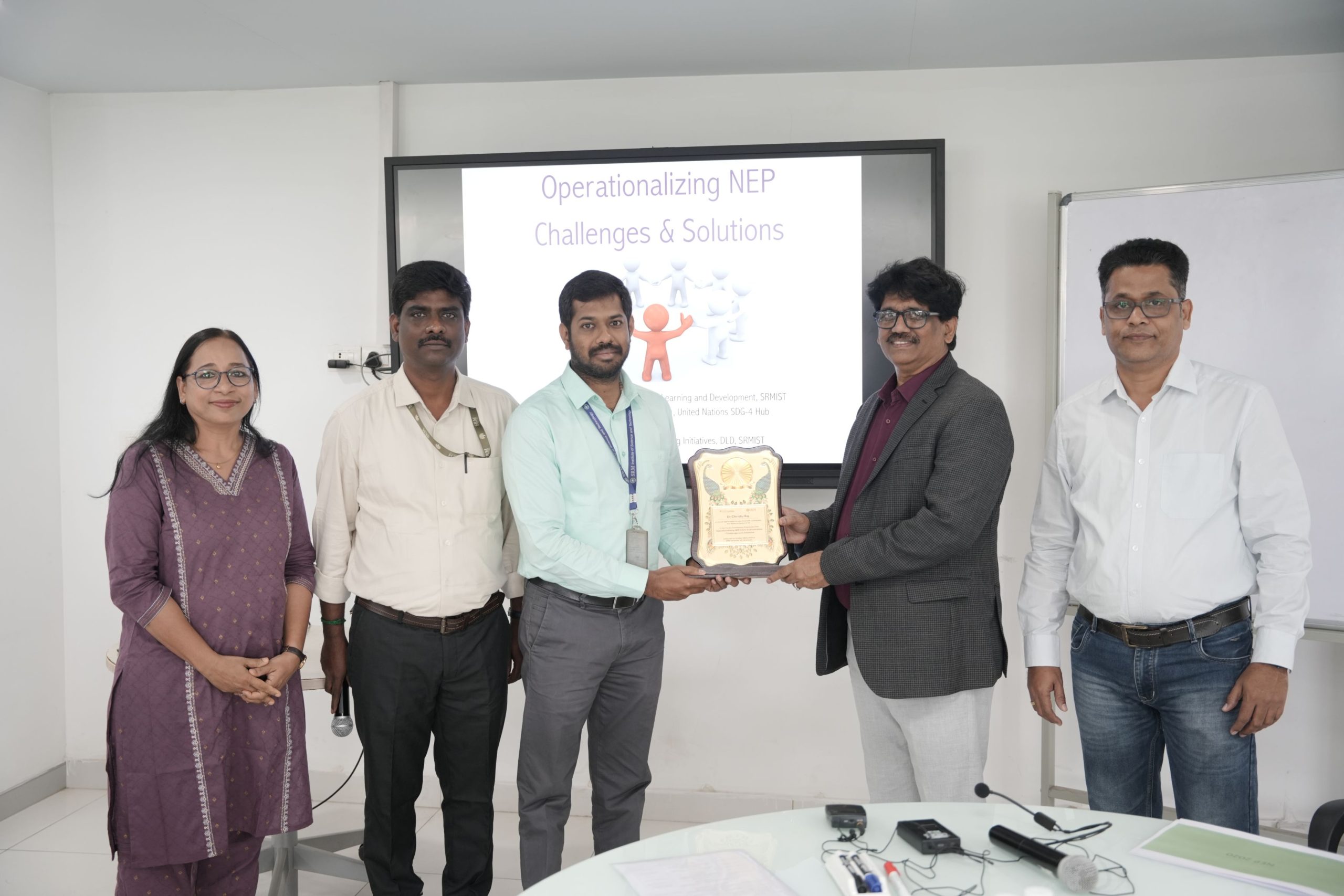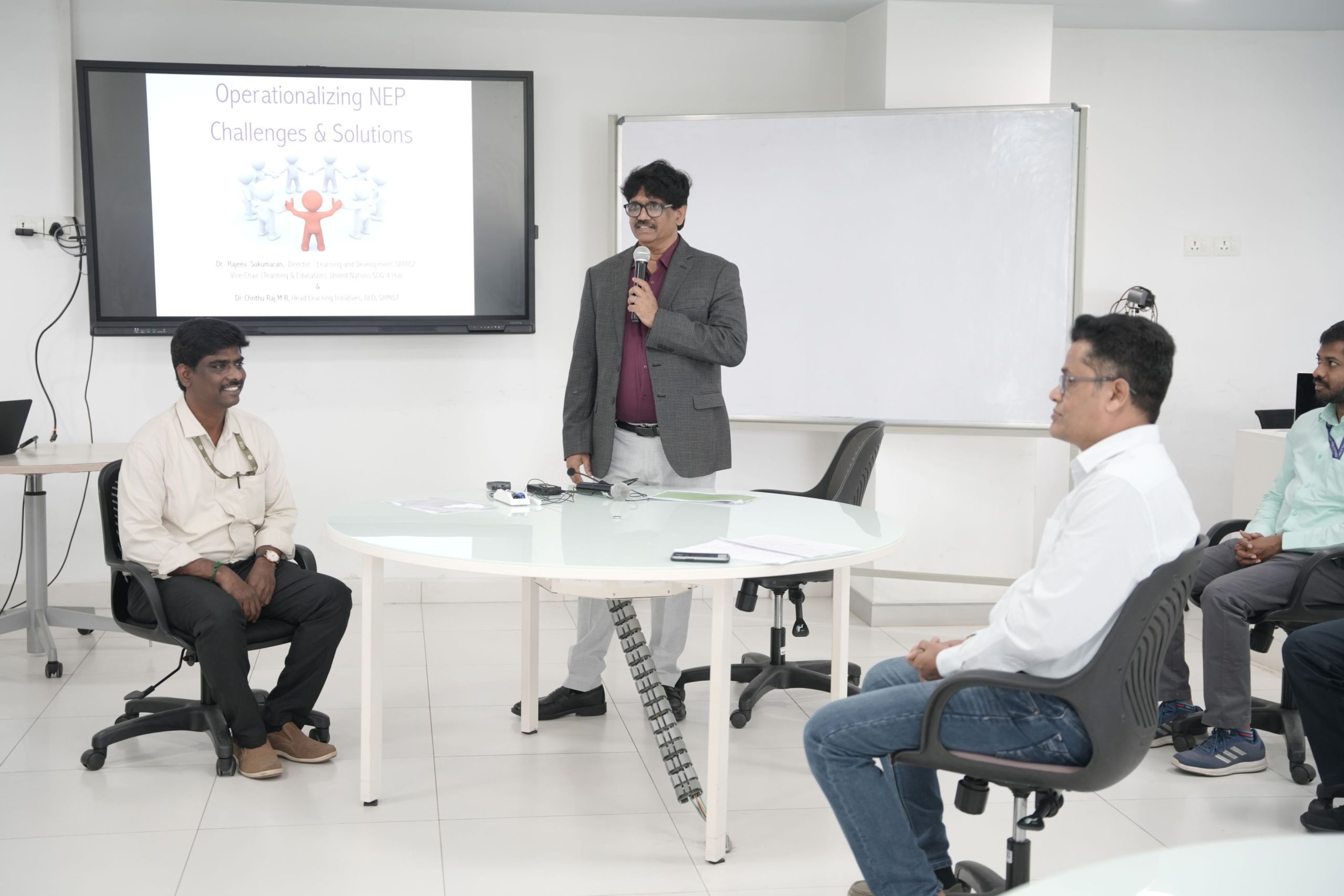

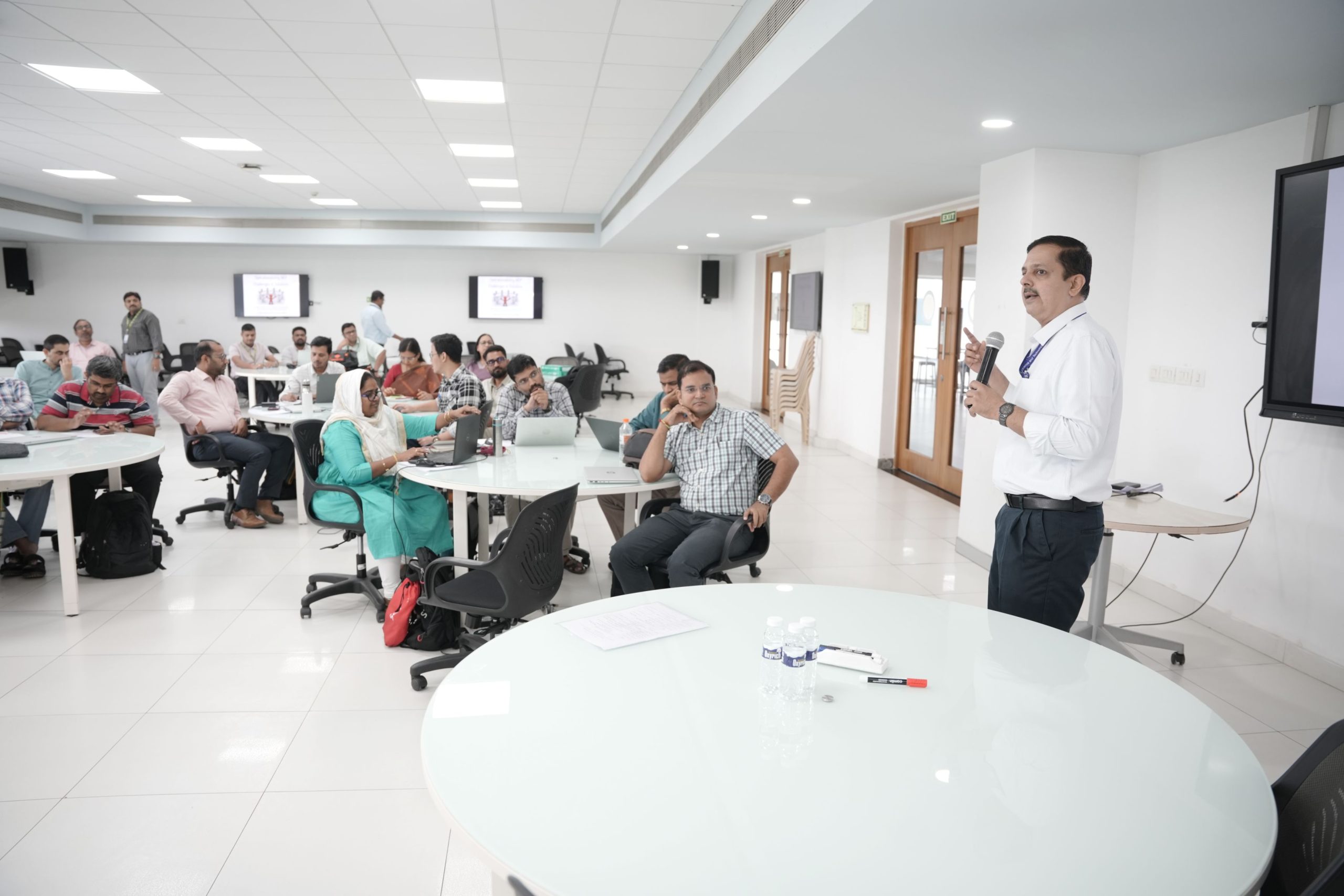
 The Teaching Learning Centre at SRM University-AP organised a two-day Faculty Development Programme titled “Operationalising NEP 2020 in Universities: Challenges and Solutions” on October 14-15, 2026. Designed to translate national policy directives into concrete academic structures, the initiative brought together senior university leadership, administrative heads, and faculty members to examine institutional reform strategies. The inaugural session set an analytical tone for the workshop, featuring keynotes from university leadership that grounded policy objectives in practical academic management.
Inaugurating the proceedings, Vice-Chancellor Prof. Ch. Satish Kumar contextualised current reforms by tracing the evolution of Indian educational frameworks from the 1986 National Policy on Education to the present day. Drawing from his administrative experience implementing policy changes during his tenure at SRM University Sikkim, he highlighted the necessity of systematic institutionalisation across academic departments. He noted that foundational learning requires early cognitive engagement similar to Montessori principles, observing that primary education forms the bedrock of individual intellectual growth rather than university instruction alone. He urged academic planners to embed multidisciplinary structures across all degree tracks and emphasized the vocational character of the National Education Policy as a means to connect theoretical study with practical capability. Following his address, Dean of Academic Affairs Prof. Jatindra Kumar Dash presented an assessment of SRM AP‘s current operational status, demonstrating how systematically the university’s academic regulations and credit systems align with national implementation benchmarks.
Across the two days, expert resource persons from SRMIST conducted technical working sessions focused on alignment with regulatory and quality accreditation frameworks. Prof. Rajeev Sukumaran, Director of Learning and Development at SRMIST, led the first day’s modules on programme-level design, institutional structures, and the integration of policy criteria into UGC, AICTE, NBA, and NAAC compliance standards. His afternoon presentations extended to mapping departmental outputs against global ranking indicators, including QS, THE, Shanghai, and Green Metric benchmarks. On the second day, Dr Christhu Raj M R, Head of Learning Initiatives at SRMIST, guided participants through the CDIO engineering education framework, United Nations Sustainable Development Goals, and global academic initiatives. The concluding sessions provided actionable blueprints for university directorates, academic departments, and central facilities to execute coherent policy transitions.
This faculty development initiative reinforces SRM AP‘s commitment to building a progressive academic environment that meets international standards. By aligning internal governance, credit frameworks, and pedagogical methods with national reforms and global quality metrics, the university continues to strengthen its position as a forward-looking research institution prepared to train graduates for complex global demands.