
 Conventional lithium-ion batteries rely on flammable liquid electrolytes, which present safety hazards, thermal stability limits, and energy density constraints. Solid-state batteries address these concerns by substituting liquid components with solid electrolytes, creating safer energy storage systems capable of integrating high-capacity lithium metal anodes. Assessing how different material classes perform under operational conditions, research involving Dr P S N Masthan Vali from SRM University-AP evaluates oxide, sulfide, polymer, halide, and composite solid electrolytes to determine their conductivity, chemical stability, and interfacial compatibility.
In a comprehensive review published in the Journal of Energy Storage, a Q1 journal with an impact factor of 10.7 published by Elsevier, Dr P S N Masthan Vali, Post-doctoral Research Fellow in the Department of Mechanical Engineering at SRM University-AP, conducted the research in collaboration with international researchers from King Khalid University and Al Baha University in Saudi Arabia, alongside Muğla Sıtkı Koçman University in Turkey. The publication is titled “Solid-state electrolytes for advanced solid-state batteries: A comprehensive review of materials, ionic conductivity, and interface engineering”.
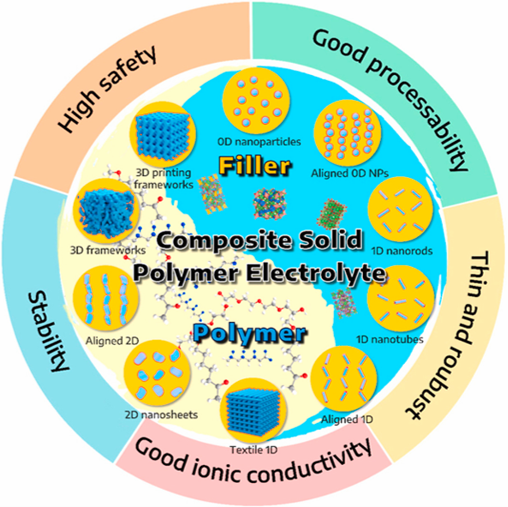
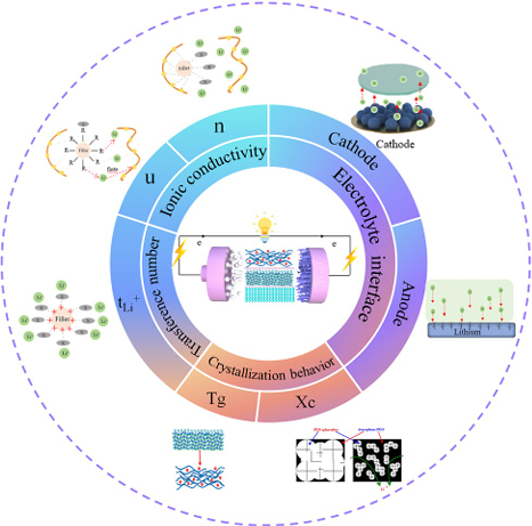
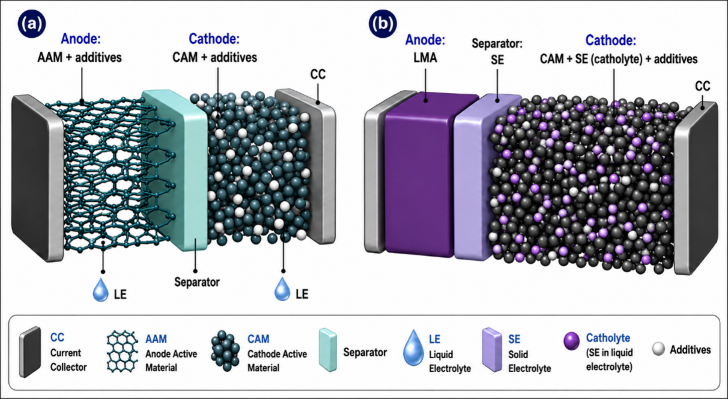
Solid-state batteries (SSBs) have emerged as promising next-generation energy storage systems capable of addressing the safety limitations and energy-density constraints associated with conventional lithium-ion batteries (LIBs). The substitution of flammable liquid electrolytes with solid-state electrolytes (SSEs) offers enhanced thermal stability, enhanced safety, and the possibility of integrating high-capacity anode materials such as lithium metal. This review provides a comprehensive and systematic assessment of recent developments in solid-state battery technologies with particular emphasis on electrolyte materials, electrode architectures, and interface engineering strategies that influence electrochemical performance. Major classes of solid-state electrolytes, including oxide-, sulfide-, polymer-, halide-, and composite-based systems, are critically evaluated in terms of ionic conductivity, chemical stability, interfacial compatibility, and practical applicability. The analysis highlights that sulfide electrolytes exhibit high ionic conductivity approaching that of liquid electrolytes, whereas oxide electrolytes provide superior chemical stability but often suffer from grain-boundary resistance. Polymer electrolytes offer mechanical flexibility but remain limited by relatively low ionic conductivity at room temperature. Halide and composite electrolytes have recently involved attention due to their improved compatibility with superior-voltage cathodes and enhanced ionic transport properties. The review further examines interface stabilization strategies and advanced synthesis approaches that significantly influence electrochemical performance. Finally, current technological challenges and research directions are discussed, emphasizing the need for improved electrolyte electrode interfaces, scalable manufacturing methods, and integrated materials design strategies for the practical commercialization of solid-state battery technologies.
The insights from this study support the global development of safer, higher-energy, and longer-lasting energy storage systems for electric vehicles, mobile devices, and renewable energy grids. By reducing fire risks and supporting higher energy density, these advanced solid electrolytes help extend electric vehicle driving ranges and reduce charging frequency. The findings also contribute to broader global clean energy goals by supporting cleaner transport and renewable energy storage integration. Moving forward, future research will focus on developing halide, sulfide, oxide, and composite materials with higher ionic conductivity and interface stability, while optimising lithium-metal anodes, high-voltage cathodes, and scalable manufacturing methods for practical commercial deployment.
[Article link will be available upon publication]