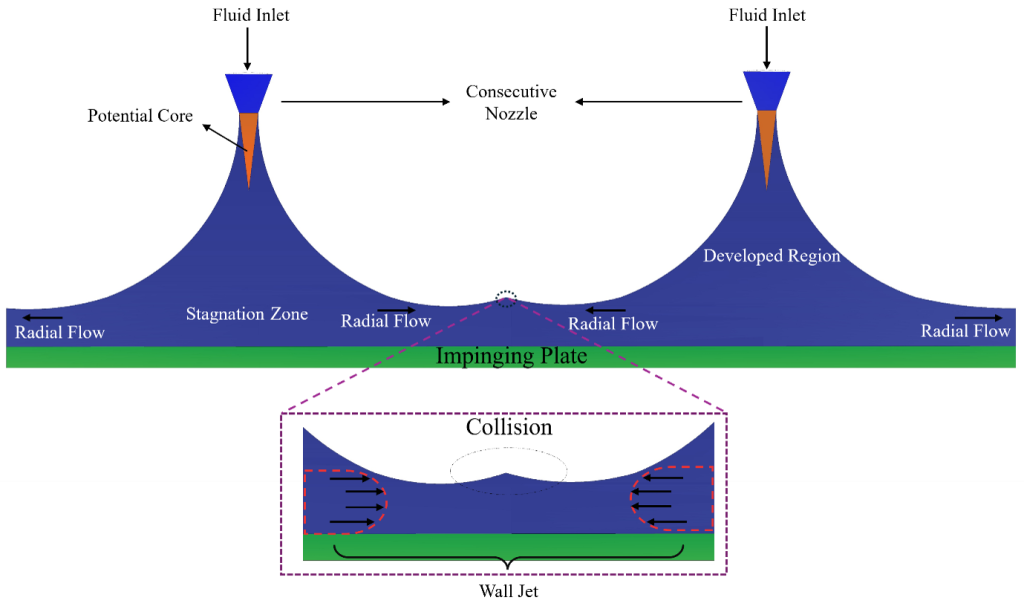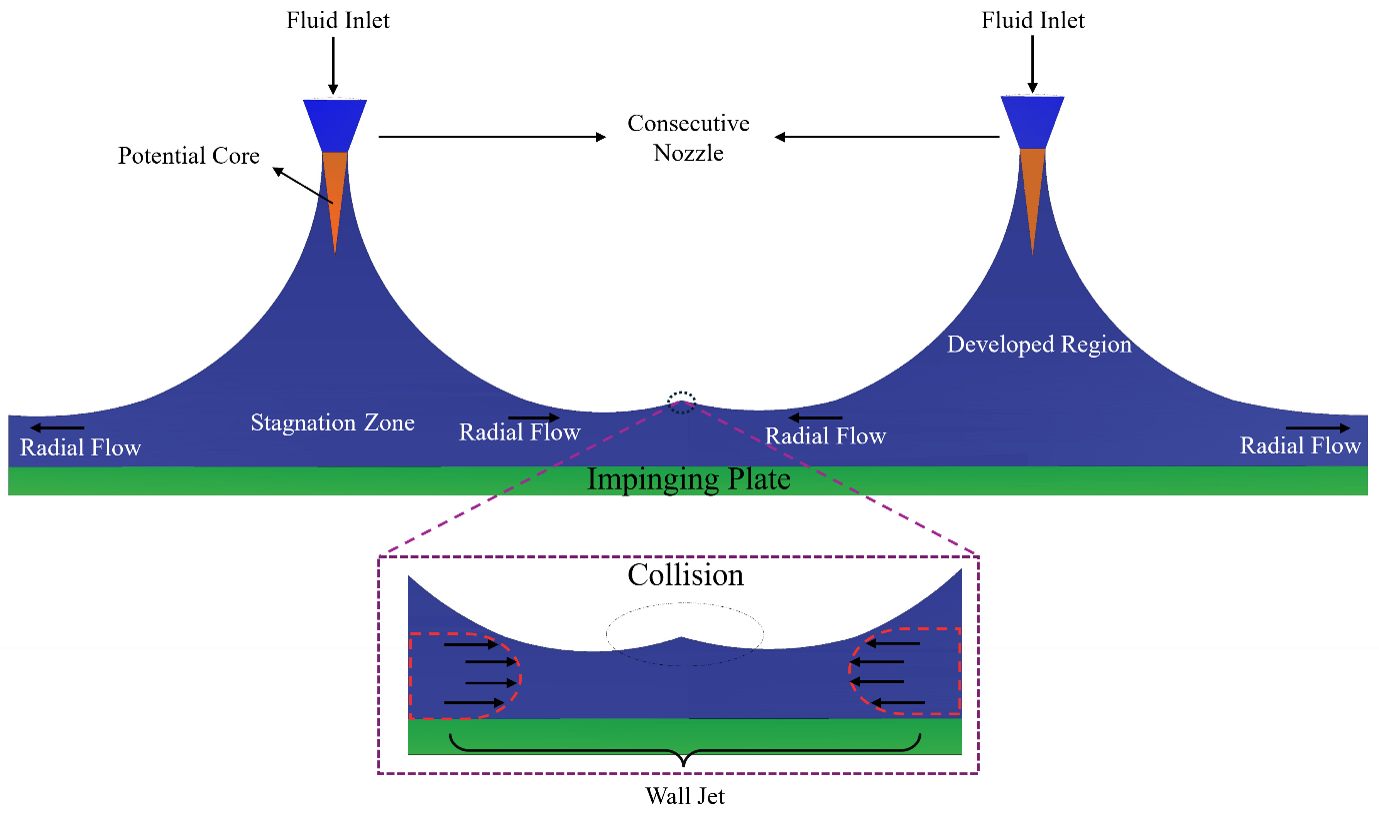

Electronic devices such as data centres, artificial intelligence servers, and high-performance computers generate large amounts of heat. If this heat is not removed efficiently, the devices become less reliable and consume more energy. The research team from the Department of Mechanical Engineering, Dr Lakshmi Sirisha Maganti, Associate Professor, Mr Manikanta Bandlamudi and Mr Siva Krishna Karnati, PhD scholars, have developed an improved liquid jet cooling technique.
In their article titled “Augmented Jet Impingement Cooling System for High-Heat Flux Electronics Through Mitigating Radial Jet-to-Jet Interaction by Employing Rectilinear and Curvilinear Separators” in the journal Applied Thermal Engineering, the team introduces specially designed separators that reduce interference between neighbouring cooling jets. By minimising these interactions, the cooling performance is significantly enhanced while reducing the energy required for pumping the coolant. This research contributes to the development of more efficient and sustainable cooling technologies for future electronic systems.
Practical Applications / Social Impact of Research
The outcomes of this research can be applied to:
- Thermal management of AI and HPC servers.
- Data centre cooling systems.
- High-power electronic devices.
- Electric vehicle power electronics.
- Aerospace electronic cooling.
- Energy-efficient liquid cooling technologies.
- Sustainable computing by reducing cooling energy consumption.
Read the article