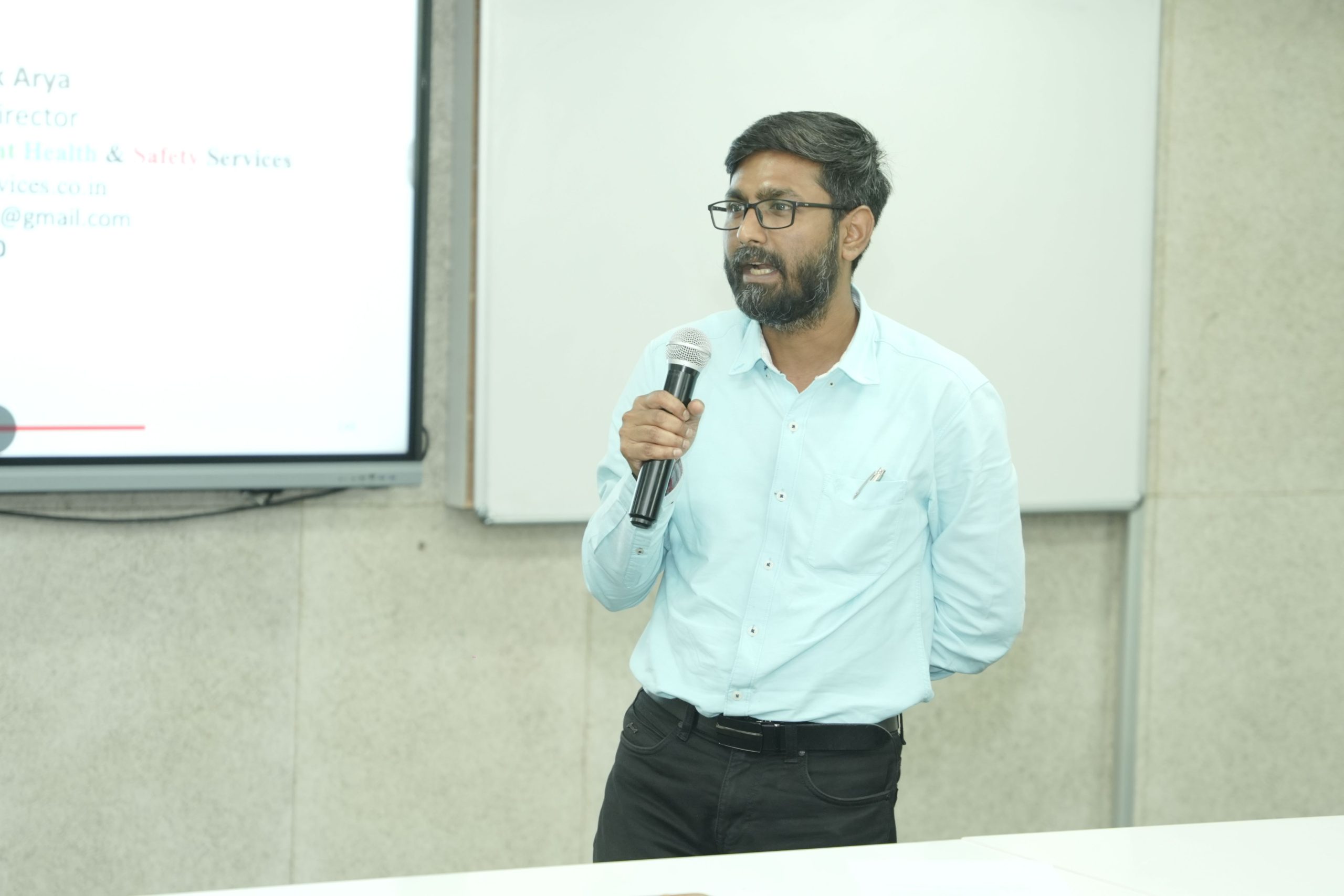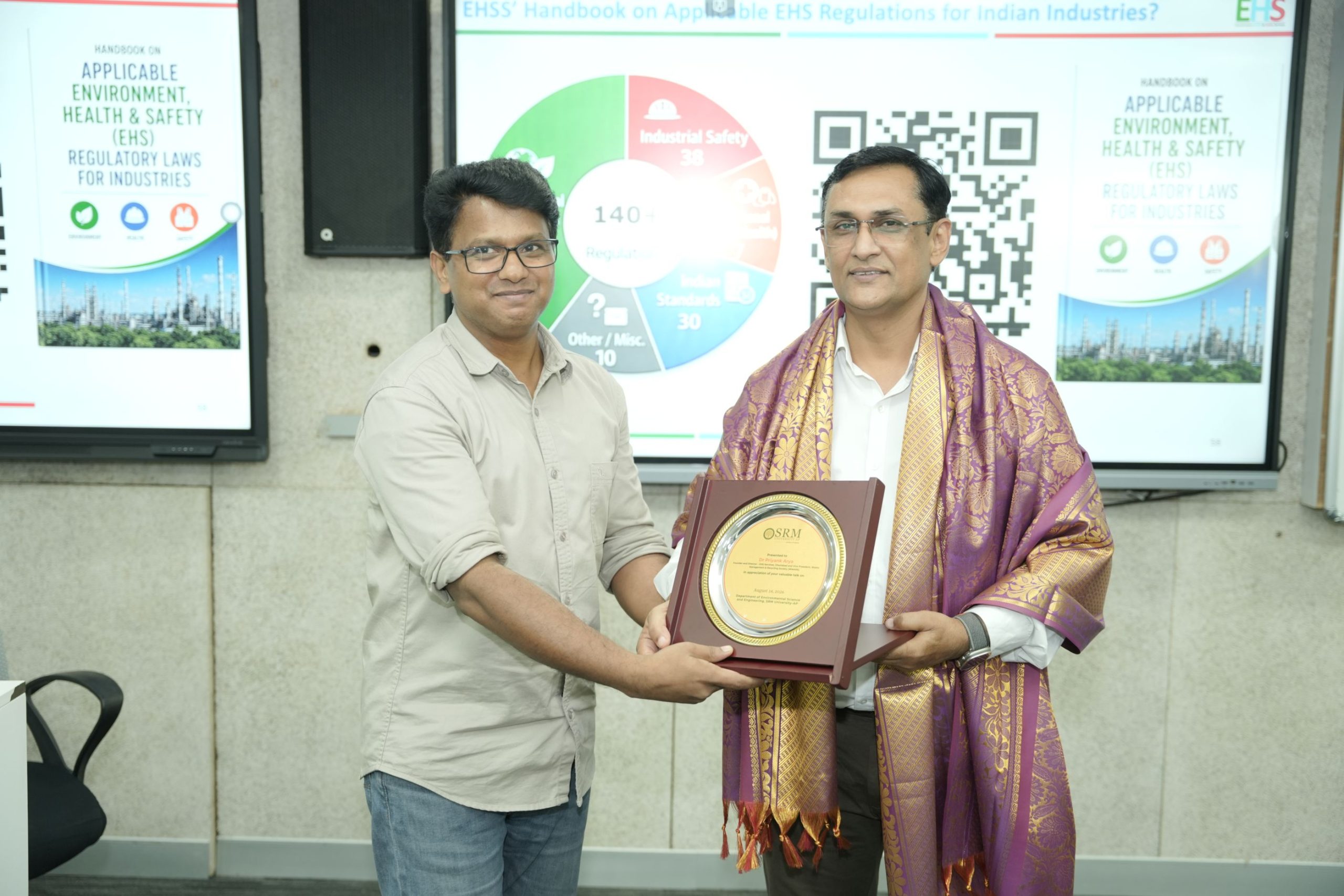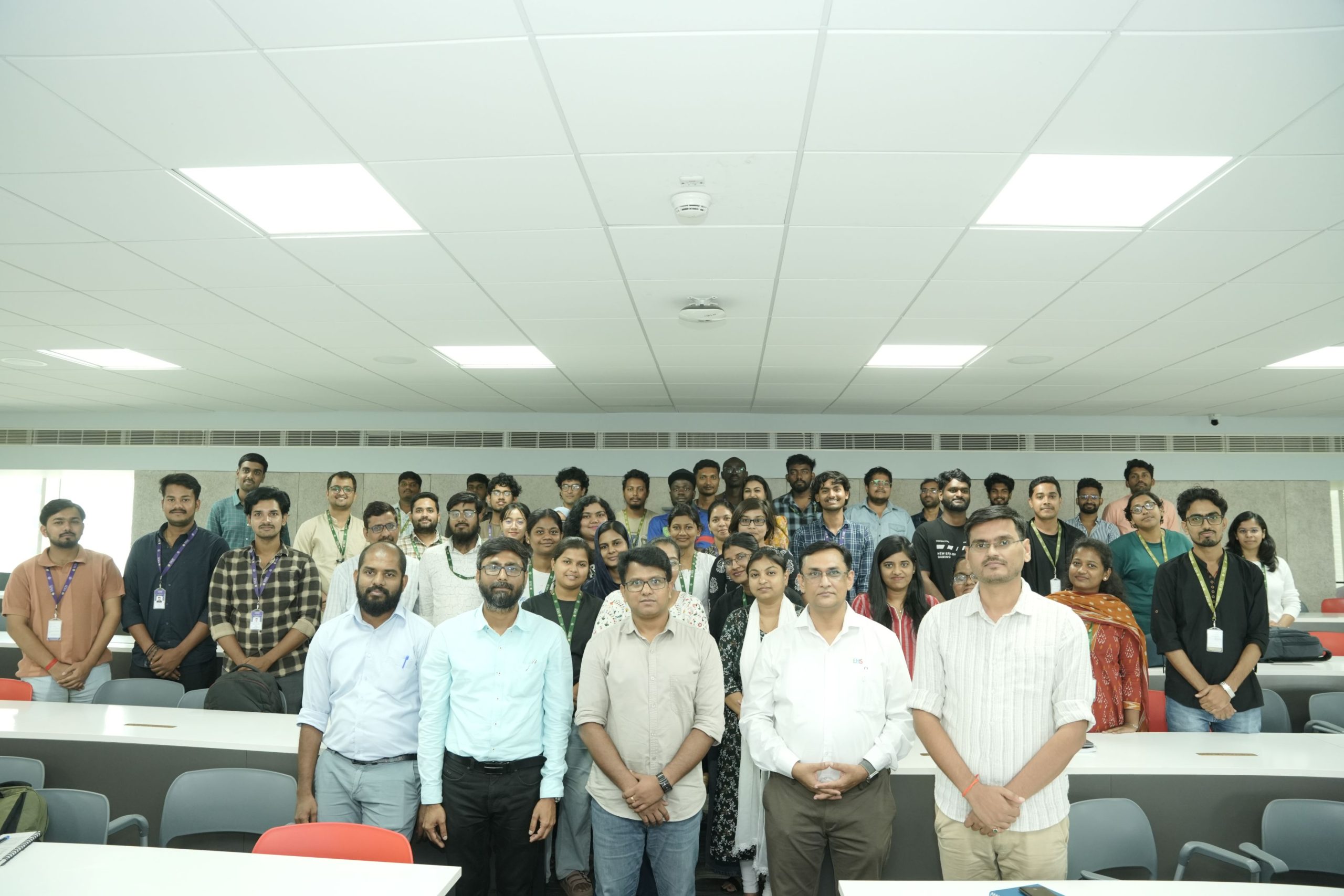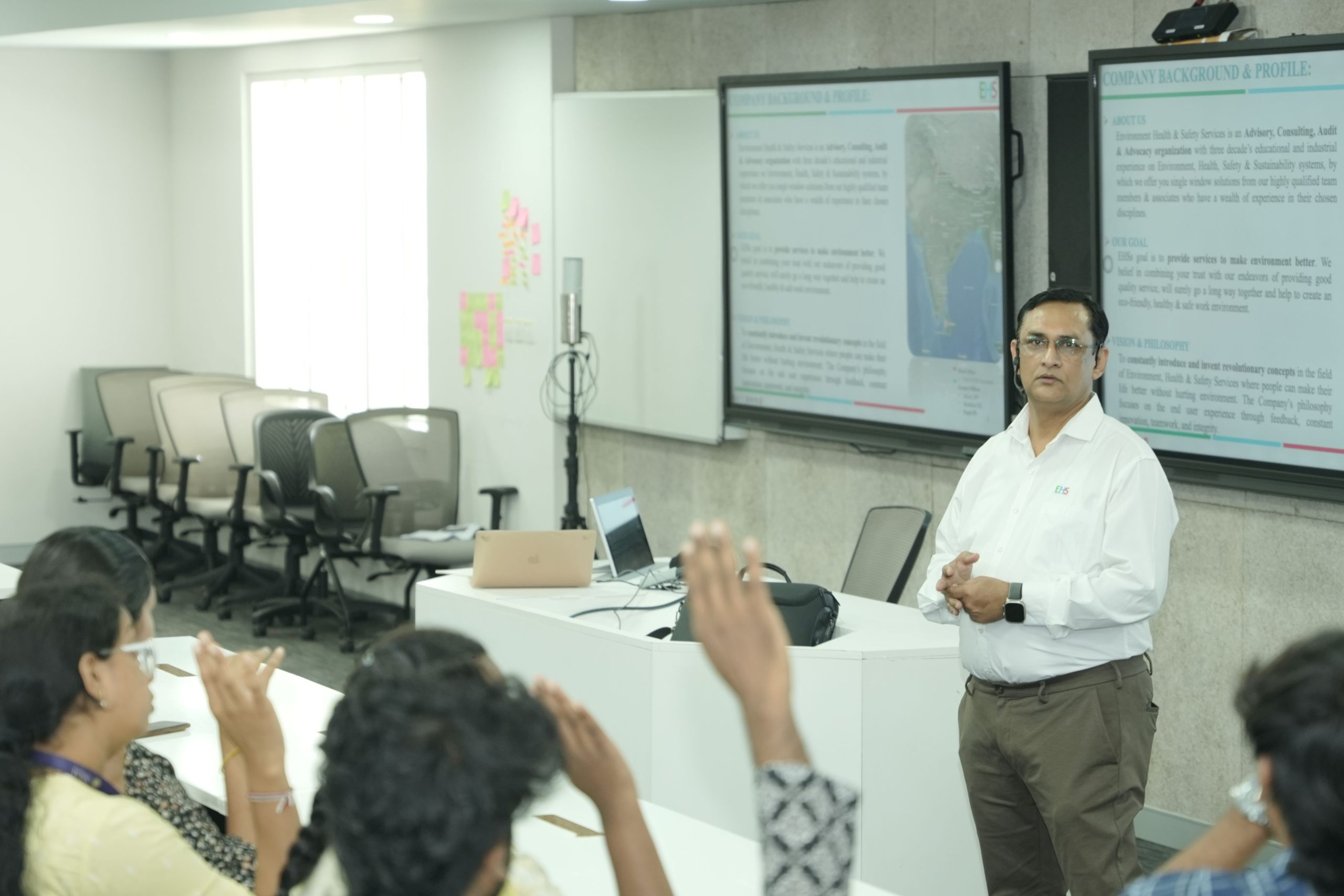

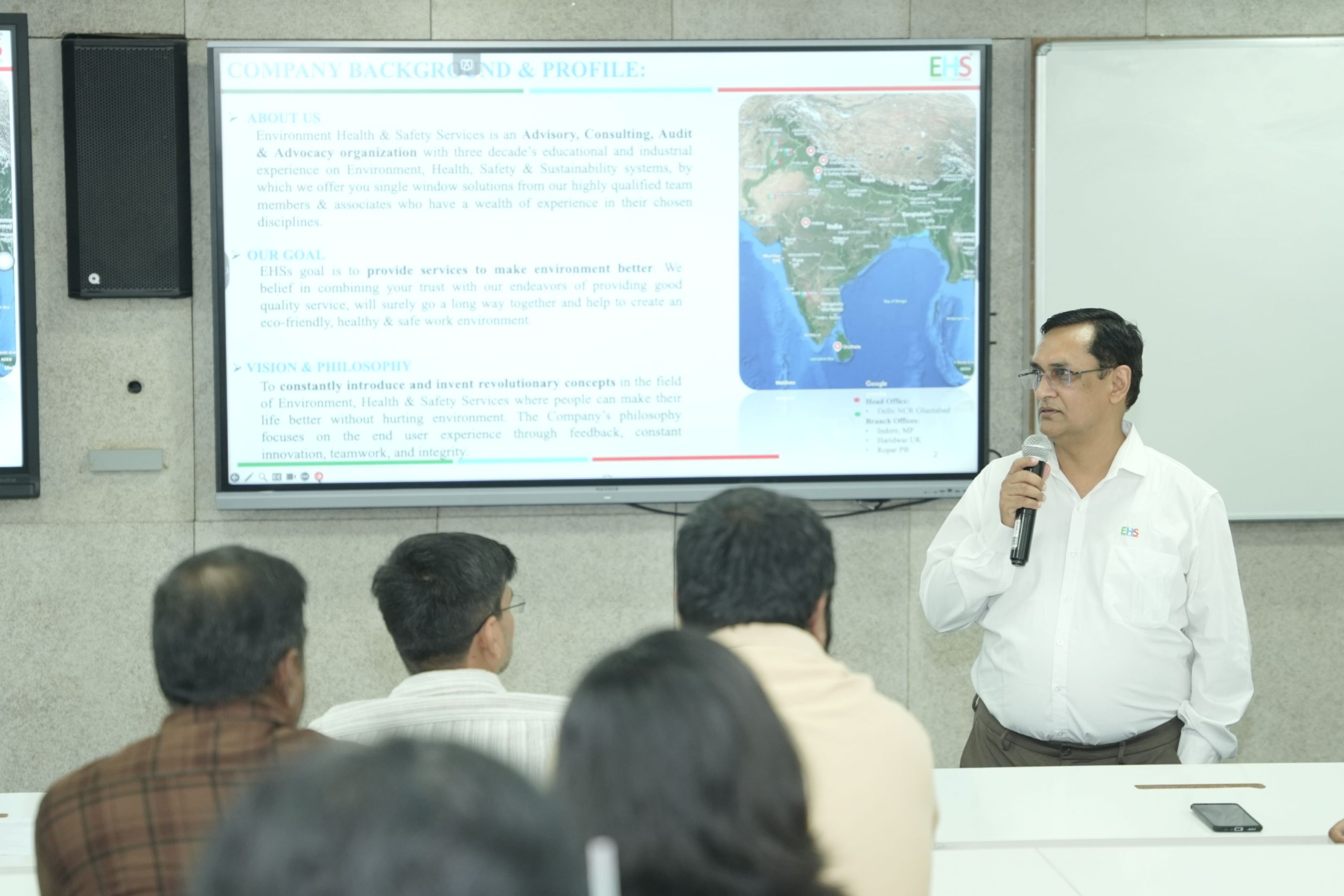
 The Department of Environmental Science and Engineering, School of Engineering and Sciences, organised a session under its Guest Expert Lecture Series 2026 on 14 August 2026, titled “Applicable Indian EHS Regulations Supporting Circular Economy, A Bright Career Opportunity.” Held at the Tiered Classroom, the one-day seminar brought together students to examine how India’s environmental, health and safety regulatory framework intersects with the principles of a circular economy, and what that intersection means for those looking to build a career in the sector.
The session was led by Dr Priyank Arya, Founder and Director of EHS Services, Ghaziabad, and Vice President of the Waste Management and Recycling Society. Drawing on his experience across regulatory compliance and sustainable waste management, Dr Arya walked students through both the practical and career dimensions of working within India’s EHS landscape, grounding a technical subject in the realities of industry practice.
Dr Arya opened by making the case for closer collaboration between industry and academia, arguing that the two rarely benefit from operating at arm’s length from each other. Academic training equips students with the theoretical grounding to understand regulation, he noted, but it is only through sustained engagement with industry that students come to understand how that regulation actually plays out on the ground, in audits, in day-to-day compliance, and in the decisions organisations make under commercial pressure.
He then turned to the mechanics of compliance itself, describing audits and training as the two instruments through which organisations translate regulation into practice. A recurring theme of the talk was the pace at which India’s EHS regulatory landscape changes, and Dr Arya was direct about the discipline this demands of anyone working in the field: regulations are revised often enough that treating them as fixed is itself a professional risk. He encouraged students to build the habit of tracking updates methodically, going as far as recommending that they maintain a personal regulatory library, a working reference built and revised over time, rather than relying on memory or assuming last year’s framework still holds.
Dr Arya then walked students through the different categories of regulation that operate within the Indian context, and how industry actually thinks about compliance, its requirements, its priorities, and how those shape the way regulation gets applied in practice. He followed this with a glimpse into industrial safety as it is practised on the ground, moving the discussion from regulatory text to the operational realities of keeping a site, and the people on it, safe.
Dr Arya closed the technical portion of his talk by turning to the future of the field, outlining the career opportunities available to students with a grounding in EHS regulation and pointing to renewable energy as a sector where that expertise is likely to matter increasingly, as India’s environmental and industrial priorities continue to evolve.
The lecture concluded with a quiz for the students, testing their grasp of the concepts covered over the course of the session and rounding off the seminar on an engaging, participatory note.
For students of environmental science and engineering, the session offered a rare vantage point, seeing regulation not as a constraint on industry, but as the very framework within which a circular economy, and a career within it, takes shape.