

 Across India, waste work remains one of the most stigmatised and precarious forms of informal labour, even as the country moves steadily towards a more circular economy. Workers engaged in segregation, collection, and recycling are often overlooked in discussions on skill development, despite forming the backbone of decentralised waste management systems.
New research examines how structured training programmes can change this picture. Through skill-building initiatives covering waste segregation, health and hygiene, workplace safety, and legal rights, waste workers in Kerala are gradually moving from insecure, stigmatised roles towards more secure, dignified, and environmentally important employment within India’s growing circular economy.
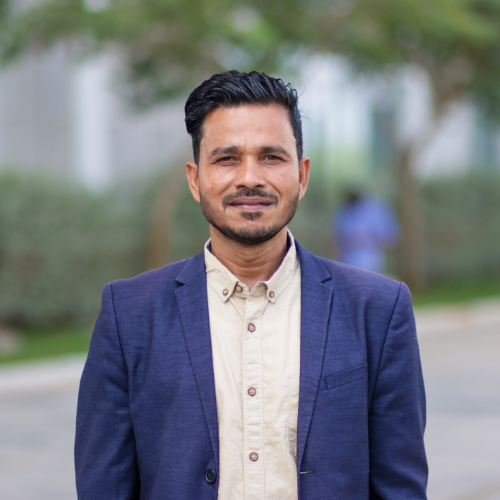
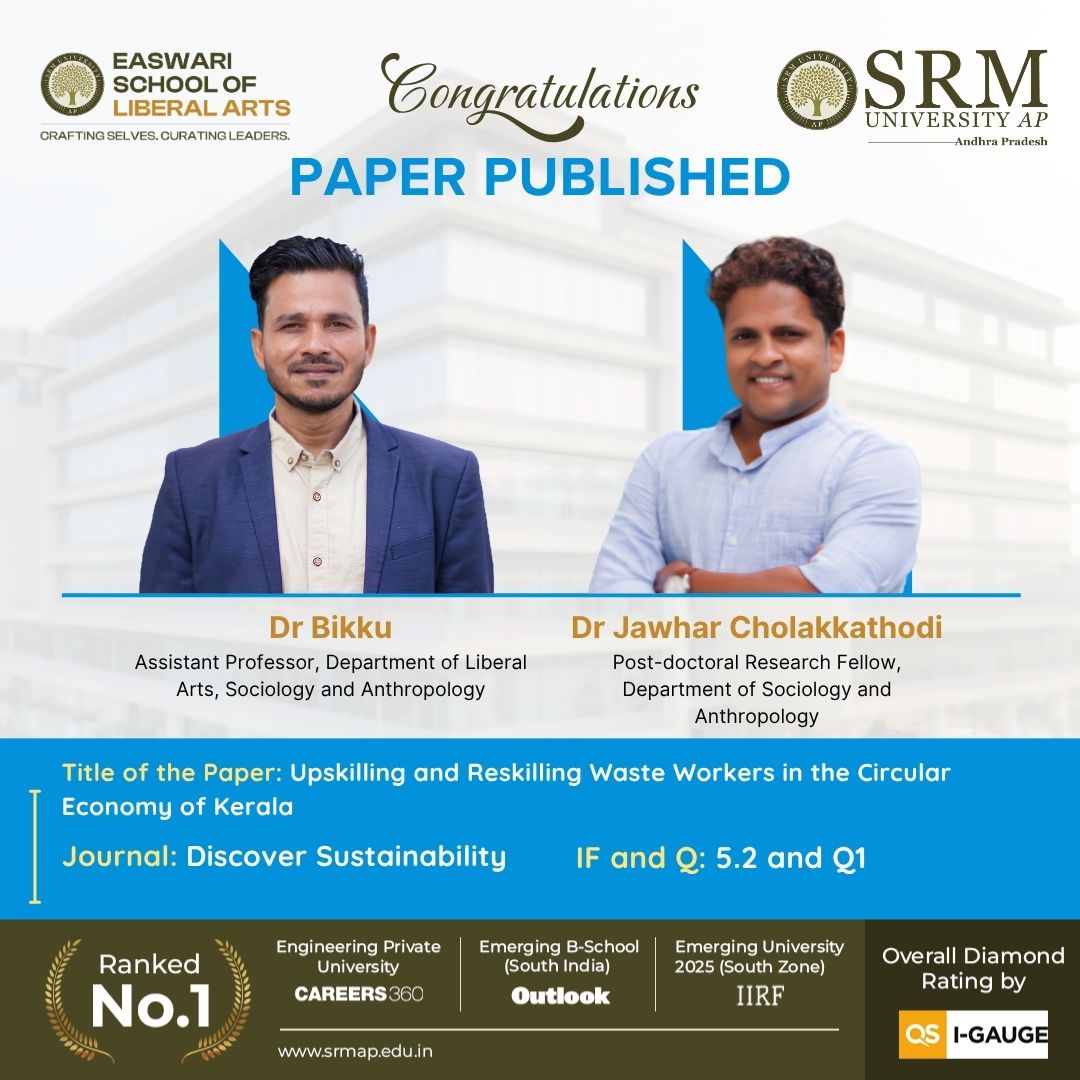
This research, published by Dr Bikku, Assistant Professor in the Department of Sociology and Anthropology at SRM University-AP, in the Q1 journal Discover Sustainability (Springer Nature), having an impact factor of 5.2, titled Upskilling and Reskilling Waste Workers in the Circular Economy of Kerala, presents a qualitative case study of Green Worms, a leading social enterprise in Kerala that manages plastic waste and drives a circular economic transition in the region.
This research was carried out by Jawhar Cholakkathodi, a Post-Doctoral Fellow, under the mentorship of Dr Bikku, Assistant Professor, in the Department of Sociology and Anthropology at SRM University-AP.
This study shows how structured training can transform waste work into a more secure, respected, and environmentally significant profession, offering a model for inclusive green employment across India’s expanding circular economy.
Abstract
This paper examines the role of upskilling and reskilling in transforming waste work within the emerging circular economy in India. The available literature on waste management and skill development overlooks the interconnection between skill development and the transformation of the waste workforce in the Global South. This study addresses this gap through a case study of Green Worms, a leading social enterprise in Kerala, India, that manages plastic waste and drives a circular economic transition. Using a qualitative case study approach that includes semi-structured interviews, participant observation, document analysis, and case studies, this paper examines the social embeddedness of upskilling and reskilling processes in the waste management sector. The study looked at various upskilling and reskilling initiatives conducted by Green Worms, including training in segregation, menstrual hygiene, self-defence, first aid, and the prevention of sexual harassment, to understand the role of skill training in strengthening the green workforce within decentralised waste management systems. It also examines the role of such training in reshaping the social identity of waste workers by reducing occupational stigma and reframing waste work as dignified work. The paper argues that upskilling and reskilling are central to this transition towards a circular economy. By linking labour transformation, gender, dignity of labour, and circular economy transitions, the study contributes to discussions on green skills, informal labour formalisation, and sustainable development in the Global South. Skill development in the waste management sector is not merely a technical training process but a socially embedded practice that transforms stigmatised informal waste work into skilled, formalised, and gender-inclusive green labour.
Practical Implementation and Social Implications
The study highlights how community-based skill training can improve waste management, worker safety, gender inclusion, and social dignity. Governments, municipalities, and social enterprises can adopt similar upskilling models to strengthen decentralised recycling systems, create green jobs, and support a more inclusive circular economy.
Key Benefits
- Strengthened decentralised waste management systems through structured skill training
- Improved worker safety through training in health, hygiene, and first aid
- Reduced occupational stigma and greater dignity for waste workers
- Enhanced gender inclusion through training in self-defence and prevention of sexual harassment
- A replicable model for green job creation within India’s circular economy
Future research will compare upskilling and reskilling initiatives across different Indian states and waste management models. It will examine long-term impacts on income, social mobility, gender relations, and worker well-being, while exploring how policy support and public-private partnerships can strengthen inclusive circular economy transitions in the Global South.
Read the full article here.