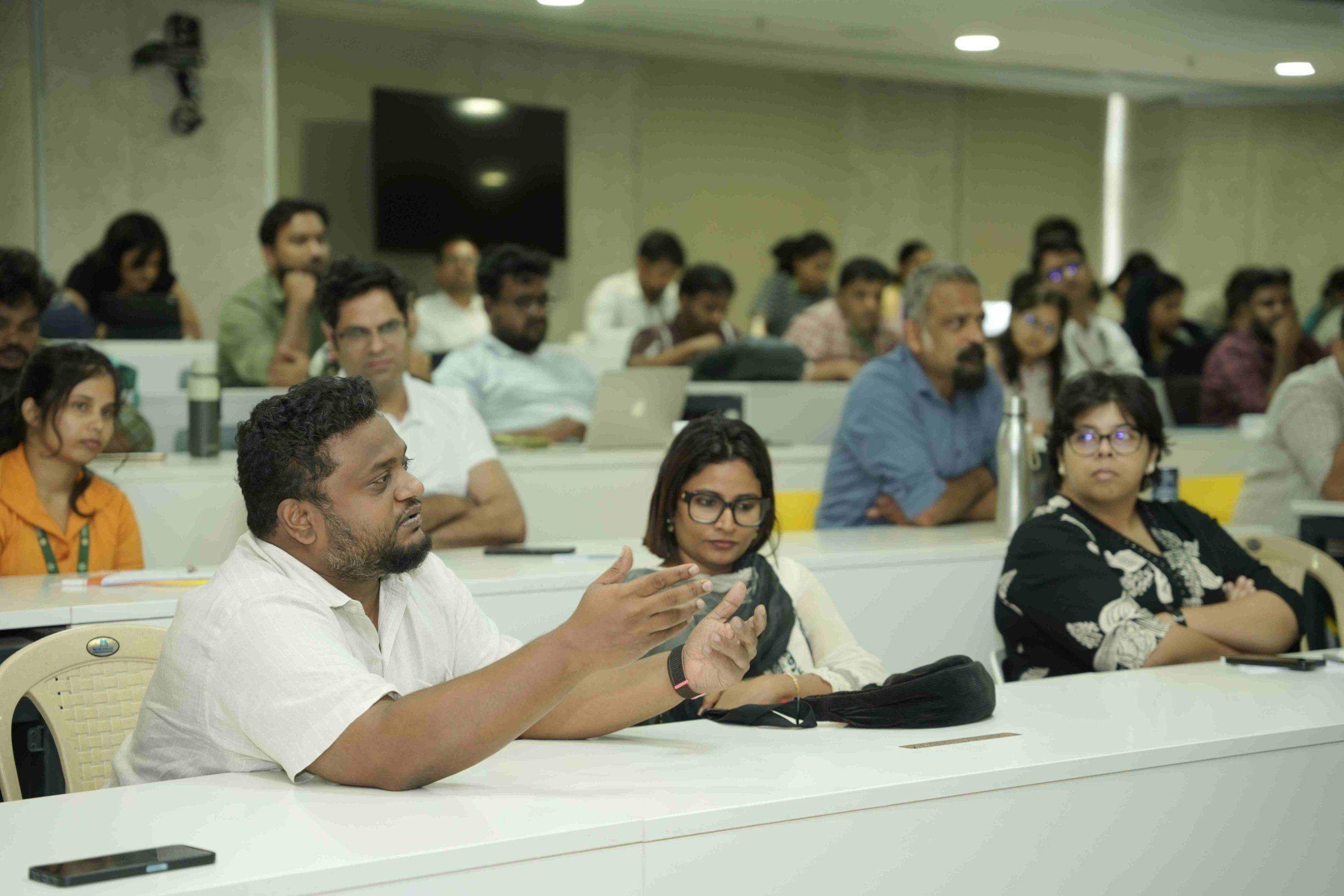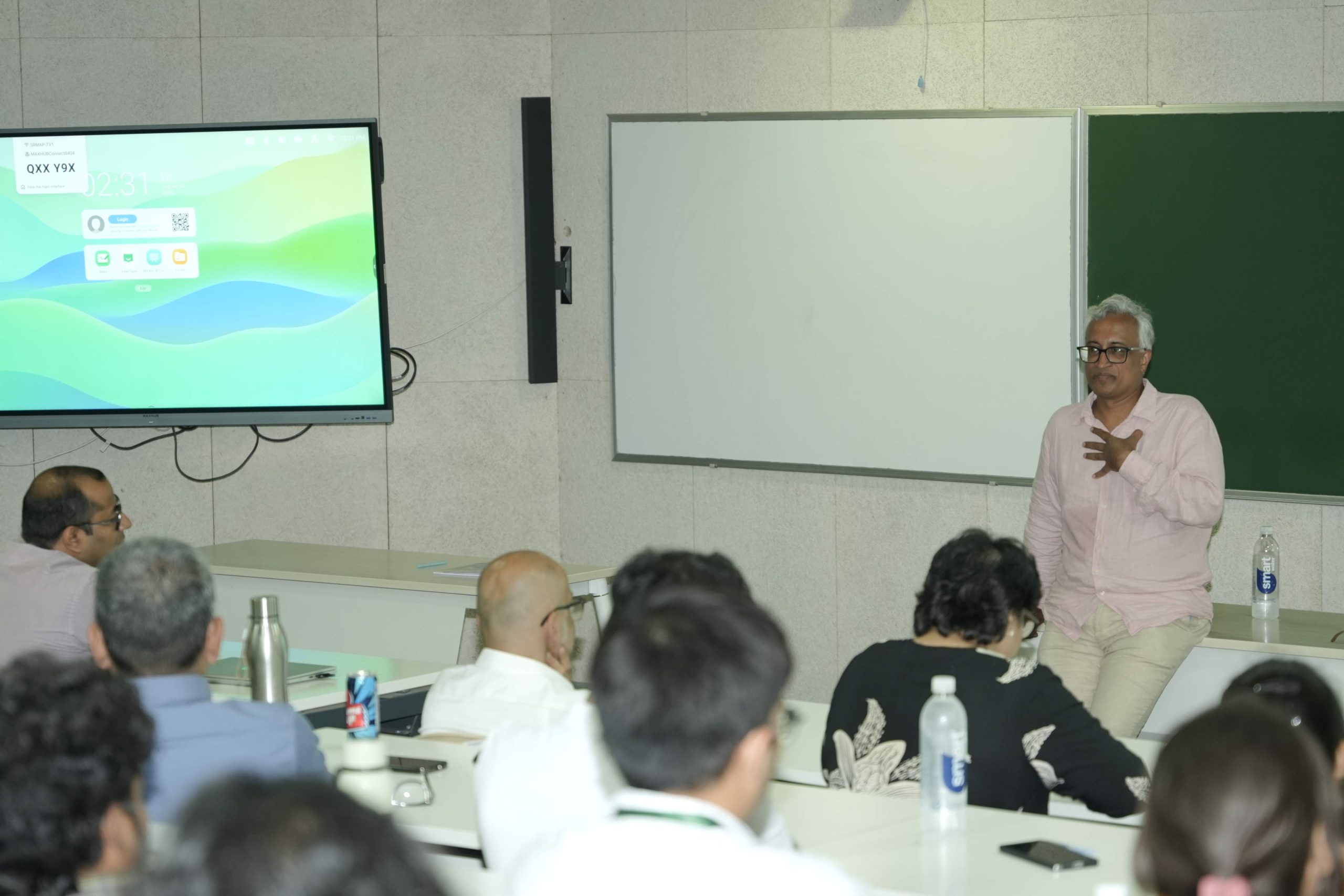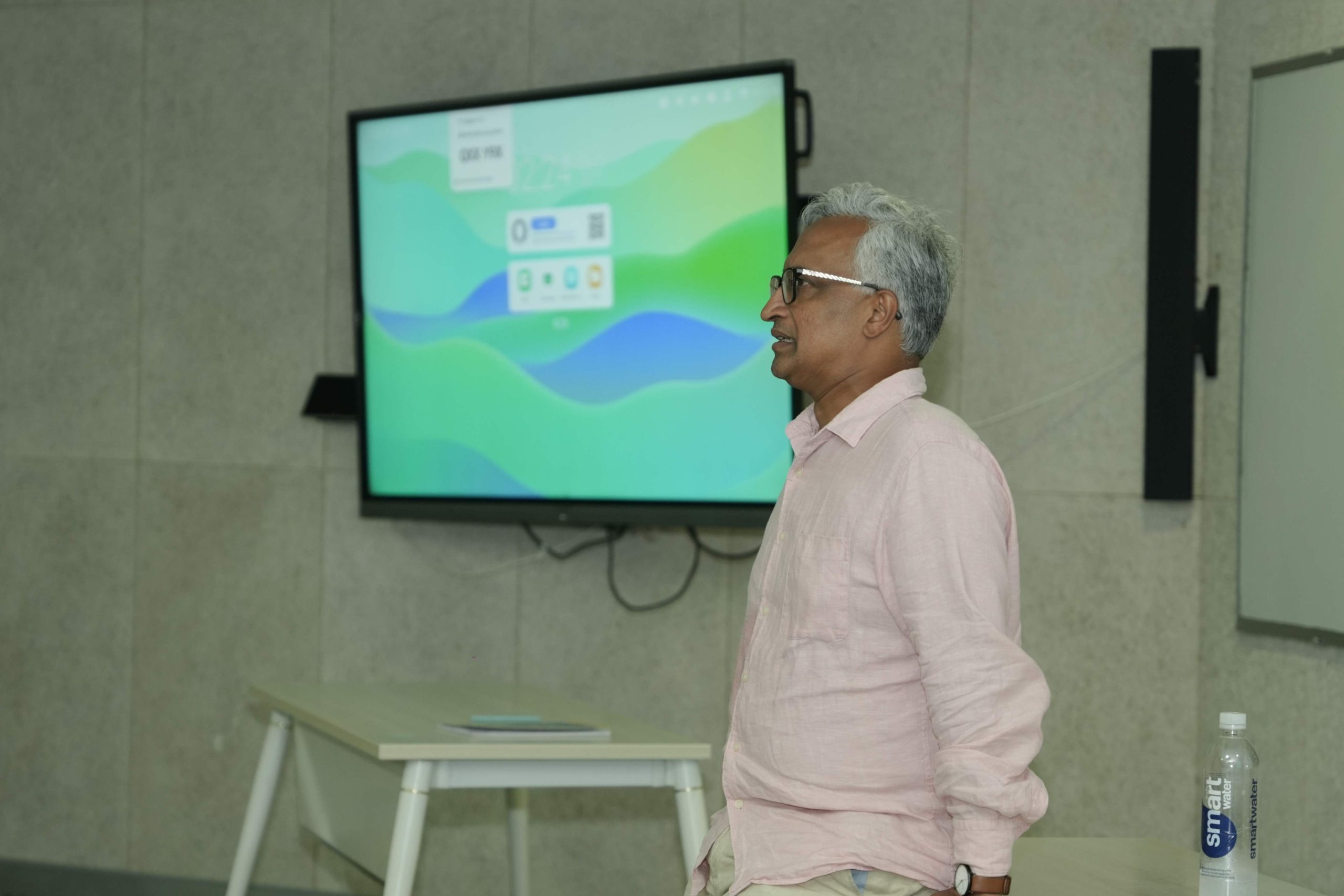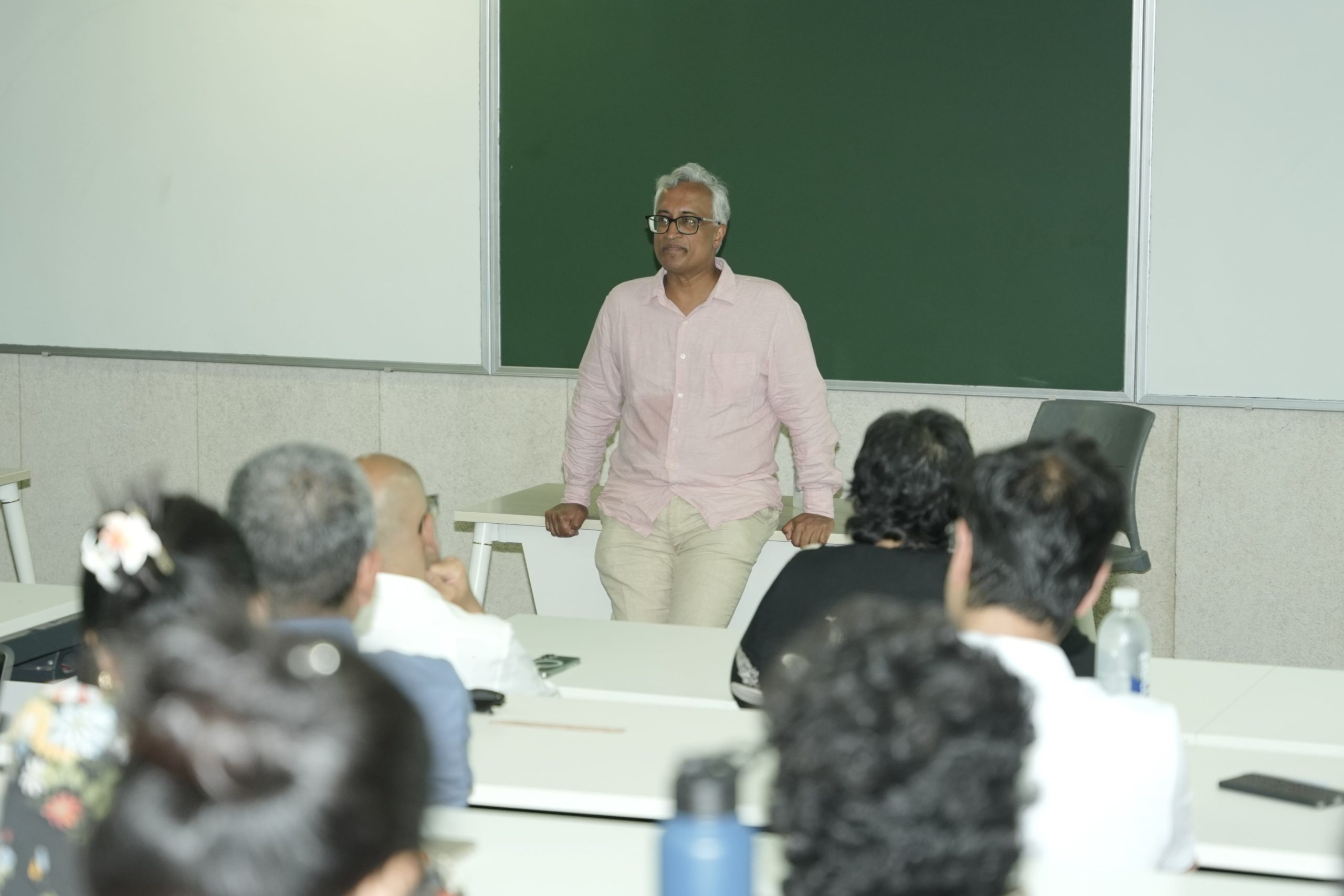

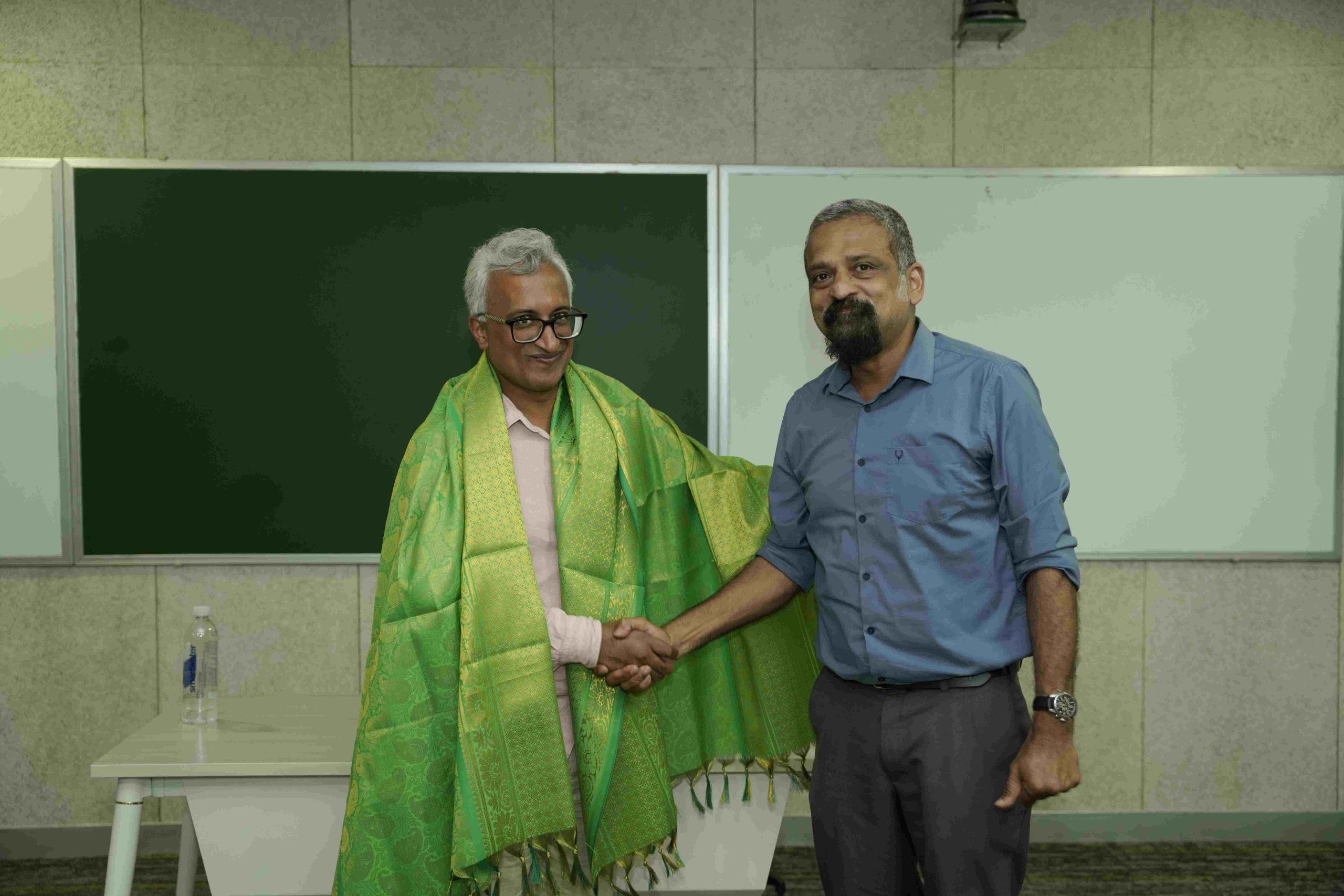
 The Department of Economics, Easwari School of Liberal Arts, hosted a thought-provoking lecture titled “Values & Measures” by Prof. Sanjay Reddy, Professor of Economics at The New School for Social Research, New York, USA, on 14 August 2026.
Prof. Reddy’s lecture explored a fundamental yet often overlooked question in economics and the human sciences: Can measurement ever be separated from values? Drawing from his extensive work on poverty, inequality, national income, development, welfare, and quality of life, he examined how the ways in which societies measure economic and social realities are shaped by underlying judgements about what matters and what ought to be valued.
Beyond Numbers: Understanding the Role of Values
Opening with the relationship between measurement and theoretical understanding, Prof. Reddy challenged the conventional view that measurement simply provides objective data upon which theories are subsequently built. He proposed a more interconnected relationship, where understanding itself is often necessary to determine what and how we measure.
Using examples from economics, he demonstrated how seemingly objective measures can involve normative choices. Converting a large range of economic activities and commodities into a single indicator such as GDP, for instance, requires decisions about how different goods and services should be valued and weighted.
The discussion also drew attention to longstanding critiques of national income accounting. Feminist economists have highlighted the exclusion of unpaid household work, while environmental and ecological economists have questioned how natural resources and environmental costs are represented within conventional economic measures.
Rethinking the Measurement of Poverty
A significant part of the lecture focused on the measurement of poverty. Prof. Reddy explained that determining who is poor and how poverty changes across time and places cannot rely solely on observed patterns of consumption.
He noted that people experiencing poverty may have already adapted their consumption to severe constraints and may therefore be unable to afford goods and services that are nevertheless necessary for an adequate standard of living. In this context, simply observing what people consume may not provide an appropriate basis for determining what constitutes a minimally adequate standard of living.
Prof. Reddy advocated a capability-based approach to understanding poverty, drawing attention to capabilities such as being adequately nourished, having adequate shelter, and being able to participate in society without shame. Such an approach, he argued, makes the value judgements underlying poverty measurement more explicit and open to discussion.
Making Measurement More Transparent
The lecture further explored how value judgements influence the construction of consumer price indices, poverty lines, and measures of living standards. According to Prof. Reddy, recognising these judgements does not make measurement less scientific. Instead, making the underlying assumptions transparent can make measurement more rigorous and open to critical evaluation.
Through examples from India and global poverty measurement, he highlighted the importance of establishing clear conceptual foundations before translating complex social realities into statistical indicators.
An Interdisciplinary Conversation
The lecture reflected SRM University–AP’s commitment to fostering interdisciplinary academic dialogue. Prof. Reddy’s work connects economics with philosophy, ethics, history, politics, and questions of social justice, offering students and faculty an opportunity to examine economic questions beyond their technical dimensions.
The session concluded with a broader reflection on the relationship between facts and values, emphasising that the two are often deeply intertwined in the human sciences. By questioning how measures are constructed and what they ultimately represent, the lecture encouraged participants to look beyond numbers and critically examine the assumptions that shape our understanding of economic and social life.