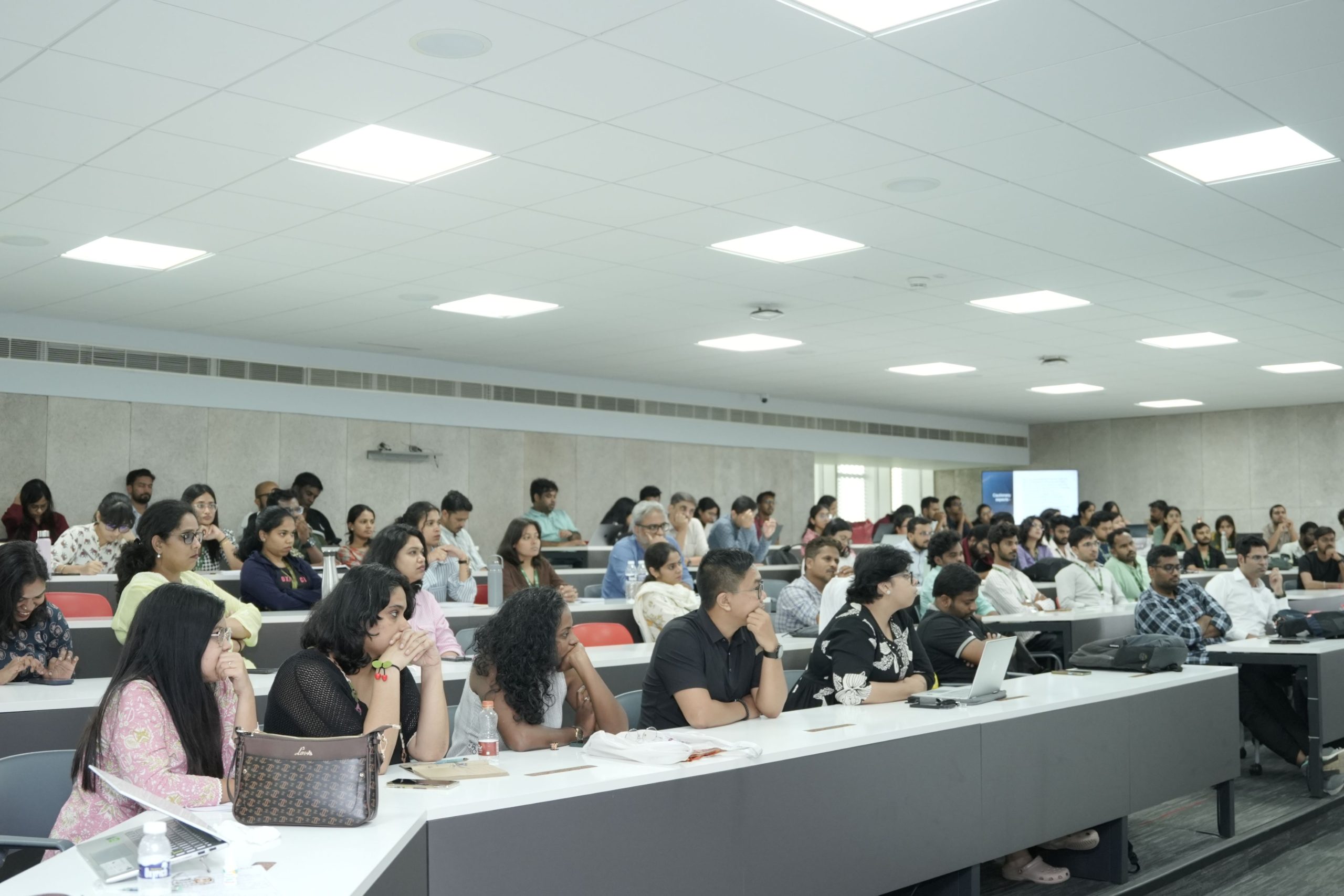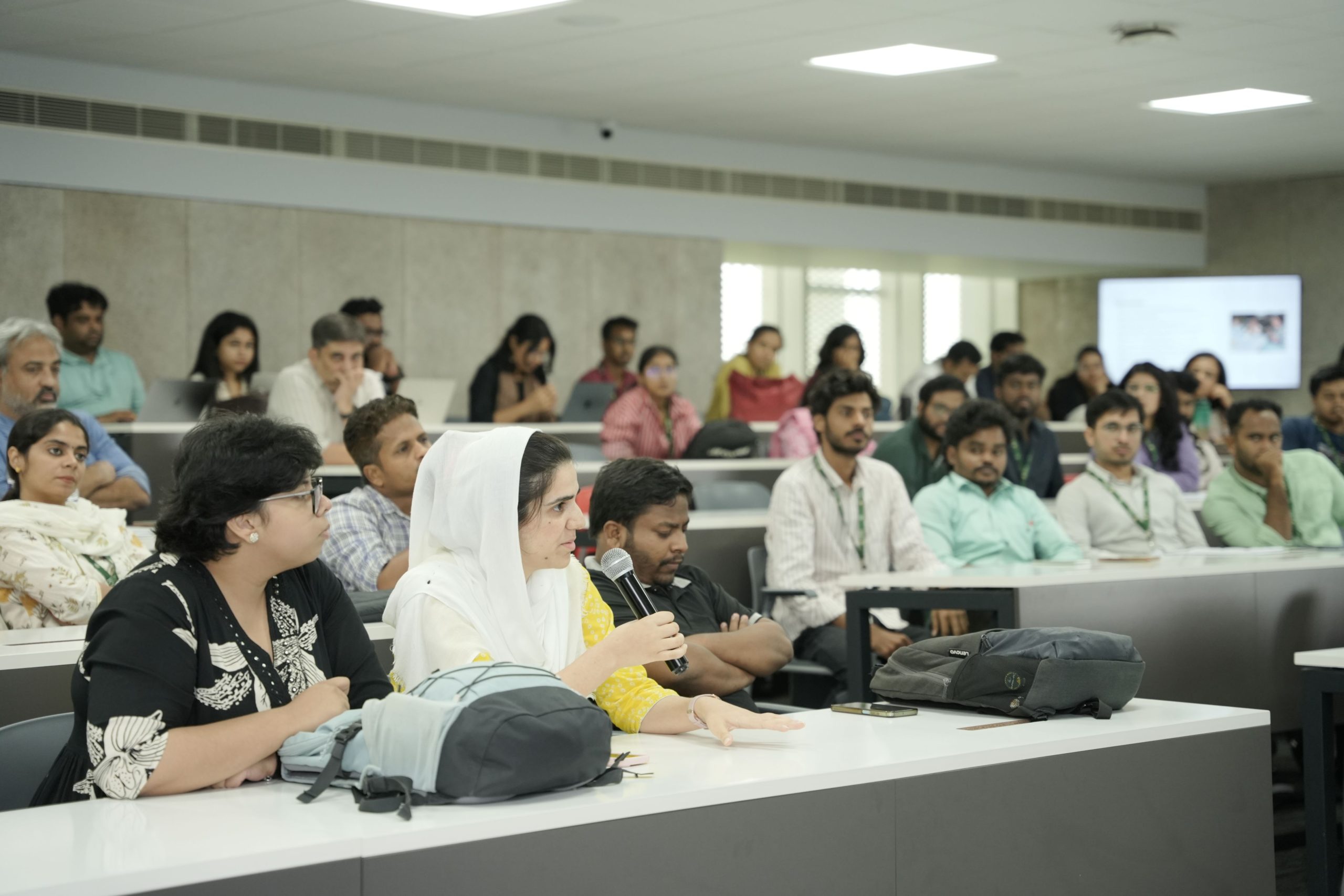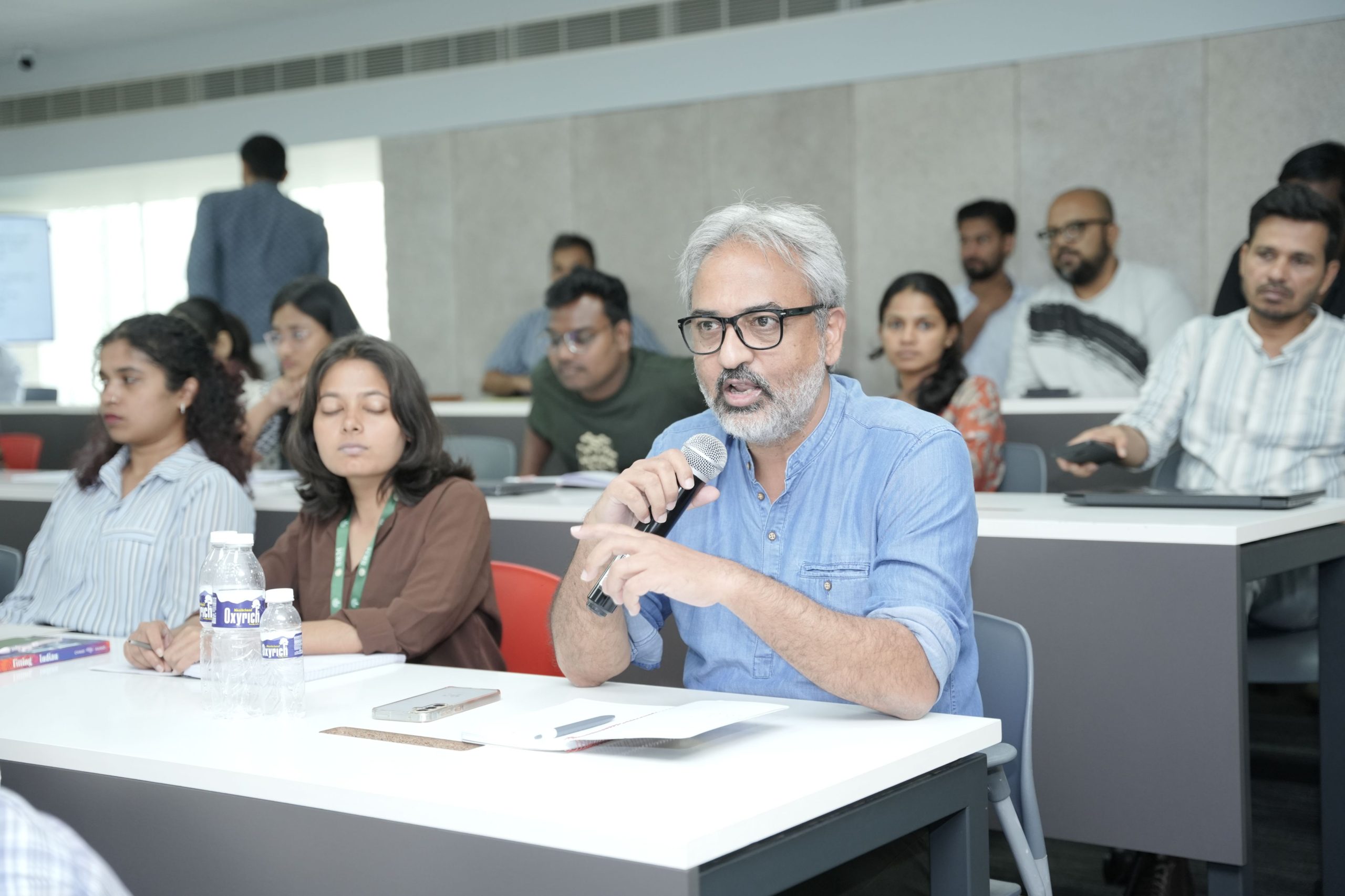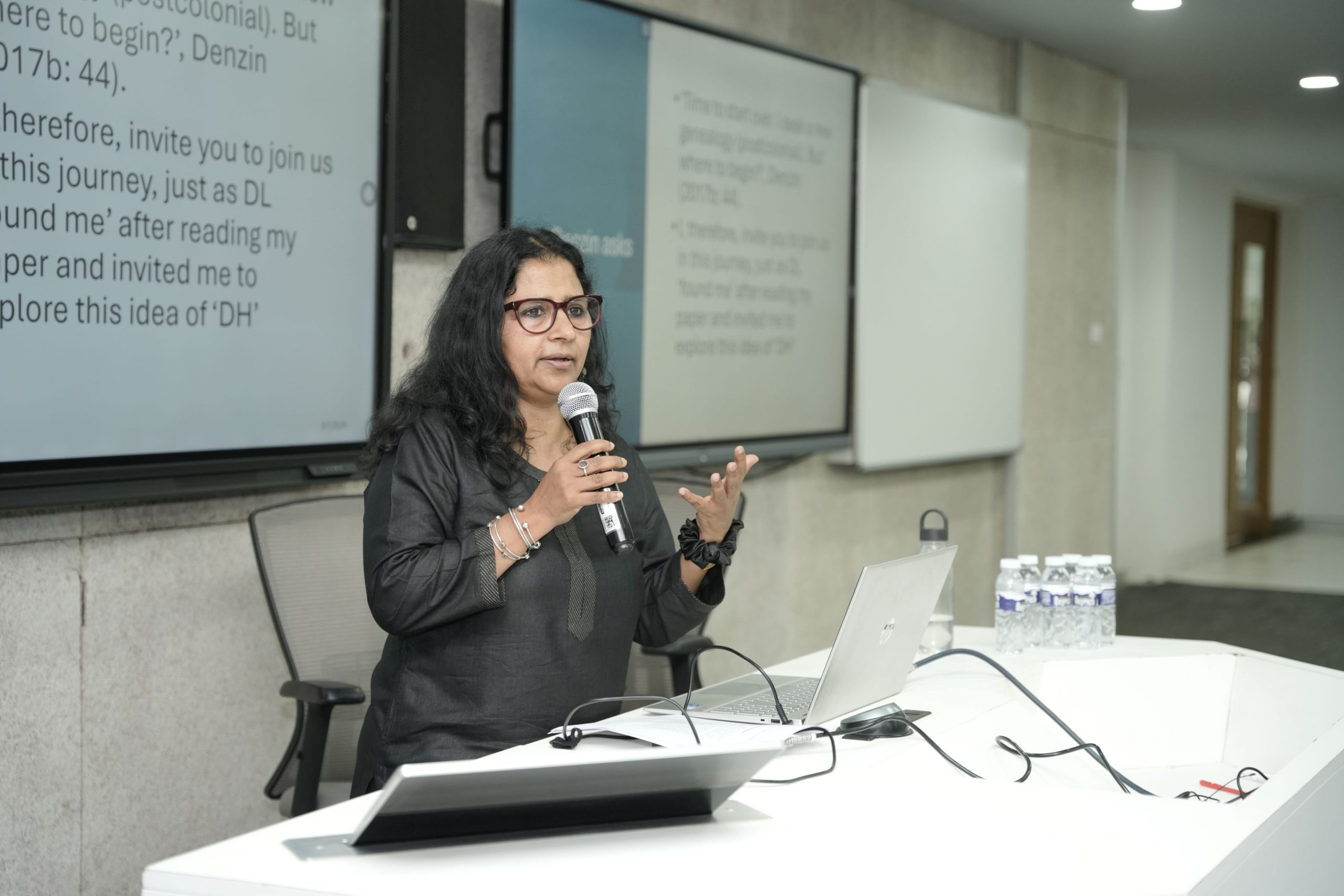

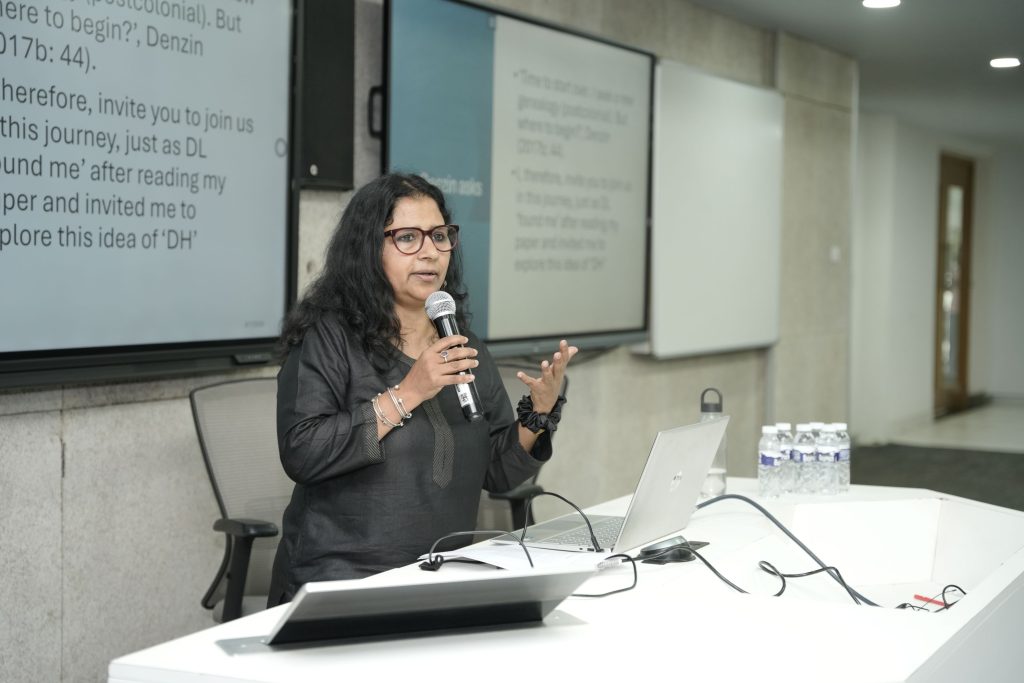
The Department of Political Science, Easwari School of Liberal Arts (ESLA) successfully organised a Distinguished Guest Lecture titled “The Emancipatory Potential of Poetry in Decolonising Development” on August 07, 2026, featuring Dr Nita Mishra, Associate Professor, Department of Politics & Public Administration, University of Limerick, Ireland, as the distinguished speaker. The event focused on the potential of poetry as an alternative methodological tool within Development Studies and its role in amplifying marginalised voices, challenging dominant narratives, and contributing to more inclusive and emancipatory forms of knowledge production.
The lecture examined the emancipatory potential of poetry as a methodological tool within Development Studies, particularly its ability to amplify marginalised voices and challenge dominant narratives of development. Dr Mishra highlighted how poetry can provide alternative ways of expressing lived experiences that may remain overlooked through conventional research methodologies. The discussion encouraged participants to reflect on the relationship between knowledge, representation, voice, and power in the study of development.
Dr Mishra’s interdisciplinary research interests encompass development, rights, social justice, women’s rights, food rights, street-level bureaucrats, and the environment. Her work uses arts-based qualitative research methodologies to generate forms of knowledge and data that may not be captured through traditional approaches. Her engagement with poetry and migrant narratives in Ireland further demonstrated the potential of creative expression to bring marginalised experiences into public and academic discourse.
The lecture also introduced participants to the emerging field of Development Humanities, which seeks to bring humanities-based perspectives into Development Studies. The session demonstrated how literature, poetry, and other creative practices can contribute to critical reflections on development, particularly by questioning established assumptions about whose knowledge counts and whose experiences are represented within development narratives.
Overall, the Distinguished Guest Lecture provided a valuable interdisciplinary academic platform for exploring the intersection of poetry, development, decolonisation, social justice, and knowledge production. It encouraged participants to reconsider conventional boundaries between creative expression and academic research and highlighted the potential of arts-based methodologies to generate more inclusive understandings of development.