
Artificial Intelligence is no longer something that libraries are simply experimenting with—it is quietly becoming part of everyday work. Many librarians now use AI-powered tools for searching information, summarising documents, drafting content, and assisting users.
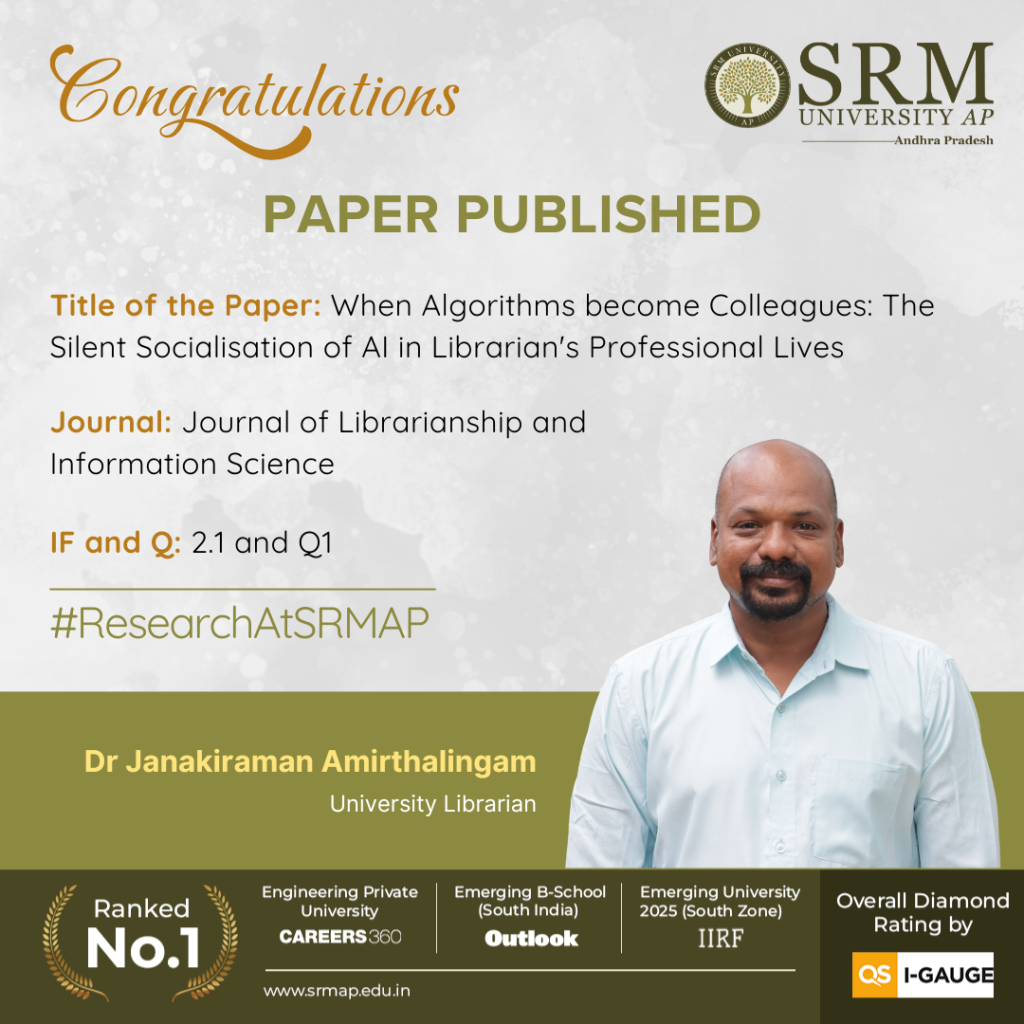
Dr Janakiraman Amirthalingam, University Librarian, SRM AP, has published a paper titled “When algorithms become colleagues: The silent socialisation of AI in librarians’ professional lives” in the Journal of Librarianship and Information Science, which explores this hidden transformation. The study encourages educational institutions and libraries to adopt AI thoughtfully, with proper ethical guidelines and governance.
Abstract
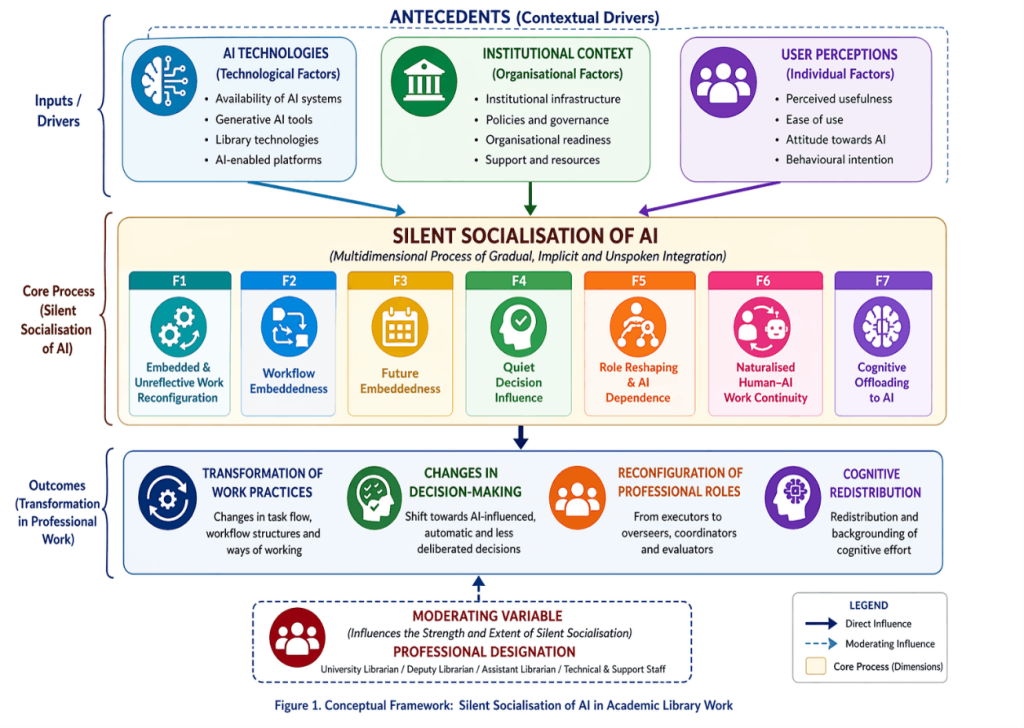
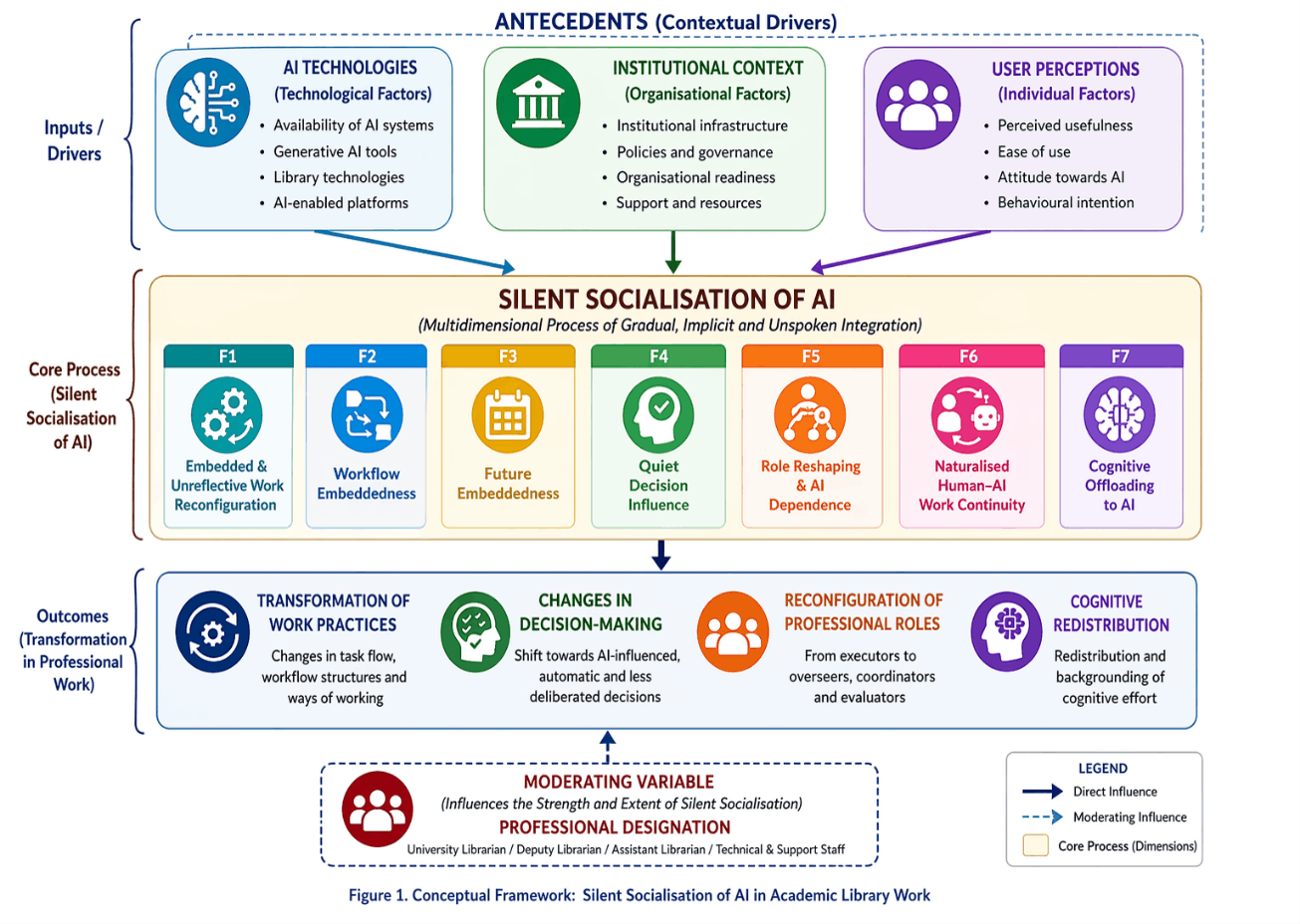
This research investigates the concept of the “silent socialisation of Artificial Intelligence (AI)” in academic library environments. Rather than viewing AI as merely a technological tool, the study explores how AI gradually becomes an invisible yet routine part of librarians’ everyday professional work. Using a quantitative cross-sectional survey of 100 academic library professionals across India, the study identifies seven dimensions through which AI integrates into library workflows, including workflow embeddedness, cognitive offloading, implicit decision influence, and future embeddedness. The findings reveal that AI is increasingly experienced as an infrastructural condition of work, subtly influencing decision-making, professional roles, and cognitive processes. The study introduces the concept of “silent socialisation of AI” and highlights the importance of governance, ethical awareness, and critical engagement as AI becomes deeply embedded in academic library practice.
Practical Implementation / Social Implications
The findings of this study have important implications for academic libraries, higher education institutions, and policymakers. As AI becomes an integral part of professional workflows, libraries need to establish clear policies and ethical frameworks governing its use. The research can assist institutions in developing AI literacy programmes, staff training initiatives, and governance models that ensure transparency, accountability, and responsible adoption.
More broadly, the study contributes to the ongoing conversation about how AI is reshaping human work and professional identity, helping society better understand the opportunities and challenges associated with human–AI collaboration.
Collaborations
This research was carried out through an interdisciplinary and international collaboration among scholars from:
- Bennett University, Greater Noida, Uttar Pradesh, India
- J. Watumull Sadhubella Girls College, Ulhasnagar, Maharashtra, India
- SRM University-AP, Andhra Pradesh, India
- Eden University, Lusaka, Zambia
- Vinayaka Mission’s Kirupananda Variyar Arts and Science College, Salem, Tamil Nadu, India
- Vinayaka Mission’s Research Foundation (Deemed to be University), Salem, Tamil Nadu, India
The collaboration brought together expertise in Library and Information Science, Artificial Intelligence, digital transformation, and higher education.
Future Research Plans
Building upon this work, future research will focus on developing and validating a comprehensive framework for measuring AI socialisation across different professional settings. The next phase will include larger national and international studies, longitudinal analyses to understand how AI integration evolves over time, and qualitative investigations into how AI influences professional identity and decision-making. Further research will also explore AI governance, ethics, transparency, and responsible implementation in libraries and educational institutions.