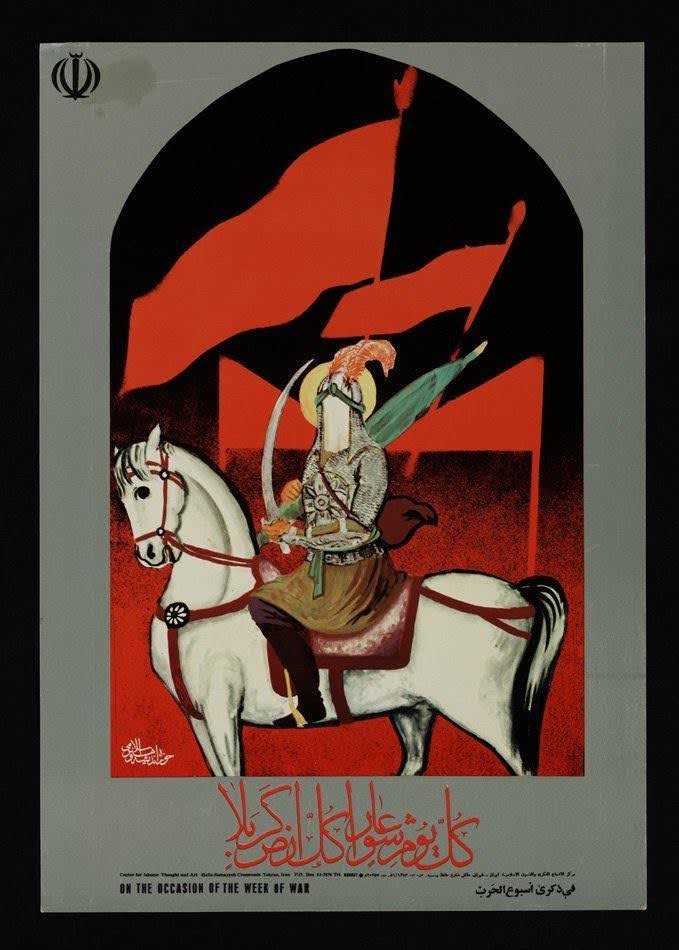

Dr Aqsa Agha, Assistant Professor, Department of History has published a paper titled “Revisiting Shariati in a Time of War: Karbala, Resistance and Political Theology of Iran” in the journal EPW (Perspectives). This paper revisits the ideas of Iranian sociologist and intellectual Ali Shariati, highlighting their continuing relevance in contemporary political contexts. It argues that the spirit of dissent embodied in the memory of Karbala cannot be confined to any single political order; instead, it endures as a moral force that can both legitimise and challenge authority while giving meaning to suffering in times of conflict. Examining how this symbolic resource is mobilised during crises enables a deeper understanding of Iran beyond simplistic binaries, revealing a political theology rooted in sacrifice, martyrdom, social justice, and collective resistance.
Abstract:
This paper revisits the thought of Iranian sociologist and intellectual Ali Shariati. The enduring relevance of Shariati’s insight lies in recognising that the political “No” embedded in the memory of Karbala cannot be permanently captured by any single political order. It remains a moral resource capable of legitimising authority, contesting authority, and interpreting the suffering produced by war. Understanding how that resource is mobilised in moments of crisis offers a way to move beyond the simplified binaries that often dominate discussions of Iran and to recognise the deeper political theology through which resistance continues to be imagined imbedded in the narratives of sacrifice, martyrdom, social justice, and collective resistance.
Explanation in Layperson’s Terms:
Most people know Karbala as a historical battle that holds deep significance for Muslims, particularly Shi’a communities. Our research explores how Iranian thinker Ali Shariati interpreted Karbala not merely as a religious event but as a universal story about standing up against injustice. The paper shows how Shariati’s ideas inspired generations of Iranians to view resistance, sacrifice, and social justice as moral responsibilities. These ideas played an important role in shaping political thought in Iran and continue to influence discussions around war, identity, and public action today.
In simple terms, the research asks: How can events from the past continue to shape political ideas and social movements in the present? Through the example of Karbala and Shariati’s writings, the paper demonstrates how history and memory remain powerful forces in contemporary politics.
Practical Implementation and Social Implication:
The research contributes to broader discussions on the relationship between religion, history, memory, and politics. It offers insights into how historical narratives and collective memory shape public identities, political discourse, and forms of social action in contemporary societies. It examines the ways in which religious symbols and historical events are mobilised during periods of conflict and crisis, offering a deeper understanding of political developments in Iran and the wider West Asia through their historical and cultural contexts. By encouraging more informed engagement with questions of religion, resistance, and social justice, the study holds particular relevance for scholars, policymakers, media professionals, and students interested in the cultural and historical dimensions of political mobilisation.
Future Research Plan:
Dr Aqsa’s future research will continue to examine the intersections of history, memory, religion, and politics across South Asia and the broader Islamic world.
The Link to the Article:
https://www.epw.in/journal/2026/22/perspectives/revisiting-shariati-time-war.html