
India is the world’s second-largest producer of cement, and the Indian cement industry accounts for 7-8% of global carbon emissions. To reduce these emissions, the Government of India (GOI) has set targets to make the cement sector cleaner and more sustainable by 2030.
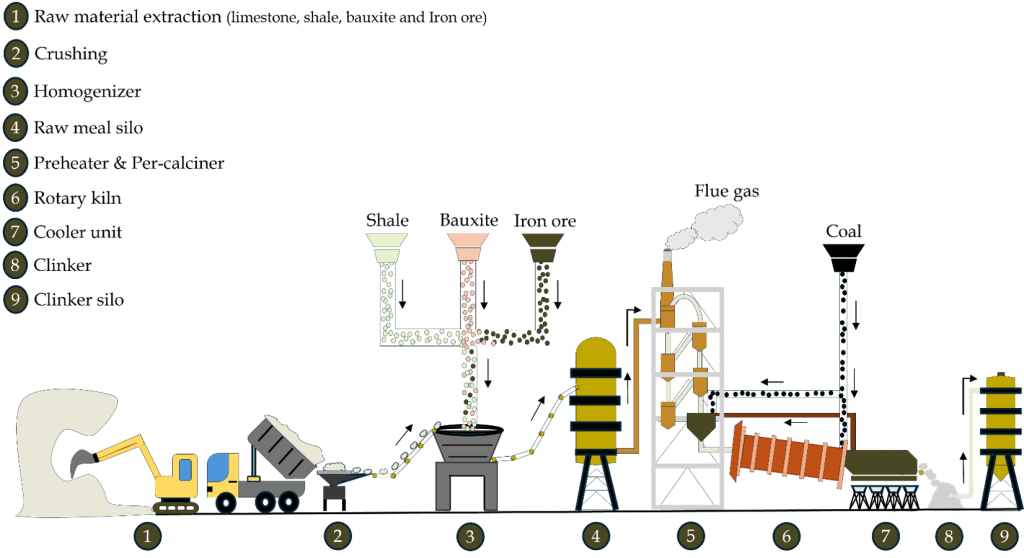
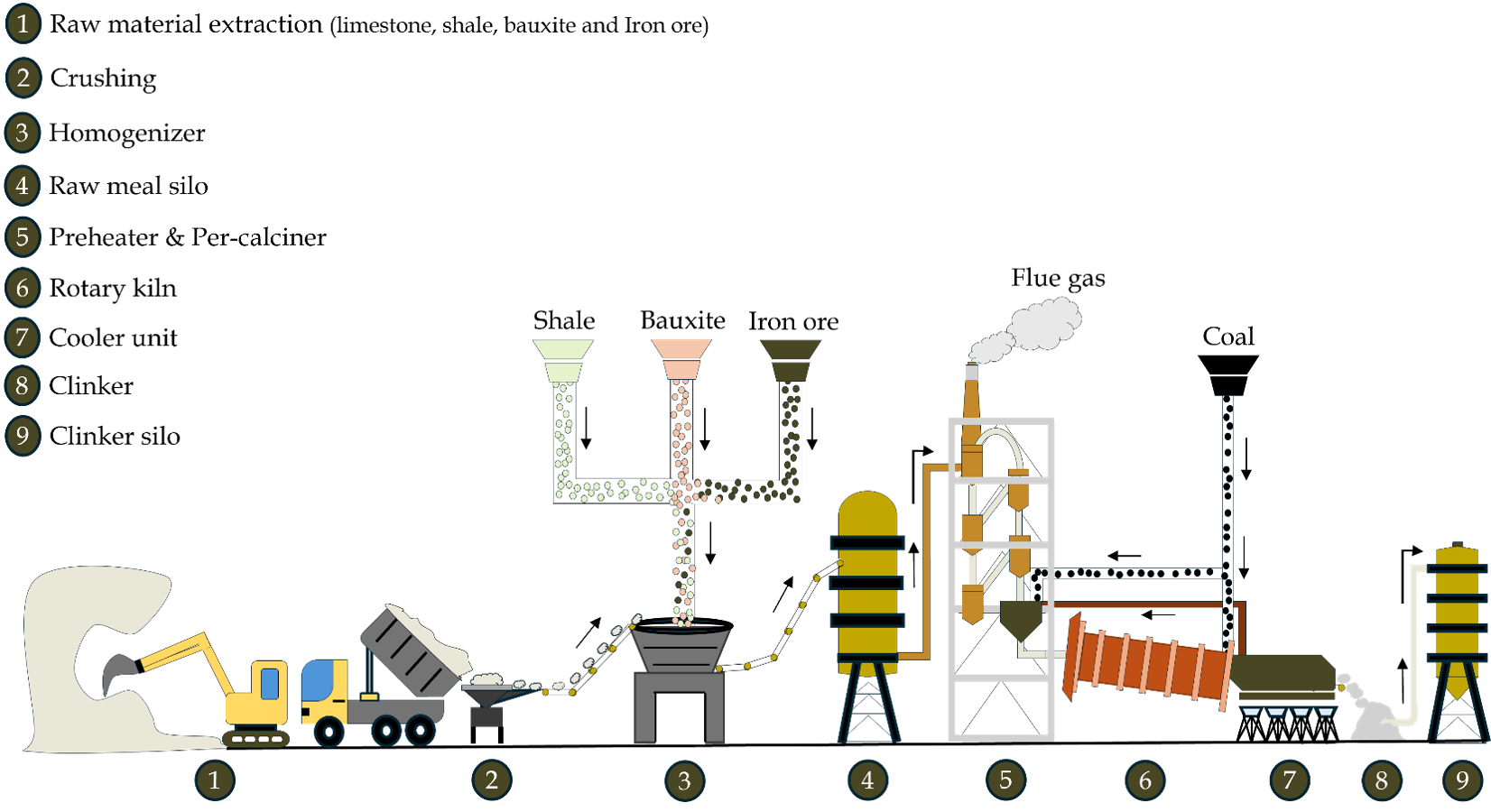
A major source of emissions is clinker production, a key ingredient for binding. In this context, Dr Karthik Rajendran, Associate Professor, Dr Vigneswaran V S, Assistant Professor and Mr Rahul Ramesh, PhD Scholar from the Department of Environmental Science and Engineering, have conducted research investigating ways to reduce these emissions by replacing conventional fossil fuels with alternative fuels, such as agricultural waste, and applying carbon capture technology.
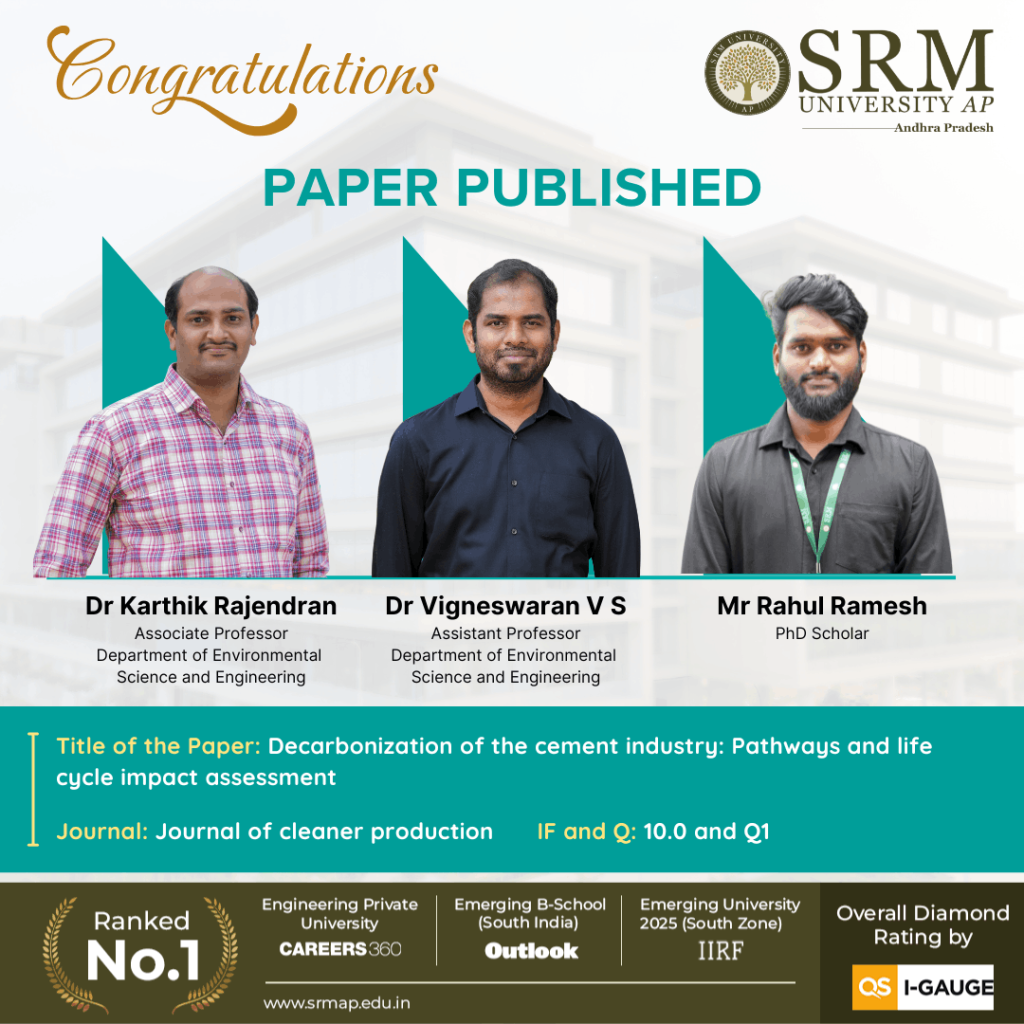
Their article “Decarbonization of the cement industry: Pathways and life cycle impact assessment”, published in the Journal of Cleaner Production, a Q1 journal with an impact factor of 10, shows that combining agricultural waste-based fuels with carbon capture technology has the potential to significantly reduce emissions and support the transition toward a net-zero cement industry.
Abstract
The Indian cement industry alone contributes for 7% of total CO2 emissions. Majority of these emissions originate from clinker production, which is the primary intermediate product in cement manufacturing. Clinker consumes about 3.07-3.3 GJ/t of thermal energy were predominately supplied by fossil fuels, while limestone calcination further results in emissions of 0.9-1 t CO2eq./t. Hence, to decarbonize clinker production, fossil fuels must be replaced with alternative fuels and implementing carbon capture technologies to capture the CO2 emitted from the calcination process. In this regard, this study evaluates the potential of rice husk (RH) and torrefied rice husk (TRH) as alternative fuels to decarbonize clinker production, along with the integration of carbon capture and storage (CCS). Six scenarios were developed and compared with business-as-usual (BAU) through a cradle-to-gate life cycle assessment to identify the environmental sustainability of the process. Among these, scenarios 5 and 6 demonstrated the highest emission reductions, with emissions reduced from 926.5 kg CO2eq./t of clinker in BAU to 709.7 kg CO2eq./t in scenario 5 and 708.7 kg CO2eq./t in scenario 6. The emission reduction was mainly attributed to the substitution of fossil fuels (25%) with RH and TRH, along with CCS. Hence, the use of alternative fuels along with CCS can facilitate to reduce the carbon intensity of clinker production and aid India in achieving its decarbonization target (560 kg CO2eq./t of cement) for the cement sector by 2030.
Practical implementation/ Social implications of Research
The practical implementation of this research lies in supporting the decarbonization of the Indian cement industry through the adoption of alternative fuels and carbon capture technologies. The findings provide scientific evidence on the environmental benefits of utilising agricultural waste as an alternative fuel in cement production. This approach can reduce greenhouse gas emissions associated with fossil fuel combustion while promoting the beneficial use of agricultural residues as a valuable resource. In addition, carbon capture technologies offer a promising solution for mitigating the process-related emissions that are inherently generated during clinker production. Together, these strategies can contribute significantly to reducing the carbon footprint of the cement industry and advancing its transition toward a more sustainable and low-carbon future.
Future Research Plans
Future research will focus on developing policy frameworks that support the decarbonization of the cement industry and facilitate the adoption of low-carbon technologies. Also focus on evaluating the potential of green hydrogen as an alternative fuel for cement manufacturing. The research will examine the technical feasibility, environmental benefits, economic viability, and infrastructure requirements associated with green hydrogen utilisation under Indian conditions. In addition, policy mechanisms, regulatory frameworks, and incentive structures necessary for large-scale deployment will be assessed. These efforts aim to contribute to the development of sustainable pathways for reducing carbon emissions and achieving net-zero targets in the cement sector.