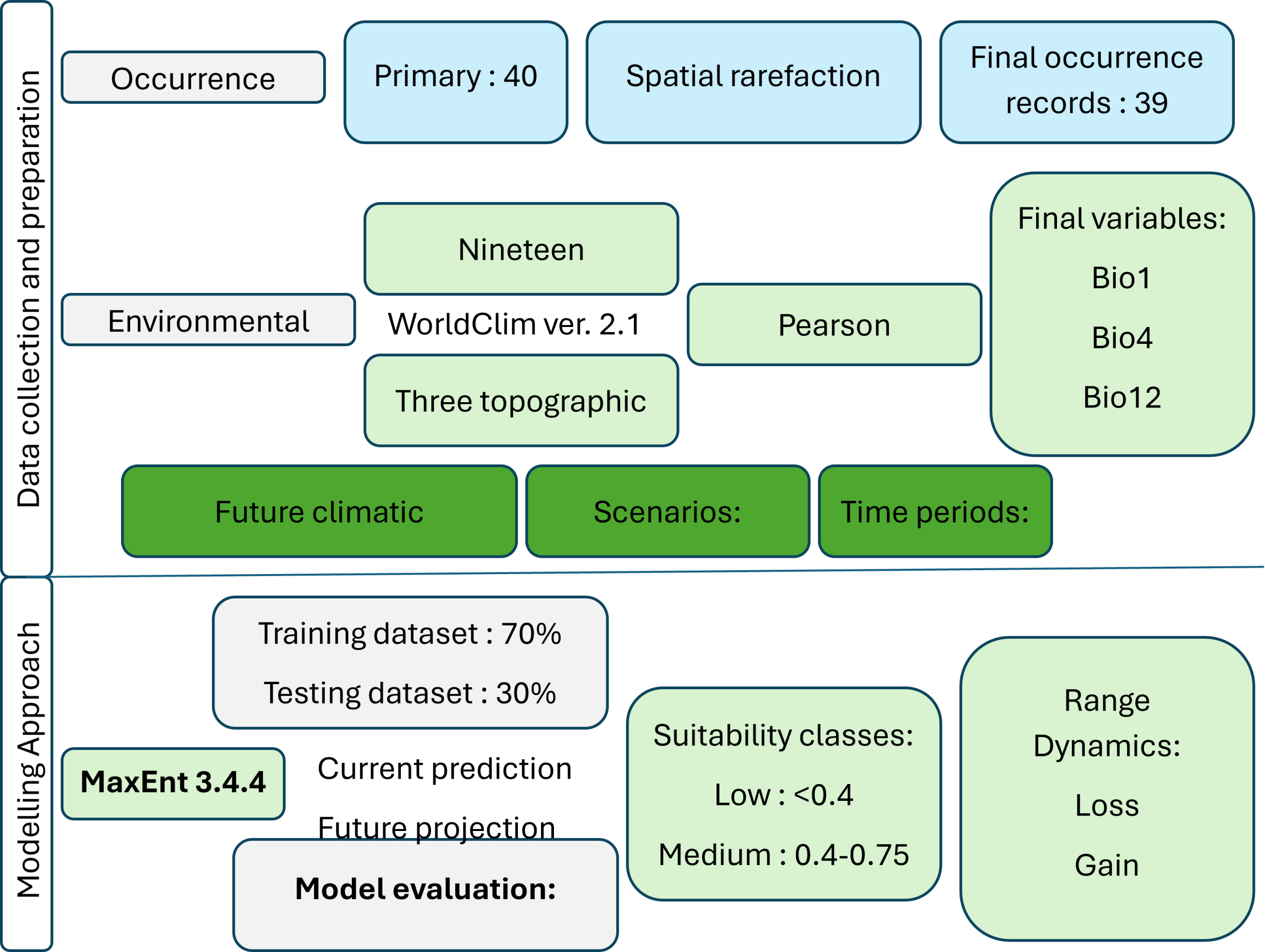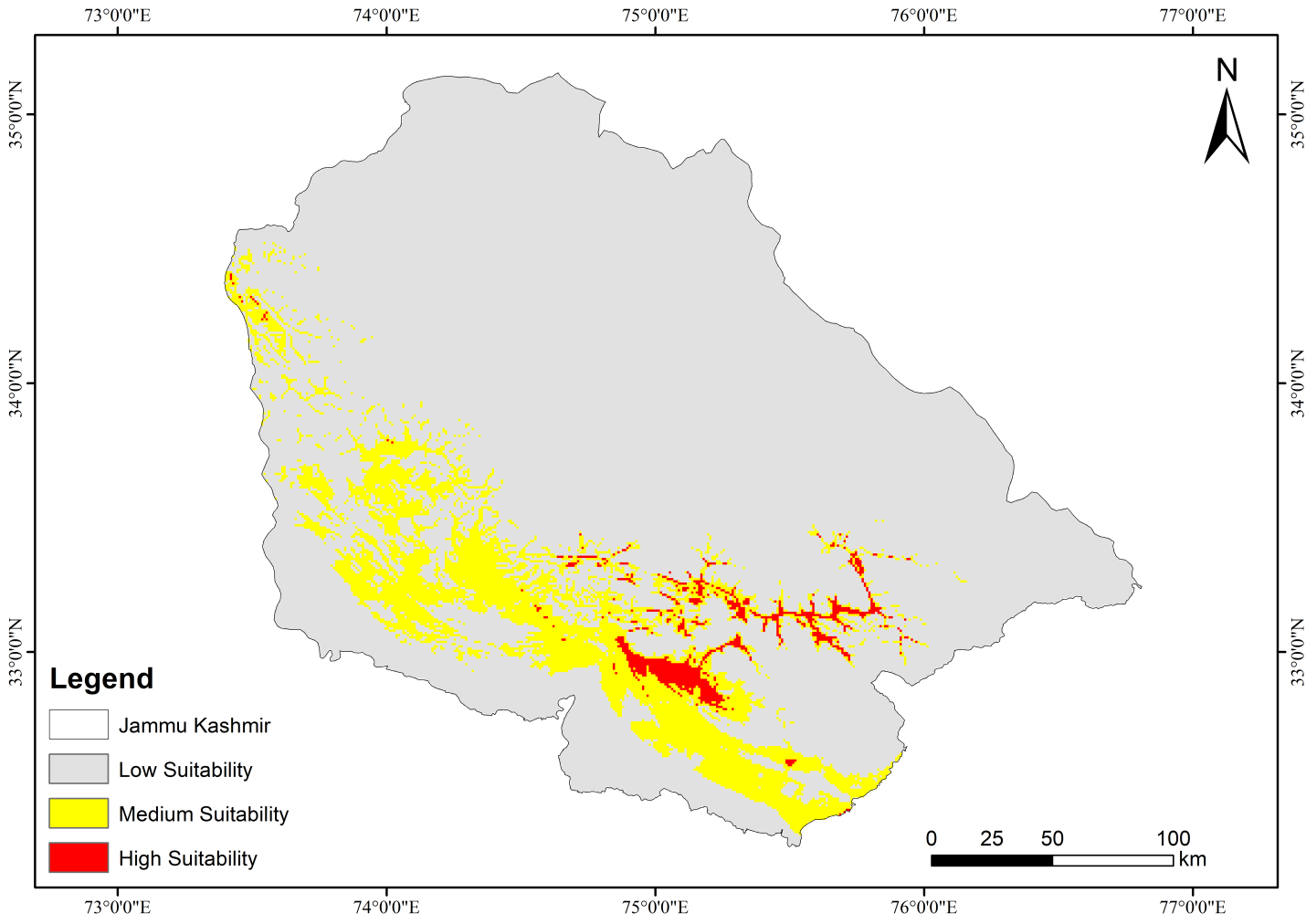
Dr Zishan Ahmad Wani, Postdoctoral Fellow, Department of Environmental Science and Engineering, along with PhD scholar Mr Abdul Rahim PP, has conducted a study to forecast the distribution of Solanum viarum Dunal in Jammu and Kashmir, India, using a species distribution modelling approach. The research team have published a paper titled “Assessing future invasion risk by Solanum viarum Dunal in the Northwestern Himalaya to inform early detection and management” in the Q1 journal Scientific Reports, with an impact factor of 3.9.
The findings of the study provide a strong scientific basis for developing early detection and rapid response strategies to limit the further spread of Solanum viarum. Integrating model outputs with local ecological knowledge, land-use information, and systematic monitoring is likely to enhance the effectiveness of management interventions.
The researchers will assess the invasion threat posed by alien plant species in protected areas across India to support effective biodiversity conservation and management.
Abstract
The study predicted the current and future distribution of Solanum viarum Dunal in Jammu and Kashmir, India using a species distribution modelling approach. Mean annual temperature was found to be the most influential variable contributing to the predicted distribution of the species. Future climate projections indicate a considerable increase (29%-160%) in the potential distribution of the species. Furthermore, expansion of highly suitable areas within protected areas of the region is projected. The projected expansion of the species highlights the need for proactive management planning.
Collaboration
Baba Ghulam Shah Badshah University, Rajouri, Jammu and Kashmir
Read the full article