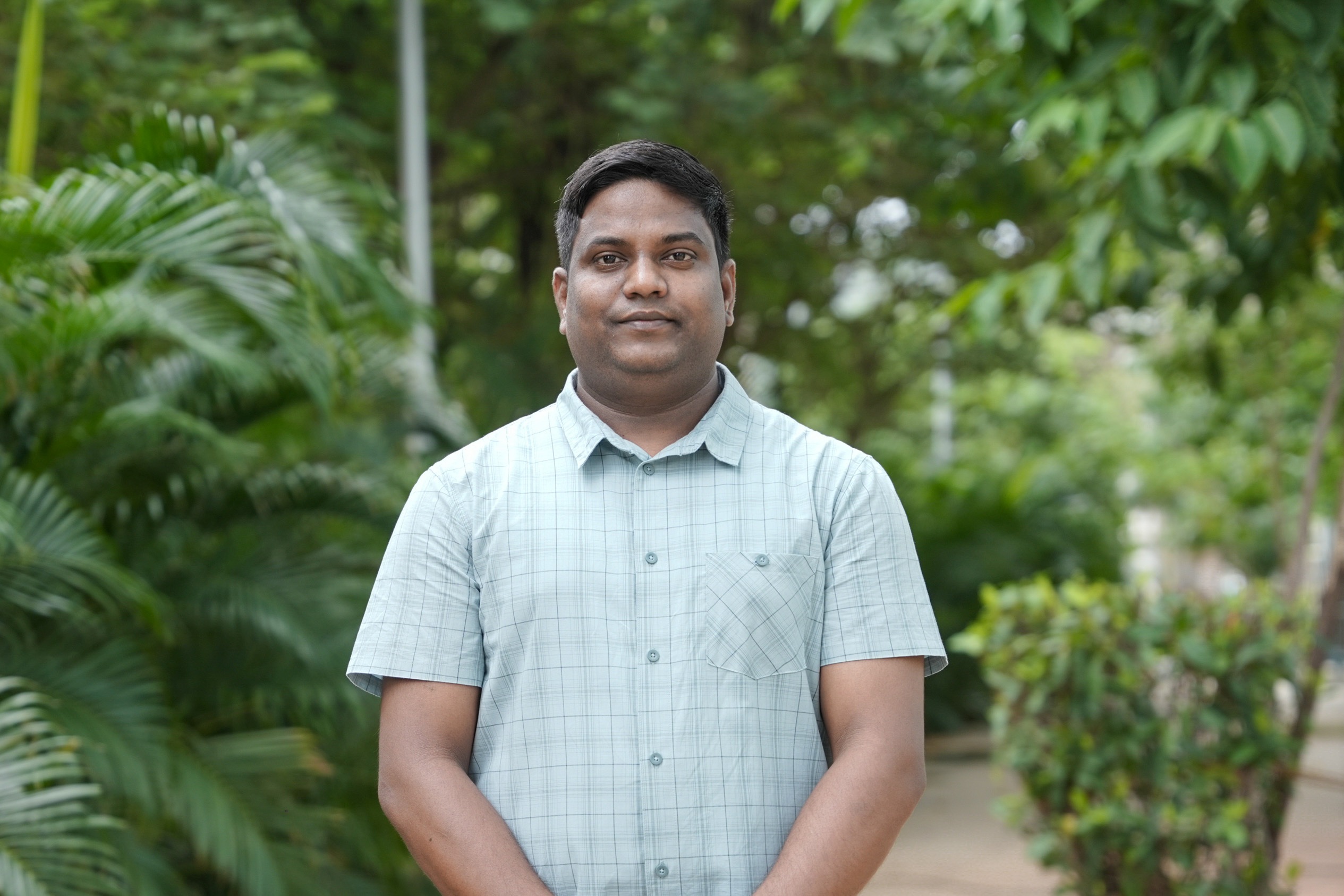
Faculty Dr Neelakantam Gone

Dr Neelakantam Gone

Assistant Professor

Department of Computer Science and Engineering

Contact Details

neelakantam.g@srmap.edu.in

Office Location

CV Raman Block, Level 11, Cubicle No: 130

Education

2021
Integrated PhD
Chang Gung University, Taiwan
Taiwan
2015
MSc
Chang Gung University, Taiwan
Taiwan
2014
B.Tech
PITS-Jawaharlal Nehru Technology University, Hyderabad, Telangana
India

Personal Website

Experience

  • Postdoctoral Researcher, Mahindra University, Hyderabad, Telangana (2022 - 2025)
  • Assistant Professor, SRM University-AP, Andhra Pradesh (2026 - Present)

Research Interest

  • My research focuses on Artificial Intelligence, Machine Learning, and data-driven systems, with an emphasis on building scalable and intelligent predictive models. My early work involved big data analytics and cloud-based architectures, followed by research on fog/edge computing and reinforcement learning for optimization in smart city environments, including transportation and energy systems. During my doctoral and postdoctoral research, I developed reinforcement learning-based and data-driven decision frameworks for real-time IoT-enabled systems and digital twin applications. Currently, my work focuses on nutrition data processing for Type 2 Diabetes prediction, leveraging feature engineering, statistical modeling, and machine learning techniques for correlation analysis, risk prediction, and interpretable healthcare analytics.

Awards

  • Awarded a Full-time postgraduate scholarship (2015) by Chang Gung University, Taiwan.
  • Awarded a Full-time Phd scholarship (2016-2021) by Chang Gung University, Taiwan.
  • Best session paper presentation award in International Conference on Emerging Techniques in Computational Intelligence (ICETCI) 2024, Hyderabad, India (2020) Paper title: Prediction model for suicidal behavior disorder risk analysis by correlating cyber and real world data

Memberships

Publications

  • Machine Learning Driven Cost and PHEV User Convenience Optimization in Smart City

    Neelakantam G.

    Conference paper, Proceedings of the 2025 International Conference on Emerging Techniques in Computational Intelligence, ICETCI 2025, 2025, DOI Link

    View abstract ⏷

    In the digital era, intelligent transportation systems enhance urban mobility through plug-in hybrid electric vehicle (PHEV) integration. This study identifies opportunities to improve PHEV utility by enabling productive activity during charging/discharging periods instead of idle waiting time. We address smart city PHEV service challenges through a machine learning-enabled fog computing platform featuring an Intelligent Decision Making System (IDMS). This system helps mobilityaware PHEV users optimize multiple services with minimal costs and decision-making delays. The IDMS offers precise predictions for accessing various services at single destinations. Performance evaluations confirm our decision tree-based algorithm delivers superior accuracy compared to existing solutions, significantly enhancing PHEV user experience in smart city environments. The approach successfully balances user convenience and cost efficiency.
  • Data Generation, Storage, and AI-Enabled Processing of IoMT Healthcare Data in Edge Computing

    Dobariya V., Neelakantam G., Thakkar H.K.

    Book chapter, Health 5.0: Concepts, Challenges, and Solutions, 2025, DOI Link

    View abstract ⏷

    With the integration of the Internet of Medical Things (IoMT), edge computing, and artificial intelligence (AI), one can observe the advancement in healthcare, generate vast amounts of health data with the potential to revolutionize patient care, reduce costs, and enhance organizational performance. In this chapter, we explore data generation, multiple storage options, AI-enabled data processing, and security considerations. Notable studies on IoMT-based healthcare systems has been reviewed, emphasizing real-time data generation through wearable sensors and mobile apps. The analysis highlights the role of AI in improving personalized treatment, diagnostic accuracy, and proactive healthcare management. The chapter concludes with a call for a comprehensive approach, prioritizing privacy, consent, and ethical data use to build trust and technological advancement in leveraging advanced technologies for a responsive healthcare system.
  • Machine Learning-based Decision Making for Charging/Discharging Cost Optimization of PREV in Smart City

    Neelakantam G.

    Conference paper, Proceedings of the 1st International Symposium on Parallel Computing and Distributed Systems, PCDS 2024, 2024, DOI Link

    View abstract ⏷

    Smart cities, equipped with smart grid infrastructure, establish advanced communication networks that facilitate interactions among multiple entities. It is well-known that smart grid technology ensures the reliable transmission of electricity. Additionally, Plug-in Hybrid Electric Vehicles (PHEVs) significantly contribute to the efficient utilization of energy in mobility-aware environments. The Intelligent Transportation System (ITS) enables Vehicle-to-Infrastructure (V2I) communication, which is crucial for providing transportation services and managing PHEV recharging at user-preferred locations. This capability is a key element of smart city infrastructure. To optimize the use of PHEV services in a smart city, addressing the cost minimization of charging and discharging is essential. Therefore, this paper proposes a decision tree machine learning-based algorithm within a fog computing platform aimed at minimizing charging and discharging costs. Performance evaluation demonstrates that the model outperforms existing algorithms in terms of accuracy. These results indicate that our model can accurately predict the costs associated with charging and discharging PHEVs in smart city environments.
  • Prediction Model for Suicidal Behavior Disorder Risk Analysis by Correlating Cyber and Real World Data

    Neelakantam G.

    Conference paper, Proceedings of the 2024 International Conference on Emerging Techniques in Computational Intelligence, ICETCI 2024, 2024, DOI Link

    View abstract ⏷

    In the era of internet of things (IoT), people are attentive to express their non verbal behavior on cyber world such as social media by using smart phone, laptop or tablet. People are more active in sharing their daily activities status such as current activity the person is into and personal life situations such as achievement, problem, stress and even any hazardous desire (i.e. suicide). In contrast with real world such as smart home environment, people generally spent their non verbal behavior in term of Activity Daily Livings (ADLs) in associating with smart home sensors. Based on non verbal and verbal behaviors, data are generated from both Cyber and Real world, which are big in volume and variety. However, there is lack of investigating Cyber and Real world data especially in analyzing the risk of committing suicide, considering suicide is a big issues and threats in the society. Therefore, it motivate us to propose prediction model to determine high and low risk of committing suicide by combining two separate approaches such as Activity Recognition (AR) for real world and Sentiment Analysis (SA) for cyber world.
  • Role of Internet of Things and Artificial Intelligence in COVID-19 Pandemic Monitoring

    Onthoni D.D., Sahoo P.K., Neelakantam G.

    Book chapter, EAI/Springer Innovations in Communication and Computing, 2022, DOI Link

    View abstract ⏷

    Internet of Things (IoT) has become one of the important components in developing interconnected smart IoT devices. Data generated from the IoT devices increases rapidly due to the increase in the number of connected devices. The current COVID-19 outbreak condition has led to the need of the Healthcare IoT (H-IoT), which can provide an automatic solution for monitoring. Therefore, IoT data is extremely crucial to be analyzed. Artificial Intelligence (AI) has gained a lot of attentions for automatizing applications based on the big data generated from the IoT devices. This chapter presents the current development of AI applications for monitoring the pandemic. The role of IoT, data acquisition, preprocessing, and analysis is also described here. In depth, we elucidate few methods of data preprocessing using conventional techniques and Machine Learning (ML) algorithms, and data analysis using ML and Deep Learning (DL) algorithms. We list all techniques in handling data preprocessing and analysis, and the challenges of IoT and AI in the new way of living during pandemic which is also known as the era of new normal.
  • Analysis and Prediction of Plant Growth in a Cloud-Based Smart Sensor Controlled Environment

    Nandi A., Ghosh A., Yadav S., Jaiswal Y., Neelakantam G.

    Book chapter, Predictive Analytics in Cloud, Fog, and Edge Computing: Perspectives and Practices of Blockchain, IoT, and 5G, 2022, DOI Link

    View abstract ⏷

    The increasing demand for food supply in India is a major problem with respect to the production of crops. According to FAO, more than 40 percent of the crop grown is wasted in India. There are several reasons leading to this huge wastage. One of the major reasons is withered crops due to an unsustainable environment. Many technologies are evolving these days and with the help of those, we can minimize wastage. This paper includes an experimental analysis in a cloud-based smart sensor-controlled environment that can increase crop growth. IoT devices were used to measure different environmental parameters like temperature, humidity, moisture, NPK values, etc. via sensors, and the data collected was stored in the cloud. LightGBM, one of the popular machine learning algorithms was used for the analysis and prediction. This algorithm is based on the gradient boosting technique and is very accurate with its results. The model architecture which was trained gave an accuracy of 99.38 percent. The high accuracy rate of the model makes it most effective to use it in real-life applications. The further expansion of this idea can help a lot of farmers to understand and plan according to environmental conditions.
  • Fog computing enabled locality based product demand prediction and decision making using reinforcement learning

    Neelakantam G., Onthoni D.D., Sahoo P.K.

    Article, Electronics (Switzerland), 2021, DOI Link

    View abstract ⏷

    Wastage of perishable and non-perishable products due to manual monitoring in shopping malls creates huge revenue loss in supermarket industry. Besides, internal and external factors such as calendar events and weather condition contribute to excess wastage of products in different regions of supermarket. It is a challenging job to know about the wastage of the products manually in different supermarkets region-wise. Therefore, the supermarket management needs to take appropriate decision and action to prevent the wastage of products. The fog computing data centers located in each region can collect, process and analyze data for demand prediction and decision making. In this paper, a product-demand prediction model is designed using integrated Principal Compo-nent Analysis (PCA) and K-means Unsupervised Learning (UL) algorithms and a decision making model is developed using State-Action-Reward-State-Action (SARSA) Reinforcement Learning (RL) algorithm. Our proposed method can cluster the products into low, medium, and high-demand product by learning from the designed features. Taking the derived cluster model, decision making for distributing low-demand to high-demand product can be made using SARSA. Experimental results show that our proposed method can cluster the datasets well with a Silhouette score of ≥ 60%. Besides, our adopted SARSA-based decision making model outperforms over Q-Learning, Monte-Carlo, Deep Q-Network (DQN), and Actor-Critic algorithms in terms of maximum cumulative reward, average cumulative reward and execution time.
  • Reinforcement learning based passengers assistance system for crowded public transportation in fog enabled smart city

    Neelakantam G., Onthoni D.D., Sahoo P.K.

    Article, Electronics (Switzerland), 2020, DOI Link

    View abstract ⏷

    Crowding in city public transportation systems is a primary issue that causes delay in the mobility of passengers. Moreover, scheduled and unscheduled events in a city lead to excess crowding situations at the metro or bus stations. The Internet of Things (IoT) devices could be used for data collection, which are related to crowding situations in a smart city. The fog computing data centers located in different zones of a smart city can process and analyze the collected data to assist the passengers how to commute smoothly with minimum waiting time in the crowded situation. In this paper, Q-learning based passengers assistance system is designed to assist the commuters in finding less crowded bus and metro stations to avoid long queues of waiting. The traffic congestion and crowded situation data are processed in the fog computing data centers. From our experimental results, it is found that our proposed method can achieve higher reward values, which can be used to minimize the passengers’ waiting time with minimum computational delay as compared to the cloud computing platform.

Patents

  • AI based Remote Partient Monitoring Device

    Dr Neelakantam Gone

    Patent Application No: 443359-001, Date Filed: 07/01/2025, Date Published: 24/03/2025, Status: Granted

  • E-Commerce Fraud Detection Device

    Dr Neelakantam Gone

    Patent Application No: 6397766, Date Filed: 08/10/2024, Date Published: 14/10/2024,

Projects

Scholars

Interests

  • AI Smart cities
  • Edge Computing
  • Fog Computing
  • Health Informatics
  • Machine Learning

Thought Leaderships

There are no Thought Leaderships associated with this faculty.

Top Achievements

Research Area

No research areas found for this faculty.

Computer Science and Engineering is a fast-evolving discipline and this is an exciting time to become a Computer Scientist!

Computer Science and Engineering is a fast-evolving discipline and this is an exciting time to become a Computer Scientist!

Recent Updates

No recent updates found.

Education
2014
B.Tech
PITS-Jawaharlal Nehru Technology University, Hyderabad
India
2015
MSc
Chang Gung University
Taiwan
2021
Integrated PhD
Chang Gung University
Taiwan
Experience
  • Postdoctoral Researcher, Mahindra University, Hyderabad, Telangana (2022 - 2025)
  • Assistant Professor, SRM University-AP, Andhra Pradesh (2026 - Present)
Research Interests
  • My research focuses on Artificial Intelligence, Machine Learning, and data-driven systems, with an emphasis on building scalable and intelligent predictive models. My early work involved big data analytics and cloud-based architectures, followed by research on fog/edge computing and reinforcement learning for optimization in smart city environments, including transportation and energy systems. During my doctoral and postdoctoral research, I developed reinforcement learning-based and data-driven decision frameworks for real-time IoT-enabled systems and digital twin applications. Currently, my work focuses on nutrition data processing for Type 2 Diabetes prediction, leveraging feature engineering, statistical modeling, and machine learning techniques for correlation analysis, risk prediction, and interpretable healthcare analytics.
Awards & Fellowships
  • Awarded a Full-time postgraduate scholarship (2015) by Chang Gung University, Taiwan.
  • Awarded a Full-time Phd scholarship (2016-2021) by Chang Gung University, Taiwan.
  • Best session paper presentation award in International Conference on Emerging Techniques in Computational Intelligence (ICETCI) 2024, Hyderabad, India (2020) Paper title: Prediction model for suicidal behavior disorder risk analysis by correlating cyber and real world data
Memberships
Publications
  • Machine Learning Driven Cost and PHEV User Convenience Optimization in Smart City

    Neelakantam G.

    Conference paper, Proceedings of the 2025 International Conference on Emerging Techniques in Computational Intelligence, ICETCI 2025, 2025, DOI Link

    View abstract ⏷

    In the digital era, intelligent transportation systems enhance urban mobility through plug-in hybrid electric vehicle (PHEV) integration. This study identifies opportunities to improve PHEV utility by enabling productive activity during charging/discharging periods instead of idle waiting time. We address smart city PHEV service challenges through a machine learning-enabled fog computing platform featuring an Intelligent Decision Making System (IDMS). This system helps mobilityaware PHEV users optimize multiple services with minimal costs and decision-making delays. The IDMS offers precise predictions for accessing various services at single destinations. Performance evaluations confirm our decision tree-based algorithm delivers superior accuracy compared to existing solutions, significantly enhancing PHEV user experience in smart city environments. The approach successfully balances user convenience and cost efficiency.
  • Data Generation, Storage, and AI-Enabled Processing of IoMT Healthcare Data in Edge Computing

    Dobariya V., Neelakantam G., Thakkar H.K.

    Book chapter, Health 5.0: Concepts, Challenges, and Solutions, 2025, DOI Link

    View abstract ⏷

    With the integration of the Internet of Medical Things (IoMT), edge computing, and artificial intelligence (AI), one can observe the advancement in healthcare, generate vast amounts of health data with the potential to revolutionize patient care, reduce costs, and enhance organizational performance. In this chapter, we explore data generation, multiple storage options, AI-enabled data processing, and security considerations. Notable studies on IoMT-based healthcare systems has been reviewed, emphasizing real-time data generation through wearable sensors and mobile apps. The analysis highlights the role of AI in improving personalized treatment, diagnostic accuracy, and proactive healthcare management. The chapter concludes with a call for a comprehensive approach, prioritizing privacy, consent, and ethical data use to build trust and technological advancement in leveraging advanced technologies for a responsive healthcare system.
  • Machine Learning-based Decision Making for Charging/Discharging Cost Optimization of PREV in Smart City

    Neelakantam G.

    Conference paper, Proceedings of the 1st International Symposium on Parallel Computing and Distributed Systems, PCDS 2024, 2024, DOI Link

    View abstract ⏷

    Smart cities, equipped with smart grid infrastructure, establish advanced communication networks that facilitate interactions among multiple entities. It is well-known that smart grid technology ensures the reliable transmission of electricity. Additionally, Plug-in Hybrid Electric Vehicles (PHEVs) significantly contribute to the efficient utilization of energy in mobility-aware environments. The Intelligent Transportation System (ITS) enables Vehicle-to-Infrastructure (V2I) communication, which is crucial for providing transportation services and managing PHEV recharging at user-preferred locations. This capability is a key element of smart city infrastructure. To optimize the use of PHEV services in a smart city, addressing the cost minimization of charging and discharging is essential. Therefore, this paper proposes a decision tree machine learning-based algorithm within a fog computing platform aimed at minimizing charging and discharging costs. Performance evaluation demonstrates that the model outperforms existing algorithms in terms of accuracy. These results indicate that our model can accurately predict the costs associated with charging and discharging PHEVs in smart city environments.
  • Prediction Model for Suicidal Behavior Disorder Risk Analysis by Correlating Cyber and Real World Data

    Neelakantam G.

    Conference paper, Proceedings of the 2024 International Conference on Emerging Techniques in Computational Intelligence, ICETCI 2024, 2024, DOI Link

    View abstract ⏷

    In the era of internet of things (IoT), people are attentive to express their non verbal behavior on cyber world such as social media by using smart phone, laptop or tablet. People are more active in sharing their daily activities status such as current activity the person is into and personal life situations such as achievement, problem, stress and even any hazardous desire (i.e. suicide). In contrast with real world such as smart home environment, people generally spent their non verbal behavior in term of Activity Daily Livings (ADLs) in associating with smart home sensors. Based on non verbal and verbal behaviors, data are generated from both Cyber and Real world, which are big in volume and variety. However, there is lack of investigating Cyber and Real world data especially in analyzing the risk of committing suicide, considering suicide is a big issues and threats in the society. Therefore, it motivate us to propose prediction model to determine high and low risk of committing suicide by combining two separate approaches such as Activity Recognition (AR) for real world and Sentiment Analysis (SA) for cyber world.
  • Role of Internet of Things and Artificial Intelligence in COVID-19 Pandemic Monitoring

    Onthoni D.D., Sahoo P.K., Neelakantam G.

    Book chapter, EAI/Springer Innovations in Communication and Computing, 2022, DOI Link

    View abstract ⏷

    Internet of Things (IoT) has become one of the important components in developing interconnected smart IoT devices. Data generated from the IoT devices increases rapidly due to the increase in the number of connected devices. The current COVID-19 outbreak condition has led to the need of the Healthcare IoT (H-IoT), which can provide an automatic solution for monitoring. Therefore, IoT data is extremely crucial to be analyzed. Artificial Intelligence (AI) has gained a lot of attentions for automatizing applications based on the big data generated from the IoT devices. This chapter presents the current development of AI applications for monitoring the pandemic. The role of IoT, data acquisition, preprocessing, and analysis is also described here. In depth, we elucidate few methods of data preprocessing using conventional techniques and Machine Learning (ML) algorithms, and data analysis using ML and Deep Learning (DL) algorithms. We list all techniques in handling data preprocessing and analysis, and the challenges of IoT and AI in the new way of living during pandemic which is also known as the era of new normal.
  • Analysis and Prediction of Plant Growth in a Cloud-Based Smart Sensor Controlled Environment

    Nandi A., Ghosh A., Yadav S., Jaiswal Y., Neelakantam G.

    Book chapter, Predictive Analytics in Cloud, Fog, and Edge Computing: Perspectives and Practices of Blockchain, IoT, and 5G, 2022, DOI Link

    View abstract ⏷

    The increasing demand for food supply in India is a major problem with respect to the production of crops. According to FAO, more than 40 percent of the crop grown is wasted in India. There are several reasons leading to this huge wastage. One of the major reasons is withered crops due to an unsustainable environment. Many technologies are evolving these days and with the help of those, we can minimize wastage. This paper includes an experimental analysis in a cloud-based smart sensor-controlled environment that can increase crop growth. IoT devices were used to measure different environmental parameters like temperature, humidity, moisture, NPK values, etc. via sensors, and the data collected was stored in the cloud. LightGBM, one of the popular machine learning algorithms was used for the analysis and prediction. This algorithm is based on the gradient boosting technique and is very accurate with its results. The model architecture which was trained gave an accuracy of 99.38 percent. The high accuracy rate of the model makes it most effective to use it in real-life applications. The further expansion of this idea can help a lot of farmers to understand and plan according to environmental conditions.
  • Fog computing enabled locality based product demand prediction and decision making using reinforcement learning

    Neelakantam G., Onthoni D.D., Sahoo P.K.

    Article, Electronics (Switzerland), 2021, DOI Link

    View abstract ⏷

    Wastage of perishable and non-perishable products due to manual monitoring in shopping malls creates huge revenue loss in supermarket industry. Besides, internal and external factors such as calendar events and weather condition contribute to excess wastage of products in different regions of supermarket. It is a challenging job to know about the wastage of the products manually in different supermarkets region-wise. Therefore, the supermarket management needs to take appropriate decision and action to prevent the wastage of products. The fog computing data centers located in each region can collect, process and analyze data for demand prediction and decision making. In this paper, a product-demand prediction model is designed using integrated Principal Compo-nent Analysis (PCA) and K-means Unsupervised Learning (UL) algorithms and a decision making model is developed using State-Action-Reward-State-Action (SARSA) Reinforcement Learning (RL) algorithm. Our proposed method can cluster the products into low, medium, and high-demand product by learning from the designed features. Taking the derived cluster model, decision making for distributing low-demand to high-demand product can be made using SARSA. Experimental results show that our proposed method can cluster the datasets well with a Silhouette score of ≥ 60%. Besides, our adopted SARSA-based decision making model outperforms over Q-Learning, Monte-Carlo, Deep Q-Network (DQN), and Actor-Critic algorithms in terms of maximum cumulative reward, average cumulative reward and execution time.
  • Reinforcement learning based passengers assistance system for crowded public transportation in fog enabled smart city

    Neelakantam G., Onthoni D.D., Sahoo P.K.

    Article, Electronics (Switzerland), 2020, DOI Link

    View abstract ⏷

    Crowding in city public transportation systems is a primary issue that causes delay in the mobility of passengers. Moreover, scheduled and unscheduled events in a city lead to excess crowding situations at the metro or bus stations. The Internet of Things (IoT) devices could be used for data collection, which are related to crowding situations in a smart city. The fog computing data centers located in different zones of a smart city can process and analyze the collected data to assist the passengers how to commute smoothly with minimum waiting time in the crowded situation. In this paper, Q-learning based passengers assistance system is designed to assist the commuters in finding less crowded bus and metro stations to avoid long queues of waiting. The traffic congestion and crowded situation data are processed in the fog computing data centers. From our experimental results, it is found that our proposed method can achieve higher reward values, which can be used to minimize the passengers’ waiting time with minimum computational delay as compared to the cloud computing platform.
Contact Details

neelakantam.g@srmap.edu.in

Scholars
Interests

  • AI Smart cities
  • Edge Computing
  • Fog Computing
  • Health Informatics
  • Machine Learning

Education
2014
B.Tech
PITS-Jawaharlal Nehru Technology University, Hyderabad
India
2015
MSc
Chang Gung University
Taiwan
2021
Integrated PhD
Chang Gung University
Taiwan
Experience
  • Postdoctoral Researcher, Mahindra University, Hyderabad, Telangana (2022 - 2025)
  • Assistant Professor, SRM University-AP, Andhra Pradesh (2026 - Present)
Research Interests
  • My research focuses on Artificial Intelligence, Machine Learning, and data-driven systems, with an emphasis on building scalable and intelligent predictive models. My early work involved big data analytics and cloud-based architectures, followed by research on fog/edge computing and reinforcement learning for optimization in smart city environments, including transportation and energy systems. During my doctoral and postdoctoral research, I developed reinforcement learning-based and data-driven decision frameworks for real-time IoT-enabled systems and digital twin applications. Currently, my work focuses on nutrition data processing for Type 2 Diabetes prediction, leveraging feature engineering, statistical modeling, and machine learning techniques for correlation analysis, risk prediction, and interpretable healthcare analytics.
Awards & Fellowships
  • Awarded a Full-time postgraduate scholarship (2015) by Chang Gung University, Taiwan.
  • Awarded a Full-time Phd scholarship (2016-2021) by Chang Gung University, Taiwan.
  • Best session paper presentation award in International Conference on Emerging Techniques in Computational Intelligence (ICETCI) 2024, Hyderabad, India (2020) Paper title: Prediction model for suicidal behavior disorder risk analysis by correlating cyber and real world data
Memberships
Publications
  • Machine Learning Driven Cost and PHEV User Convenience Optimization in Smart City

    Neelakantam G.

    Conference paper, Proceedings of the 2025 International Conference on Emerging Techniques in Computational Intelligence, ICETCI 2025, 2025, DOI Link

    View abstract ⏷

    In the digital era, intelligent transportation systems enhance urban mobility through plug-in hybrid electric vehicle (PHEV) integration. This study identifies opportunities to improve PHEV utility by enabling productive activity during charging/discharging periods instead of idle waiting time. We address smart city PHEV service challenges through a machine learning-enabled fog computing platform featuring an Intelligent Decision Making System (IDMS). This system helps mobilityaware PHEV users optimize multiple services with minimal costs and decision-making delays. The IDMS offers precise predictions for accessing various services at single destinations. Performance evaluations confirm our decision tree-based algorithm delivers superior accuracy compared to existing solutions, significantly enhancing PHEV user experience in smart city environments. The approach successfully balances user convenience and cost efficiency.
  • Data Generation, Storage, and AI-Enabled Processing of IoMT Healthcare Data in Edge Computing

    Dobariya V., Neelakantam G., Thakkar H.K.

    Book chapter, Health 5.0: Concepts, Challenges, and Solutions, 2025, DOI Link

    View abstract ⏷

    With the integration of the Internet of Medical Things (IoMT), edge computing, and artificial intelligence (AI), one can observe the advancement in healthcare, generate vast amounts of health data with the potential to revolutionize patient care, reduce costs, and enhance organizational performance. In this chapter, we explore data generation, multiple storage options, AI-enabled data processing, and security considerations. Notable studies on IoMT-based healthcare systems has been reviewed, emphasizing real-time data generation through wearable sensors and mobile apps. The analysis highlights the role of AI in improving personalized treatment, diagnostic accuracy, and proactive healthcare management. The chapter concludes with a call for a comprehensive approach, prioritizing privacy, consent, and ethical data use to build trust and technological advancement in leveraging advanced technologies for a responsive healthcare system.
  • Machine Learning-based Decision Making for Charging/Discharging Cost Optimization of PREV in Smart City

    Neelakantam G.

    Conference paper, Proceedings of the 1st International Symposium on Parallel Computing and Distributed Systems, PCDS 2024, 2024, DOI Link

    View abstract ⏷

    Smart cities, equipped with smart grid infrastructure, establish advanced communication networks that facilitate interactions among multiple entities. It is well-known that smart grid technology ensures the reliable transmission of electricity. Additionally, Plug-in Hybrid Electric Vehicles (PHEVs) significantly contribute to the efficient utilization of energy in mobility-aware environments. The Intelligent Transportation System (ITS) enables Vehicle-to-Infrastructure (V2I) communication, which is crucial for providing transportation services and managing PHEV recharging at user-preferred locations. This capability is a key element of smart city infrastructure. To optimize the use of PHEV services in a smart city, addressing the cost minimization of charging and discharging is essential. Therefore, this paper proposes a decision tree machine learning-based algorithm within a fog computing platform aimed at minimizing charging and discharging costs. Performance evaluation demonstrates that the model outperforms existing algorithms in terms of accuracy. These results indicate that our model can accurately predict the costs associated with charging and discharging PHEVs in smart city environments.
  • Prediction Model for Suicidal Behavior Disorder Risk Analysis by Correlating Cyber and Real World Data

    Neelakantam G.

    Conference paper, Proceedings of the 2024 International Conference on Emerging Techniques in Computational Intelligence, ICETCI 2024, 2024, DOI Link

    View abstract ⏷

    In the era of internet of things (IoT), people are attentive to express their non verbal behavior on cyber world such as social media by using smart phone, laptop or tablet. People are more active in sharing their daily activities status such as current activity the person is into and personal life situations such as achievement, problem, stress and even any hazardous desire (i.e. suicide). In contrast with real world such as smart home environment, people generally spent their non verbal behavior in term of Activity Daily Livings (ADLs) in associating with smart home sensors. Based on non verbal and verbal behaviors, data are generated from both Cyber and Real world, which are big in volume and variety. However, there is lack of investigating Cyber and Real world data especially in analyzing the risk of committing suicide, considering suicide is a big issues and threats in the society. Therefore, it motivate us to propose prediction model to determine high and low risk of committing suicide by combining two separate approaches such as Activity Recognition (AR) for real world and Sentiment Analysis (SA) for cyber world.
  • Role of Internet of Things and Artificial Intelligence in COVID-19 Pandemic Monitoring

    Onthoni D.D., Sahoo P.K., Neelakantam G.

    Book chapter, EAI/Springer Innovations in Communication and Computing, 2022, DOI Link

    View abstract ⏷

    Internet of Things (IoT) has become one of the important components in developing interconnected smart IoT devices. Data generated from the IoT devices increases rapidly due to the increase in the number of connected devices. The current COVID-19 outbreak condition has led to the need of the Healthcare IoT (H-IoT), which can provide an automatic solution for monitoring. Therefore, IoT data is extremely crucial to be analyzed. Artificial Intelligence (AI) has gained a lot of attentions for automatizing applications based on the big data generated from the IoT devices. This chapter presents the current development of AI applications for monitoring the pandemic. The role of IoT, data acquisition, preprocessing, and analysis is also described here. In depth, we elucidate few methods of data preprocessing using conventional techniques and Machine Learning (ML) algorithms, and data analysis using ML and Deep Learning (DL) algorithms. We list all techniques in handling data preprocessing and analysis, and the challenges of IoT and AI in the new way of living during pandemic which is also known as the era of new normal.
  • Analysis and Prediction of Plant Growth in a Cloud-Based Smart Sensor Controlled Environment

    Nandi A., Ghosh A., Yadav S., Jaiswal Y., Neelakantam G.

    Book chapter, Predictive Analytics in Cloud, Fog, and Edge Computing: Perspectives and Practices of Blockchain, IoT, and 5G, 2022, DOI Link

    View abstract ⏷

    The increasing demand for food supply in India is a major problem with respect to the production of crops. According to FAO, more than 40 percent of the crop grown is wasted in India. There are several reasons leading to this huge wastage. One of the major reasons is withered crops due to an unsustainable environment. Many technologies are evolving these days and with the help of those, we can minimize wastage. This paper includes an experimental analysis in a cloud-based smart sensor-controlled environment that can increase crop growth. IoT devices were used to measure different environmental parameters like temperature, humidity, moisture, NPK values, etc. via sensors, and the data collected was stored in the cloud. LightGBM, one of the popular machine learning algorithms was used for the analysis and prediction. This algorithm is based on the gradient boosting technique and is very accurate with its results. The model architecture which was trained gave an accuracy of 99.38 percent. The high accuracy rate of the model makes it most effective to use it in real-life applications. The further expansion of this idea can help a lot of farmers to understand and plan according to environmental conditions.
  • Fog computing enabled locality based product demand prediction and decision making using reinforcement learning

    Neelakantam G., Onthoni D.D., Sahoo P.K.

    Article, Electronics (Switzerland), 2021, DOI Link

    View abstract ⏷

    Wastage of perishable and non-perishable products due to manual monitoring in shopping malls creates huge revenue loss in supermarket industry. Besides, internal and external factors such as calendar events and weather condition contribute to excess wastage of products in different regions of supermarket. It is a challenging job to know about the wastage of the products manually in different supermarkets region-wise. Therefore, the supermarket management needs to take appropriate decision and action to prevent the wastage of products. The fog computing data centers located in each region can collect, process and analyze data for demand prediction and decision making. In this paper, a product-demand prediction model is designed using integrated Principal Compo-nent Analysis (PCA) and K-means Unsupervised Learning (UL) algorithms and a decision making model is developed using State-Action-Reward-State-Action (SARSA) Reinforcement Learning (RL) algorithm. Our proposed method can cluster the products into low, medium, and high-demand product by learning from the designed features. Taking the derived cluster model, decision making for distributing low-demand to high-demand product can be made using SARSA. Experimental results show that our proposed method can cluster the datasets well with a Silhouette score of ≥ 60%. Besides, our adopted SARSA-based decision making model outperforms over Q-Learning, Monte-Carlo, Deep Q-Network (DQN), and Actor-Critic algorithms in terms of maximum cumulative reward, average cumulative reward and execution time.
  • Reinforcement learning based passengers assistance system for crowded public transportation in fog enabled smart city

    Neelakantam G., Onthoni D.D., Sahoo P.K.

    Article, Electronics (Switzerland), 2020, DOI Link

    View abstract ⏷

    Crowding in city public transportation systems is a primary issue that causes delay in the mobility of passengers. Moreover, scheduled and unscheduled events in a city lead to excess crowding situations at the metro or bus stations. The Internet of Things (IoT) devices could be used for data collection, which are related to crowding situations in a smart city. The fog computing data centers located in different zones of a smart city can process and analyze the collected data to assist the passengers how to commute smoothly with minimum waiting time in the crowded situation. In this paper, Q-learning based passengers assistance system is designed to assist the commuters in finding less crowded bus and metro stations to avoid long queues of waiting. The traffic congestion and crowded situation data are processed in the fog computing data centers. From our experimental results, it is found that our proposed method can achieve higher reward values, which can be used to minimize the passengers’ waiting time with minimum computational delay as compared to the cloud computing platform.
Contact Details

neelakantam.g@srmap.edu.in

Scholars