School of Engineering and Science(SEAS)

SEAS Energy Engineering B. Tech Energy Engineering

B. Tech Energy Engineering

Department of Energy Engineering

B. Tech Energy Engineering

Established in 2026, the B. Tech in Energy Engineering is a futuristic and interdisciplinary programme designed to meet the growing demand for sustainable and advanced energy technologies. The curriculum provides students with strong foundations in energy engineering while offering specialized knowledge in hydrogen energy, energy storage technologies, smart grids, electric mobility, energy auditing, and Application of AI/ML. The programme emphasizes experiential learning through laboratories, industry internships, multidisciplinary projects, and research-driven education. Students gain practical exposure to the design, analysis, optimization, and management of modern energy systems and sustainable technologies that address global energy and environmental challenges. The curriculum also encourages innovation and research through industrial collaborations and the Undergraduate Research Opportunities Program (UROP), enabling students to work on emerging technologies and real-world energy applications. To earn a B.Tech degree in Energy Engineering, a student must complete a minimum of 160 credits during the course of study.

Apply science, engineering, and energy system principles to solve problems in energy generation, conversion, storage, and utilization.
Utilize interdisciplinary knowledge and research to address societal needs through sustainable and efficient energy solutions.
Exhibit leadership, ethical attitude, communication skills, teamwork in their profession and multidisciplinary skills.
Engage in lifelong learning and continuous professional development.
Apply principles of energy engineering to design, analyze, and optimize systems for energy generation, conversion, storage, and utilization.
Develop and implement sustainable and renewable energy solutions using modern tools and technologies to address environmental and societal needs.
Design energy systems, components, and processes to meet desired needs within realistic economic, environmental, social, ethical, health, safety, and sustainability constraints.
Programme Outcomes (PO)
Engineering Knowledge
Apply the knowledge of mathematics, science, engineering fundamentals, and an engineering specialisation to the solution of complex engineering problems.
Identify, formulate, research literature, and analyse engineering problems to arrive at substantiated conclusions using the first principles of mathematics, natural, and engineering sciences.
Design solutions for complex engineering problems and design system components or processes that meet the specified needs with appropriate consideration for public health and safety and cultural, societal, and environmental considerations.
Use research-based knowledge, including design of experiments, analysis and interpretation of data, and synthesis of the information to provide valid conclusions.
Create, select, and apply appropriate techniques, resources, and modern engineering and IT tools, including prediction and modelling, to complex engineering activities with an understanding of the limitations.
Apply reasoning informed by contextual knowledge to assess societal, health, safety, legal, and cultural issues and the consequent responsibilities relevant to the professional engineering practice.
Understand the impact of professional engineering solutions in societal and environmental contexts and demonstrate the knowledge of and need for sustainable development.
Apply ethical principles and commit to professional ethics and responsibilities and norms of engineering practice.
Function effectively as an individual and as a member or leader in teams and in multidisciplinary settings.
Communicate effectively with the engineering community and with society at large. Be able to comprehend and write effective reports and documentation. Make effective presentations and give and receive clear instructions.
Demonstrate knowledge and understanding of engineering and management principles and apply these to one’s work as a member and leader in a team. Manage projects in multidisciplinary environments.
Recognise the need for and have the preparation and ability to engage in independent and life-long learning in the broadest context of technological change.

Specializations Offered

Renewable Energy Systems
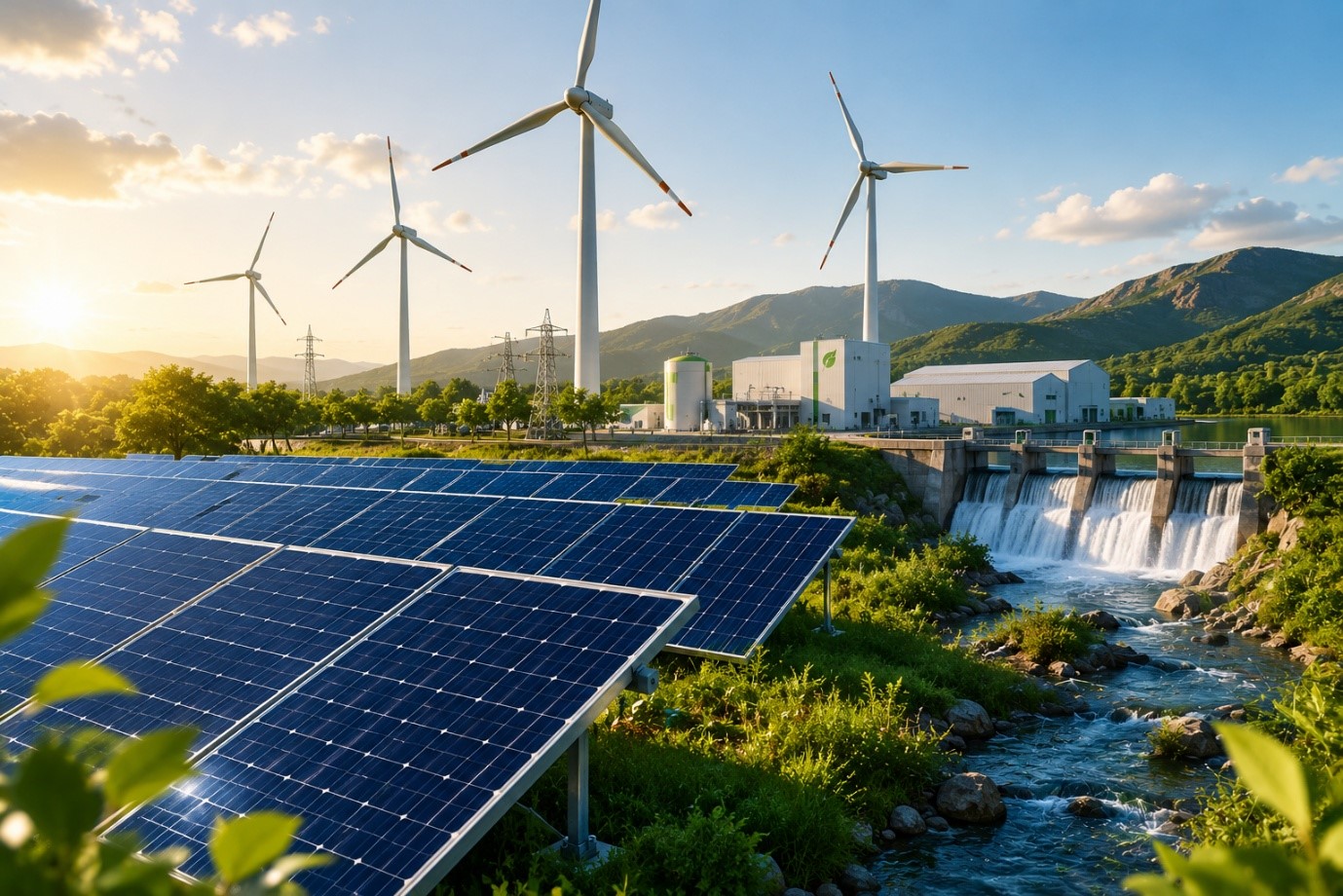
The Renewable Energy Systems specialization focuses on sustainable and clean energy technologies that are transforming the global energy sector. With increasing demand for low-carbon energy solutions, this specialization provides students with strong theoretical and practical knowledge in renewable power generation, smart energy management, and modern digital energy technologies. Students learn to design, analyze, and optimize renewable energy systems for real-world applications while gaining exposure to emerging tools used in the energy industry.

Students will learn:

Benefits and Career Opportunities:

Hydrogen and Emerging Energy Technologies

The Hydrogen and Emerging Energy Technologies specialization is designed to prepare students for future energy systems and advanced clean energy technologies. As industries worldwide move toward decarbonization and sustainable mobility, this specialization equips students with expertise in hydrogen energy, advanced batteries, fuel cells, electric mobility, and other emerging technologies that will shape the future global energy landscape.

Students will learn:

Benefits and Career Opportunities:

Undergraduate Research Opportunities Project (UROP)

The Undergraduate Research Opportunities Programme (UROP) is an integral part of the 4-year B. Tech in Energy Engineering curriculum, designed to provide students with early exposure to research and innovation in emerging energy technologies. Under this programme, students work closely with faculty members on research problems related to renewable energy, hydrogen technologies, energy storage, smart grids, sustainability, thermal systems, electric mobility, and other interdisciplinary energy domains. Based on their area of interest, students form research teams and work under faculty mentorship throughout the semester, gaining hands-on experience in research methodologies, experimentation, data analysis, simulation, and technology development. The programme enables students to explore real-world energy challenges while developing critical thinking, problem-solving, and innovation skills. UROP offers students an excellent platform to strengthen their technical and research capabilities from the early stages of their academic journey. The experience significantly enhances opportunities for higher studies, research careers, internships, entrepreneurship, and placements in advanced energy industries. All third-year Energy Engineering students are eligible to participate in UROP as it forms a part of the curriculum. A departmental review committee periodically evaluates the progress and outcomes of the projects undertaken under the programme.

Semester Abroad Programme (SAP)

The Semester Abroad Programme (SAP) at SRM University-AP provides students with an opportunity to study for a semester at reputed international universities during their second or third year of engineering. The programme offers global academic exposure, cross-cultural learning experiences, and opportunities to gain advanced knowledge in their chosen fields. SRM AP has collaborations with prestigious universities including University of California Berkeley (UCB), University of Wisconsin Madison (UWM), Illinois Institute of Technology Chicago (IIT Chicago), EFREI France, and Asia University Taiwan, with additional global partnerships being added regularly. Students are selected based on academic performance, CGPA, and internal evaluation processes including interviews. Meritorious students may also receive tuition fee waivers based on their performance and selection outcomes.