International Biodiversity Congress (IBC-2027)

Theme: Biodiversity and Ecosystem Resilience

July 16-18, 2027

INVITATION

In an increasingly interconnected world, the preservation of biodiversity is no longer a local or national issue, it is a global imperative. Earth’s rich tapestry of life, from microscopic organisms to towering trees and apex predators, transcends political boundaries. However, despite the shared benefits of biodiversity, the pressures that threaten it as such deforestation, climate change, pollution, overexploitation, and habitat fragmentation are escalating, often spurred by global economic activities. However, nature put her eggs, the biodiversity, across the planet as she knows no borders. Migratory species, rivers, wind patterns, and ocean currents all traverse across human-defined territories. When one country destroys a forest, it can affect rainfall in a neighbouring nation. When one region pollutes a river, it impacts aquatic ecosystems and communities downstream. Therefore, biodiversity conservation must be collaborative, integrating cross-border data sharing, scientific research, and joint management of ecosystems. Therefore, the call to action, through IBC 2027, is clear as we must approach biodiversity conservation as a unified global mission, recognizing that ecosystems do not adhere to human-made borders.

Indian Biodiversity congress (IBC) was launched by Centre for Innovation in Science and Social Action (CISSA) and Navdanya (Delhi) in the international year of Biodiversity in 2010 at Thiruvananthapuram (Kerala) as a platform to discuss the status of biodiversity and to provide an independent platform to share knowledge of academicians, researchers, activists, civil society, planners and policy makers in this field, and to showcase the rich biodiversity of India. After the successful biannual meetings at Bangalore (Indian Institute of Science), Chennai (SRM University), Pondicherry (Central University), the IBC became International and the first International Biodiversity Congress (IBC) was held at Dehradun (Forestry Research Institute) in 2018. The present IBC 2027 is being organized in collaboration with SRM University, Amaravati, Andhra Pradesh, India. The primary aim of IBC is now focussed to facilitate a shift towards ecological civilization that values, cherishes and conserves biodiversity to achieve sustainable development, both at national and international platforms.

The convention on Biological Diversity (CBD) Strategic plan lays out 20 Aichi Biodiversity Targets, which were set for achievement by 2020. It is time to evaluate the progress made by countries including India to halt biodiversity loss and to look beyond boarders to achieve that target of “living in harmony with nature by 2050”, with a consolidated and holistic knowledge on biodiversity. IBC 2027 advocates the focal theme that is related to this topic and will be discussed in the seminar. We consider IBC 2027 as a platform for networking and to support the younger generation to provide a holistic perspective on biodiversity science.

We cordially invite you to IBC 2027 at SRM University-AP, Andhra Pradesh

Prof. Ch. Satish Kumar                  Dr G G Gangadharan                Dr Vadana Shiva
Vice Chancellor                                    President,                                     Chairperson,
SRM University-AP                             CISSA                                               Navadanya


Overview

The natural ecosystems that sustain life on Earth know no political boundaries. Forests stretch across nations, oceans link distant shores, and migratory species traverse continents in their life cycles. Biodiversity underpins the stability of life on Earth, sustaining ecosystems that provide essential services such as food security, climate regulation, water purification, soil fertility, and cultural well-being. The accelerating pace of environmental change – driven by climate variability, land-use transformation, biological invasions, pollution, and overexploitation – has placed unprecedented pressure on biodiversity across terrestrial, freshwater, coastal, and marine systems.

Recent global assessments underscore a stark reality: biodiversity is declining at rates unprecedented in human history. The loss of biodiversity compromises ecosystem functions such as productivity, nutrient cycling, pollination, soil fertility and trophic regulation. As ecosystems lose functional redundancy, their capacity to absorb shocks reduces, increasing the likelihood of abrupt regime shifts. Such changes threaten livelihoods, food systems, and cultural heritage, particularly for communities that depend directly on natural resources. In response to these compounding stressors, the concept of ecosystem resilience has emerged as a central organizing principle for biodiversity science, conservation practice, and policy. In a rapidly changing world, ecosystem resilience offers a lens to reconcile conservation and development objectives. It encourages proactive strategies—such as maintaining landscape connectivity, conserving functional diversity, restoring degraded systems, and aligning governance with ecological scales—to enhance adaptive capacity of ecosystems to resist disturbances, recover from perturbations, and reorganize while maintaining its core biological diversity, structure, functions and feedbacks.

By considering all these factors, the United Nations introduced the Convention on Biological Diversity, in 1992 to promote the implementation of a strategic plan on biodiversity and its overall vision of living in harmony with nature. The governments were urged to make concerted efforts to achieve the Aichi Biodiversity Targets for addressing the underlying causes of biodiversity loss, and reduce the pressures on biodiversity. Despite achieving significant progress, with the targets being not fully met, the new Kunming-Montreal Global Biodiversity Framework emerged for the protection and restoration of biodiversity, including a target for the conservation and management of at least 30% of the world’s land and water by 2030. Biodiversity conservation being at the heart of ecosystem resilience has been widely emphasized in many of the Sustainable Development Goals (SDGs) as well as National Missions, in particular, the National Biodiversity Mission.

Despite advances in biodiversity science, a persistent gap remains between knowledge generation and implementation. Emerging technologies—ranging from Earth observation and artificial intelligence to genomics and bioacoustics—offer unprecedented opportunities to bridge this gap. Emerging technologies play a transformative role in advancing biodiversity sustainability by enabling more accurate, timely, and scalable approaches to understanding, conserving, and restoring ecosystems.

 Innovations such as remote sensing, artificial intelligence, environmental DNA (eDNA), bioacoustics, and sensor networks have revolutionized biodiversity monitoring by allowing continuous, non-invasive, and high-resolution observation of species, habitats, and ecological processes across landscapes and seascapes. Machine learning and big-data analytics facilitate the integration of complex ecological, climatic, and socio-environmental datasets, supporting predictive modelling, early-warning systems, and adaptive management under changing environmental conditions. Digital platforms and citizen science applications facilitate biodiversity data collection and decision-making, fostering inclusive stewardship and awareness. When coupled with participatory governance and ethical frameworks, these tools can support evidence-based decision-making at local to global scales.

International Biodiversity Congress (IBC) 2026 seeks to bring together researchers, academicians, conservationists, industry partners, social scientists, economists, policymakers, practitioners and indigenous knowledge-holders to discuss the current strategies and future directions to conserve, sustainably use and equitably share biodiversity by leveraging on novel technologies to foster ecosystem resilience across diverse landscapes. The objectives of IBC 2026 are:

  • To synthesize advances in biodiversity and ecosystem resilience
  • To showcase technological innovations that enable scalable solutions
  • To foster cross-sector partnerships
  • To support capacity building and knowledge exchange
  • To inform policies aligned with global biodiversity and climate targets


International Congress

The International Biodiversity Congress 2027 (IBC 2027) is convened at a critical juncture, when global frameworks call for collective and transformative action to halt and reverse biodiversity loss while strengthening the adaptive capacity of ecosystems and societies. Anchored in the focal theme “Biodiversity and Ecosystem Resilience,” the Congress aims to catalyse interdisciplinary dialogue, foster knowledge-sharing, and accelerate the translation of science into solutions. The event will spotlight novel tools, data-driven approaches, and innovations that are reshaping how biodiversity is monitored, managed, restored, and governed. It provides a platform to reflect on progress, identify gaps, and propose pathways for implementation through science–policy interfaces. The IBC 2027 aims to contribute actionable insights that support international and national strategies, corporate sustainability efforts, and community-led initiatives. By integrating ecological theory with cutting-edge technologies and inclusive governance, the Congress will explore pathways to build resilient ecosystems that can withstand disturbances, adapt to change, and continue to support human well-being.

Participation:

Members of academic and research community, civil society, community members, practitioners, policy-makers, corporates, etc.

Subject Areas

Agro-biodiversity, forest biodiversity, medicinal plant biodiversity, mountain biodiversity, soil biodiversity, microbial biodiversity, livestock diversity, urban biodiversity, etc.

Inland water biodiversity, coastal and marine biodiversity, subterranean aquatic biodiversity

Biodiversity-based farming systems, nutrition security, dietary diversity, bioprospecting, quality control, etc.

Biodiversity informatics, in-situ and ex-situ conservation strategies, modern techniques, both in science and engineering for conservation and sustainable use of biodiversity, GIS, GPS, remote sensing, UAVs for biodiversity monitoring, applied AI for biodiversity conservation, etc.

Expansion of transboundary protected areas and wildlife corridors, migratory species, global flyways, international cooperation initiatives, cross-border threats and risk management, technology and data sharing for transboundary conservation, etc.

Specific case studies on impact of biodiversity due to developmental activities, pollution, invasive alien species, over exploitation and climate change, eco-restoration models, biodiversity and net-zero targets, biodiversity and finance, etc.

Biodiversity education, traditional ecological knowledge (TEK), bio-cultural diversity, community-based conservation, knowledge co-production, etc.

Aichi and other Biodiversity Targets, National Biodiversity Strategies and Action Plans (NBSAPs), Biological Diversity Act, People’s Biodiversity Registers, Access and Benefit Sharing, Impact of legal instruments and policies, grass-root level experiences, success models, etc.

Regulated harvesting, species vulnerability, effectiveness of CITES and other global regulatory frameworks, combating illegal wildlife trade and transboundary trafficking, emerging technologies for trade monitoring and enforcement, etc.

Women-led green enterprises, biodiversity-based livelihoods, digital tools and emerging technologies empowering women in biodiversity conservation, etc.

Participants of IBC 2027 are requested to contribute papers for oral/poster presentations on areas pertaining to sub-themes. Selected papers will be invited for Special Issues in reputed journals.

For details, visit our website: https://www.srmap.edu.in/international-biodiversity-congress/

Important Dates

Date Details
October 01, 2026 Earlybird Registration and extended abstract submission open
December 01, 2026 Registration and Abstract Submission
March 15, 2027 Abstract Submission closes
within 1 month of abstract submission Communication of acceptance of papers
July 16-18, 2027 Conference

Extended Abstracts:

The extended abstract(s) should contain background, aim, method, results, conclusion and references with one or two photographs or graphs with a maximum of 2500 words and should be submitted through online on or before __________. The following information may kindly be noted while preparing the abstract: The title of the paper centered with bold capital letters (14 font Times New Roman); name of the author(s) centrally aligned in normal letters (12 font Times New Roman); Address(es) of the author(s) with pincode, phone and e-mail; the name(s) of the corresponding and presenting authors should be specifically mentioned (12 font Times New Roman). The paper must not exceed 2500 words excluding references. The photographs and graphs should be of higher resolution (min. 300 dpi) for printing and separate JPEG/TIFF images should be supplied. At least one author should register by paying the required registration fee for presentation and inclusion of the accepted abstract in the proceedings. There will not be any on-spot registration for presentation.

Proceedings:

All accepted extended abstracts will be published as conference proceedings with ISBN on the inaugural day of the event.

Location

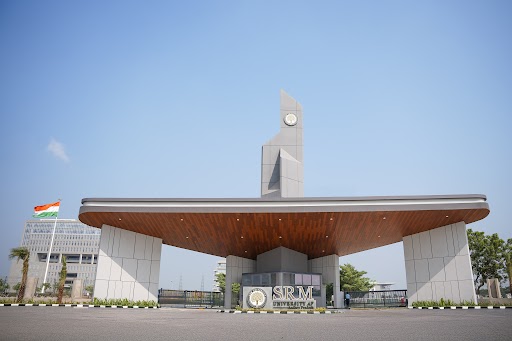
The IBC 2027 will be hosted at SRM University-AP, Amaravati. The SRM University-AP campus is located between the cities Vijayawada and Guntur.

By Rail: Those coming from other states of India by train should get down at the Vijayawada railway station (railway code: BZA), which is well connected with almost all parts of the country. One can also use the Guntur railway station (code: GNT). You need to get a taxi from the stations to the SRM University-AP campus.

By Air: The nearest airport (about 45km) is the Vijayawada International Airport (IATA: VGA). You may get a taxi from the airport to the SRM University-AP campus.

By Bus: The buses operated by APSRTC from Pandit Nehru bus station and NTR bus station connect the city with Vijayawada and Guntur respectively.

VISA Information for Foreign Participants

Foreign participants are required to apply for a visa through their nearest Indian Embassy or Consulate. As a delegate, you must complete the online visa application form with accurate and up-to-date information. Before beginning the application process, please ensure you have the following documents and files ready:

The International Biodiversity Expo (IBE) 2027, to be held in conjunction with IBC, is an attempt to bring together the government and non-government organisations, academic and R&D organisations, communities and business group to showcase the rich heritage, wisdom and potentials of the biodiversity of India and the world. The IBE 2027 is an attempt to enhance public awareness on the importance of conserving biodiversity, underlying threats to biodiversity, and success stories and use of technologies in conservation. The expo will highlight the immense role of biodiversity in fostering ecosystem resilience, thereby improving the livelihood prospects of humans. It will demonstrate how the government and communities work together to ensure conservation and sustainable use of biodiversity now and in the future. The exhibition will also highlight the products and geographical indicators related to biodiversity.

The purpose of the summit is to make awareness on issues related to biodiversity loss, the importance of biodiversity in enhancing ecosystem resilience and to encourage the children and youth to take action in protecting and using these important resources wisely using novel tools and technologies as the young generation is the powerful force for the preservation of biodiversity. If the business-as-usual scenario prevails in the modern era of biodiversity loss, the status of our biodiversity wealth will be in jeopardy. As diverse stakeholders shall be attending IBC 2027, the students and youth will get an opportunity to interact with them, learn from their experience, and showcase their ideas.

Nature and Biodiversity Documentary Film Festival will be organised during IBC 2027. The event will showcase some of the finest films made on the biodiversity richness of Planet Earth. Several films on Indian natural history will be an added attraction. Only selected entries will be screened.

Photography competition and exhibition on biodiversity will be organised in connection with IBC 2026, with entries invited from all over India and from international participants. The selected entries will be exhibited.

Centre for Innovation in Science & Social Action (CISSA) 

Centre for Innovation in Science & Social Action (CISSA) is a multi-disciplinary organization endowed with a think tank comprising of scientists and professionals from all walks of life, who provide foresighted guidance and orientation for its diverse feats bridging science with the society. Biodiversity conservation, energy management, organic farming and good food movement are among the many such activities. Currently, CISSA is the headquarters of Regional Centre for Expertise (RCE), Thiruvananthapuram acknowledged by UN University. For more details, visit:  http://www.cissa.co.in/

Navdanya

Navdanya, started by a renowned environmentalist Dr. Vandana Shiva, is an organisation committed to the conservation of agricultural biodiversity with the participation of indigenous communities. Since 1987, the Navdanya programmes have focused on saving seeds, promoting organic farming, raising awareness on the biosafety hazards, genetic engineering and bio-piracy, thereby defending people’s traditional food rights and food sovereignty in the face of globalization. Navdanya’s focus on collective, cumulative innovation symbolizes in indigenous knowledge and has created a worldwide movement for the defence of the intellectual rights of communities. For more details, visit: https://www.navdanya.org/

SRM University-AP

SRM University-AP is a multi-disciplinary research-intensive institute combining academic rigour, evolving research ecosystem, and pioneering faculty. It is vibrant institution combining academic excellence, cutting-edge research, innovation, and entrepreneurial learning across undergraduate, postgraduate, and doctoral programmes in engineering, sciences, liberal arts, management, and more. Its iconic campus—designed by world-renowned architects—is supported by state-of-the-art laboratories, research infrastructure, and a diverse faculty with extensive international experience, fostering both scholarly inquiry and practical problem-solving skills. SRM University-AP has distinguished itself since its inception with a strong research culture, high publication output, and national recognitions, while engaging actively with societal needs through community initiatives, entrepreneurship summits, innovative and practical solutions. For more details, visit:  https://www.srmap.edu.in/

SRM University-AP, Amaravati
Neerukonda, Mangalagiri Mandal, Guntur District, Andhra Pradesh – 522240.
E-mail: ibc2027@srmap.edu.in

Women-led green enterprises, biodiversity-based livelihoods, digital tools and emerging technologies empowering women in biodiversity conservation, etc.